
Free Pre-Start Checklist (Drain Jetter) Template
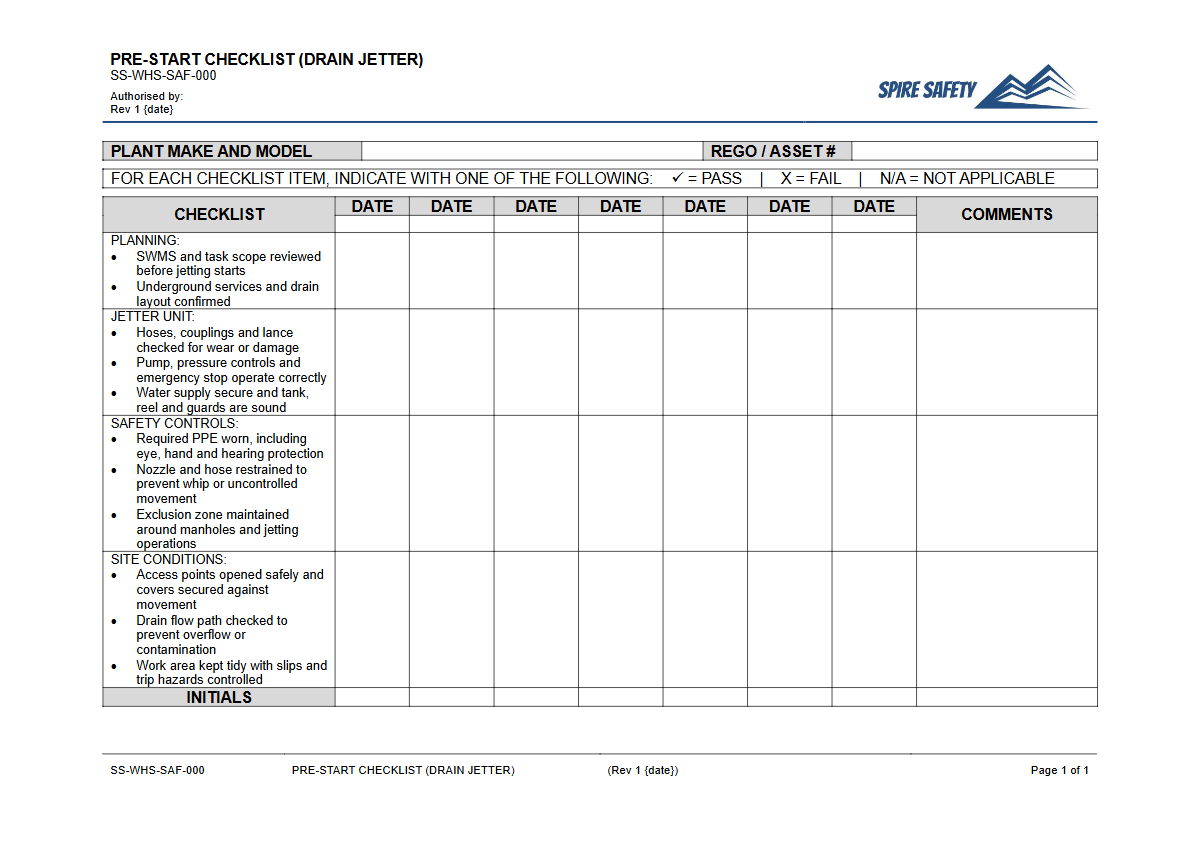
Download our free Pre-Start Checklist (Drain Jetter) Template. This structured Word & PDF template helps formalise equipment safety inspections. Download today.
Free Pre-Start Checklist (Drain Jetter) Template
DOCX • 125 KB + PDF
Updated Oct 2026
No signup required
Purpose of the Free Pre-Start Checklist (Drain Jetter) Template
Operating a high-pressure drain jetter involves significant risks, from hose failure and high-pressure injection injuries to mechanical and electrical hazards. This Free Pre-Start Checklist (Drain Jetter) Template provides a structured starting point for formalising daily equipment inspections.
Systematically checking the condition of your drain jetter before each use is a fundamental control measure to identify potential faults and prevent incidents. It helps your organisation meet its duty of care under Australian WHS laws to provide and maintain safe plant and equipment.
By documenting these checks, you create a clear record of your safety diligence, demonstrating that all reasonably practicable steps have been taken to manage risks. Integrating such procedures is a core component of developing robust WHS management systems that protect workers and ensure operational continuity.
This template is designed to be adapted into your existing safety framework, promoting a consistent and proactive approach to machinery safety.
Video walkthrough
How to use the Free Pre-Start Checklist (Drain Jetter) Template
This checklist is available for immediate download in both DOCX and PDF formats. The DOCX version is fully editable, allowing you to tailor the content to your specific operational needs.
Effective customisation is essential for creating a truly useful safety document. Just as you would adapt our free aerator pre-start checklist for landscaping machinery, this drain jetter template requires specific modification.
When customising the document, you should review the manufacturer’s operating manual for your specific drain jetter model, as it will contain critical inspection points and maintenance schedules. Also consider any site-specific hazards, attachments used (e.g., different nozzles, lances), and the environmental conditions where the equipment operates.
Incorporate findings from your workplace risk assessments to ensure all relevant hazards are covered.
Please note: We have designed this document as a template. You must customise it to reflect the specific drain jetter models, attachments, operational procedures, and unique risks present in your workplace.
When to use it
A pre-start checklist for a drain jetter should be completed before every use or at the beginning of each shift where the equipment will be operated. This routine ensures that the machine's condition is verified before it is subjected to operational pressures.
It is a proactive measure designed to catch minor issues before they escalate into major failures or safety incidents.
Additionally, the checklist should be used after any maintenance or repair work has been performed to confirm the equipment is safe to return to service. It is also good practice to complete a check when the equipment is being used by a different operator, ensuring a fresh inspection and accountability.
This routine check is a foundational safety habit and should be complemented by other critical procedures, such as formal assessments of operator skill using tools like a verification of competency for a pipe threader, ensuring a holistic approach to site safety.
Who should use it
The pre-start checklist should be completed by the person who will be operating the drain jetter. This operator must be trained, competent, and familiar with the specific model they are inspecting.
They are in the best position to notice subtle changes or potential defects in the equipment they use daily.
Supervisors and managers also have a role. They are responsible for ensuring that operators are completing the checks correctly and consistently.
They must also establish a clear procedure for what to do when a fault is identified, including tagging the equipment out of service and arranging for repairs. For complex plant or high-risk environments, seeking specialist WHS consulting can help establish appropriate levels of training and supervision.
Key Items on a Drain Jetter Checklist
While your customised checklist will be more detailed, it should cover several key areas to ensure a thorough inspection. A comprehensive checklist helps operators systematically review the equipment without missing critical components.
Discussing these points regularly, perhaps during a plant maintenance toolbox talk, helps reinforce their importance.
- Hoses and Fittings: Check for cracks, bulges, abrasions, or leaks in all high-pressure hoses. Ensure all fittings and couplings are secure and undamaged.
- Nozzles: Inspect the nozzle for blockages, cracks, or excessive wear that could cause dangerous pressure deviations.
- Safety Devices: Verify that the emergency stop, pressure relief valve, and any unloader valves are functioning correctly.
- Guards and Shields: Ensure all guards for moving parts (belts, pulleys) are in place and secure.
- Fluid Levels: Check engine oil, fuel, and water tank levels. Look for any signs of leaks underneath the unit.
- Gauges and Controls: Confirm that the pressure gauge is working and readable. Check that all operator controls function smoothly.
- General Condition: Inspect the frame for cracks or damage, check tyre pressures, and ensure all safety decals and warning labels are legible.
Integrating Pre-Start Checks into Your Safety System
A checklist is only effective when it is part of a larger, functional safety system. Completed checklists should be reviewed by supervisors and filed as part of your equipment maintenance records.
These records provide valuable data on equipment reliability and can help identify recurring issues that may require a change in maintenance strategy or operator training.
If a fault is found during a pre-start check, there must be a clear, non-negotiable process for reporting it, removing the equipment from service, and initiating repairs. This 'tag out' procedure prevents faulty equipment from being used inadvertently.
Data from these checks can also serve as a valuable input for regular WHS compliance audits, demonstrating a proactive approach to risk management and continuous improvement in your workplace safety practices.
Common mistakes
Common mistakes to avoid
- Skipping checks on 'minor' items like warning decals or guards.
- Failing to check hose fittings and connections for leaks or wear.
- Using a generic checklist without customising it for the specific machine model.
- Not removing faulty machinery from service immediately after a failed check.
Legal references
Legal considerations
The following legal requirements may be relevant to this type of work.
- Work Health and Safety Act (Harmonised) — Provides the primary duties for protecting workers and other people from work health and safety risks.
- Work Health and Safety Regulations (Harmonised) — Sets out requirements supporting the management of workplace hazards and risks.
The following codes may be relevant to this type of work.
- Managing WHS Risks Code of Practice — Provides practical guidance on identifying hazards, assessing risks and applying effective controls.
- Work Health and Safety Consultation, Cooperation and Coordination Code of Practice — Provides practical guidance on consulting workers and coordinating with other duty holders.
- Managing the Work Environment and Facilities Code of Practice — Provides practical guidance on safe work environments, workplace facilities and related controls.
Did you know
High-Pressure Hazard
High-pressure water jetting injuries can be severe, as the fluid can penetrate skin and introduce bacteria deep into tissues, requiring specialised medical attention. Even pressures as low as 700 kPa (100 psi) can cause serious injury.
Australian Standard
AS/NZS 4233.1:2013 provides detailed requirements for the safe operation and maintenance of high-pressure water jetting systems, including operator training and equipment inspection.
FAQ
Frequently asked questions
01What is the purpose of a drain jetter pre-start check?
02How often should I inspect a high-pressure water jetter?
03Can I use this template for any brand of drain jetter?
04Who is responsible for ensuring drain jetter pre-start checks are done?
Share this resource
Free Pre-Start Checklist (Drain Jetter) Template
Browse Categories
How To Use It
- 1Download and open in Word or PDF.
- 2Replace the placeholders with your business details.
- 3Get it reviewed by a WHS specialist before rollout.
Need it customised?
Our WHS consultants can adapt this template to your site, run a gap analysis, or audit what you already have in place.
Book a Free Consultation WHS consulting servicesor call 1300 156 382