
Free Pre-Start Checklist (Drill Rig) Template
Download our Free Pre-Start Checklist (Drill Rig) Template. This DOCX & PDF resource helps formalise pre-operational checks for drill rigs. Get yours today.
Free Pre-Start Checklist (Drill Rig) Template
DOCX • 125 KB + PDF
Updated Oct 2026
No signup required
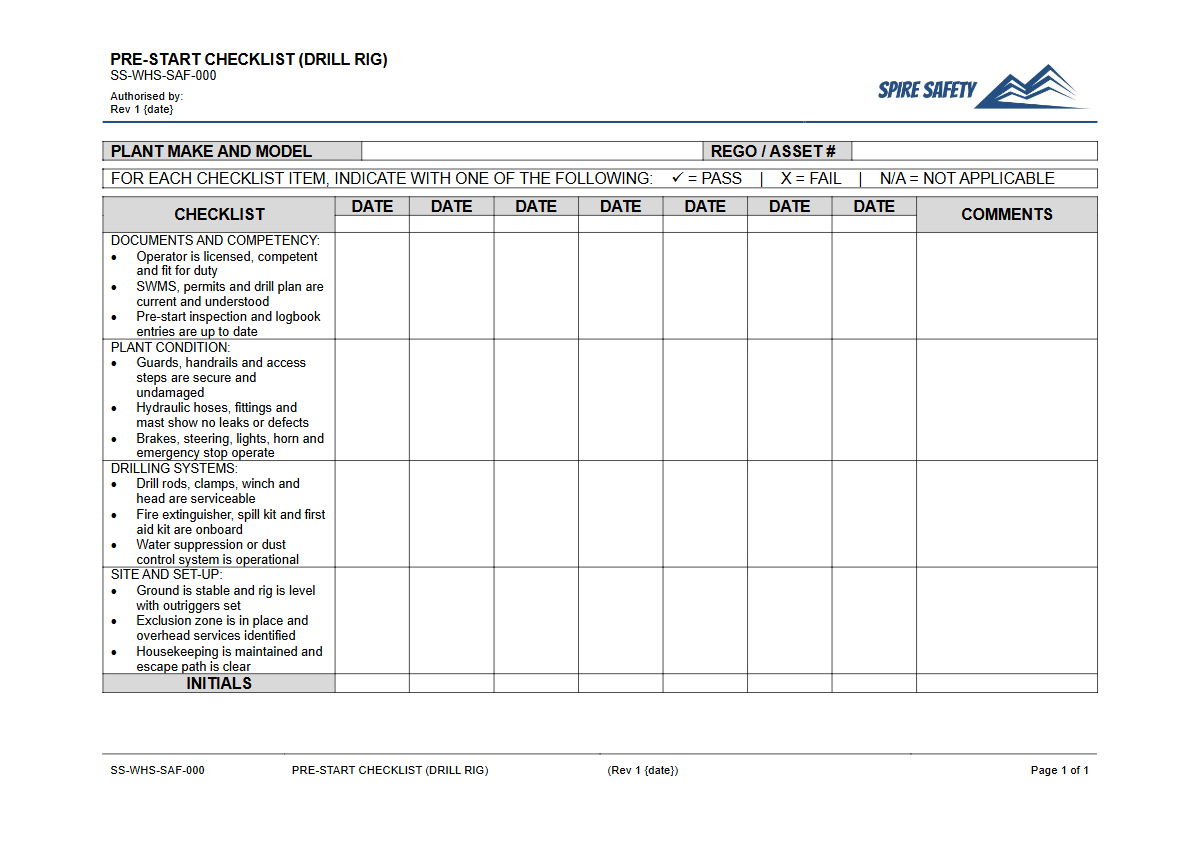
Purpose of the Free Pre-Start Checklist (Drill Rig) Template
Operating a drill rig involves significant risks, from mechanical failure and hydraulic leaks to structural collapse and entanglement. A systematic pre-start inspection is a critical control measure to ensure the equipment is safe and fit for purpose before work begins.
This Free Pre-Start Checklist (Drill Rig) Template provides a structured format for operators to meticulously inspect the machinery, identify potential defects, and prevent incidents. Regular checks help maintain the rig's integrity, protect the operator and surrounding workers, and form a key part of your preventative maintenance program.
Using a formal checklist helps document due diligence and moves beyond informal, ad-hoc inspections.
Formalising your pre-start process is a foundational step in managing plant safety. The checklist prompts a review of critical safety components, ensuring nothing is overlooked.
For a deeper look at documenting high-risk tasks associated with drilling, consider our Free Hammer Drill SWMS template as a complementary resource.
Video walkthrough
How to use the Free Pre-Start Checklist (Drill Rig) Template
This template is provided in both DOCX and PDF formats for your convenience. To effectively implement it within your organisation, follow these steps:
- Download the DOCX file.
- Customise the document by adding your company logo and specific site details.
- Critically review and adapt the checklist items to suit the exact make and model of the drill rigs used in your operations. Add, remove, or modify checks for components like hydraulic systems, guards, emergency stops, drill bits, stabilisers, and control systems.
- Save the customised document as your new internal template.
- Train all operators on how to use the checklist correctly, explaining the importance of each check and the procedure for reporting defects.
Important: This is a template, not a finished document. It is essential to customise it to your specific drill rig models, site conditions, and operational risks.
We've provided a solid foundation, but you must adapt it to reflect your unique work environment and legal obligations.
Key Checks for a Drill Rig
While your customised checklist will be more detailed, it should always cover these core areas:
- Emergency Equipment: Verify that emergency stops, fire extinguishers, and first aid kits are present, accessible, and functional.
- Structural Integrity: Inspect the mast, frame, and other structural components for cracks, damage, or excessive wear.
- Hydraulic and Pneumatic Systems: Check hoses, fittings, and cylinders for leaks, damage, or signs of deterioration.
- Guarding: Ensure all guards and safety interlocks for rotating parts and other hazards are in place and secure.
- Drill Components: Inspect the drill string, rods, and bits for wear, damage, or defects.
- Controls and Instruments: Test all operating controls, gauges, and warning devices to ensure they are functioning correctly.
- Stabilisers: Check that stabilisers or levelling jacks operate correctly and can support the rig securely.
To reinforce the importance of these inspections with your team, our Pre-Start Checks and Plant Maintenance Toolbox Talk provides a ready-made training session to improve understanding and engagement.
When to use it
A drill rig pre-start checklist should be completed at the beginning of every shift or before the equipment is used for the first time on any given day. It should also be used after scheduled maintenance, following a repair, or before the rig is operated after being moved to a new location on site.
This frequency ensures that any issues that may have developed overnight or during transport are identified before the rig becomes operational. Consistent use helps build a history of the machine's condition, which is invaluable for maintenance planning and demonstrating a proactive approach to safety management.
Documented checks are a vital part of your safety records and can be reviewed during internal or external audits. A robust inspection regime is a cornerstone of effective risk management, which can be assessed through services like WHS compliance auditing.
Who should use it
The pre-start checklist must be completed by a trained and competent operator who is familiar with the specific drill rig they are inspecting. Competency means the person has the knowledge and skill to identify faults, understand the associated risks, and know the correct procedure for reporting them.
Supervisors should periodically review completed checklists to verify that inspections are being done thoroughly and that any reported defects are being addressed in a timely manner. Maintenance personnel will also use the information from these checklists to schedule repairs and preventative work.
Ensuring operators are competent is a primary duty for any business. You can formalise this process using resources like our Free Drill Press VOC (Verification of Competency) Template to assess and record worker capabilities.
This checklist is one component of a comprehensive approach to safety, which should also include documented safe work procedures. You can create these using a Drill SOP (Safe Operating Procedure) to outline the approved method for operating the equipment.
This pre-start checklist is a practical tool that fits into broader WHS management systems, helping your organisation meet its safety obligations. Find more helpful documents like this one in our extensive free WHS resources library.
Common mistakes
Common mistakes to avoid
- Treating the checklist as a 'tick and flick' exercise without proper physical inspection.
- Failing to immediately report, quarantine, and follow up on identified defects.
- Using a generic checklist that is not specific to the drill rig's make, model, and attachments.
- Not adequately training operators on how to conduct a thorough inspection and what to look for.
Legal references
Legal considerations
The following legal requirements may be relevant to this type of work.
- Work Health and Safety Act (Harmonised) — Provides the primary duties for protecting workers and other people from work health and safety risks.
- Work Health and Safety Regulations (Harmonised) — Sets out requirements supporting the management of workplace hazards and risks.
The following codes may be relevant to this type of work.
- Managing WHS Risks Code of Practice — Provides practical guidance on identifying hazards, assessing risks and applying effective controls.
- Work Health and Safety Consultation, Cooperation and Coordination Code of Practice — Provides practical guidance on consulting workers and coordinating with other duty holders.
- Managing the Work Environment and Facilities Code of Practice — Provides practical guidance on safe work environments, workplace facilities and related controls.
Did you know
Hidden Dangers
A significant portion of plant-related incidents can be traced back to mechanical failure or inadequate maintenance, issues often identified during a thorough pre-start check.
Drilling Forces
Modern drill rigs generate immense torque and hydraulic pressure. A small, undetected fault in a hose or fitting can lead to a catastrophic failure under load, highlighting the importance of daily inspections.
FAQ
Frequently asked questions
01What should a drill rig pre-start checklist include?
02How often should a drill rig pre-start inspection be done?
03Who is responsible for completing the drill rig checklist?
04Is this drill rig checklist template enough for WHS compliance?
Share this resource
Free Pre-Start Checklist (Drill Rig) Template
Browse Categories
How To Use It
- 1Download and open in Word or PDF.
- 2Replace the placeholders with your business details.
- 3Get it reviewed by a WHS specialist before rollout.
Need it customised?
Our WHS consultants can adapt this template to your site, run a gap analysis, or audit what you already have in place.
Book a Free Consultation WHS consulting servicesor call 1300 156 382