
Free Pre-Start Checklist (Dragline) Template
Streamline your equipment inspections with our free Pre-Start Checklist (Dragline) Template. Aligned with Australian WHS standards.
Free Pre-Start Checklist (Dragline) Template
DOCX • 125 KB + PDF
Updated Oct 2026
No signup required
Purpose of the Free Pre-Start Checklist (Dragline) Template
A dragline is a colossal piece of machinery, integral to many large-scale mining and civil construction operations. Its sheer size and complexity introduce significant risks if not managed correctly.
This is where a structured inspection process becomes critical. Our Free Pre-Start Checklist (Dragline) Template provides a systematic framework for operators to conduct daily inspections, helping to identify potential faults, damage, or wear and tear before they escalate into hazardous situations or costly breakdowns.
Regular use of this checklist promotes a proactive safety culture, ensures the equipment remains in safe working order, and provides documented evidence of due diligence.
Integrating this type of procedural document is a foundational element of effective WHS management systems. It helps a Person Conducting a Business or Undertaking (PCBU) meet their primary duty of care by taking reasonably practicable steps to ensure the safety of workers operating heavy machinery.
Video walkthrough
How to Use the Free Pre-Start Checklist (Dragline) Template
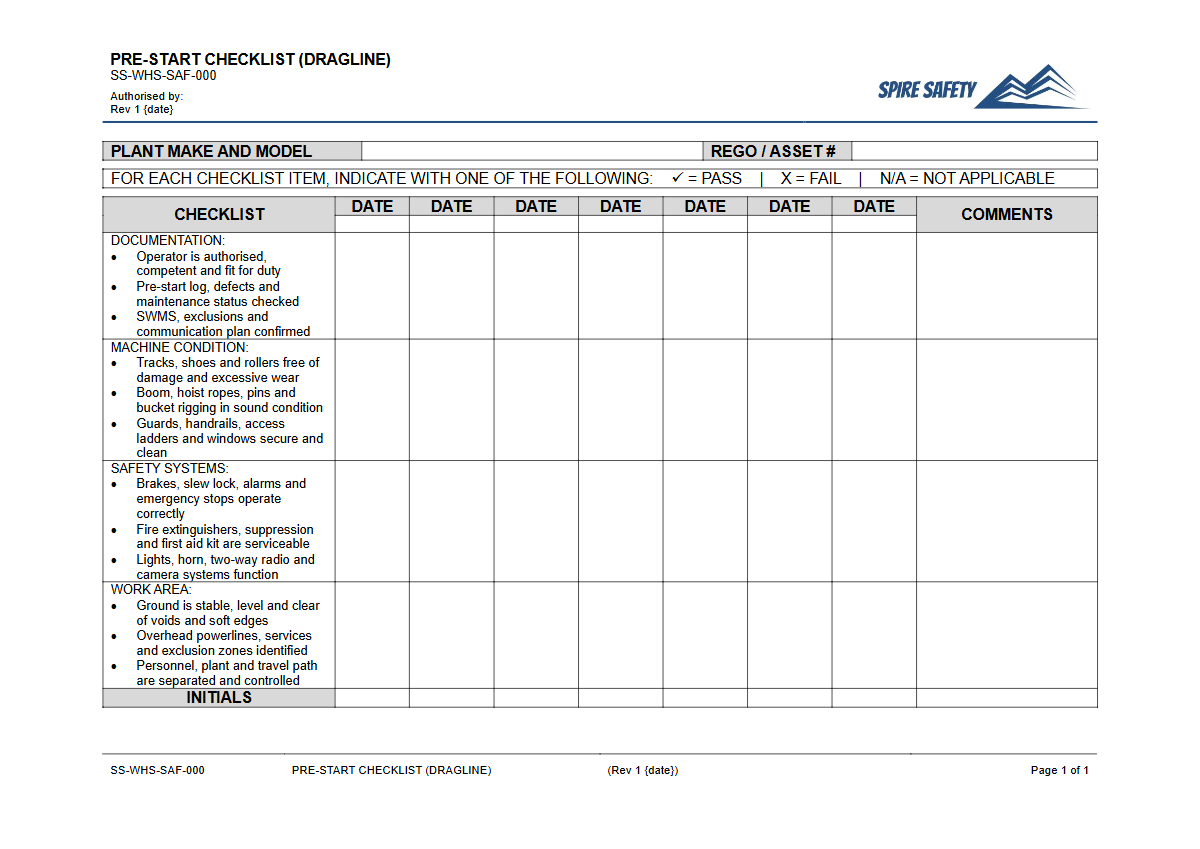
Using this template effectively involves more than just ticking boxes. This document is a starting point, providing a comprehensive list of common inspection points for a dragline, including the boom and mast, rigging, bucket, hoist and drag ropes, and operator's cabin.
The download includes both a DOCX file for easy editing and a PDF for quick printing.
Important: This is a template, not a finished document. You must customise it to suit your specific workplace, dragline model, operating conditions, and any state or territory-specific regulations.
We recommend consulting with operators, maintenance staff, and safety professionals during this customisation process. Once finalised, ensure all operators are trained on its correct use.
To support this training, consider using our Pre-Start Checks and Plant Maintenance Toolbox Talk Template to formally communicate procedures and expectations.
When to Use It
A pre-start checklist for a dragline should be completed before the beginning of every shift. This high frequency is essential due to the immense forces the machine endures during operation.
A component that was safe at the end of the last shift may have developed a fault or been damaged since. The check should be conducted by the operator in a well-lit area before any operational tasks begin.
It should also be performed after any significant maintenance event or if the machine has been idle for an extended period to ensure it's safe to return to service. Regular and consistent use is key to preventing incidents.
The completed checklists serve as valuable records. They can be reviewed during incident investigations, performance analyses, and formal WHS compliance auditing to verify that safety procedures are being consistently followed.
These records demonstrate a commitment to plant safety and maintenance protocols.
Who Should Use It
The primary user of the dragline pre-start checklist is the dragline operator. They must be deemed competent and have received specific training not only on operating the machinery but also on how to conduct a thorough inspection.
Their hands-on experience and direct responsibility for the equipment make them the first line of defence against mechanical failure. Supervisors or site managers also have a role; they are responsible for ensuring the checks are being completed correctly and for reviewing the completed forms.
They must also take prompt action on any reported defects, implementing tag-out procedures and coordinating with maintenance personnel.
Maintenance teams will use the information from completed checklists to schedule repairs and preventative maintenance, addressing issues before they become critical failures. The information gathered can feed into a broader plant maintenance program.
These documented checks are also a component of a worker's responsibilities, just as a Safe Work Method Statement (SWMS) for Concrete Truck Operation is for a concrete truck driver. Both documents formalise safety-critical tasks for a specific role and piece of plant.
Ensuring the operator is competent is a separate but related process. While this checklist confirms the machine's readiness, other documents are needed to confirm the operator's readiness.
An example for a different tool that follows a similar principle is our Verification of Competency (Pipe Threader) Template, which formalises the assessment of an individual's skill. Similar verification should be in place for dragline operators.
If you need other templates, you can browse our complete free WHS resources library for more tools.
Common mistakes
Common mistakes to avoid
- Operator 'pencil-whipping' the checklist without physically inspecting the items.
- Failing to remove the dragline from service immediately after a serious defect is found.
- Using a generic checklist that hasn't been customised for the specific model and site conditions.
- Poor record-keeping or failing to have supervisors review completed checklists and action defects.
Legal references
Legal considerations
The following legal requirements may be relevant to this type of work.
- Work Health and Safety Act (Harmonised) — Provides the primary duties for protecting workers and other people from work health and safety risks.
- Work Health and Safety Regulations (Harmonised) — Sets out requirements supporting the management of workplace hazards and risks.
The following codes may be relevant to this type of work.
- Managing WHS Risks Code of Practice — Provides practical guidance on identifying hazards, assessing risks and applying effective controls.
- Work Health and Safety Consultation, Cooperation and Coordination Code of Practice — Provides practical guidance on consulting workers and coordinating with other duty holders.
- Managing the Work Environment and Facilities Code of Practice — Provides practical guidance on safe work environments, workplace facilities and related controls.
Did you know
Walking Giants
Walking draglines are some of the largest land-based machines ever built. They don't have wheels; instead, they use a pair of large 'feet' to lift and propel themselves forward, one step at a time.
Bucket Capacity
The bucket of a large dragline can be as big as a small room and can scoop up over 100 cubic metres of material in a single pass, weighing more than 150 tonnes.
FAQ
Frequently asked questions
01What is the primary purpose of a dragline pre-start checklist?
02How often should a dragline pre-start inspection be conducted?
03What should an operator do if they find a defect during a pre-start check?
04Is this dragline checklist compliant with Australian WHS laws?
Share this resource
Free Pre-Start Checklist (Dragline) Template
Browse Categories
How To Use It
- 1Download and open in Word or PDF.
- 2Replace the placeholders with your business details.
- 3Get it reviewed by a WHS specialist before rollout.
Need it customised?
Our WHS consultants can adapt this template to your site, run a gap analysis, or audit what you already have in place.
Book a Free Consultation WHS consulting servicesor call 1300 156 382