
Free Pre-Start Checklist (Dough Mixer) Template
Download our Free Pre-Start Checklist (Dough Mixer) Template.
Free Pre-Start Checklist (Dough Mixer) Template
DOCX • 125 KB + PDF
Updated Oct 2026
No signup required
Purpose of the Free Pre-Start Checklist (Dough Mixer) Template
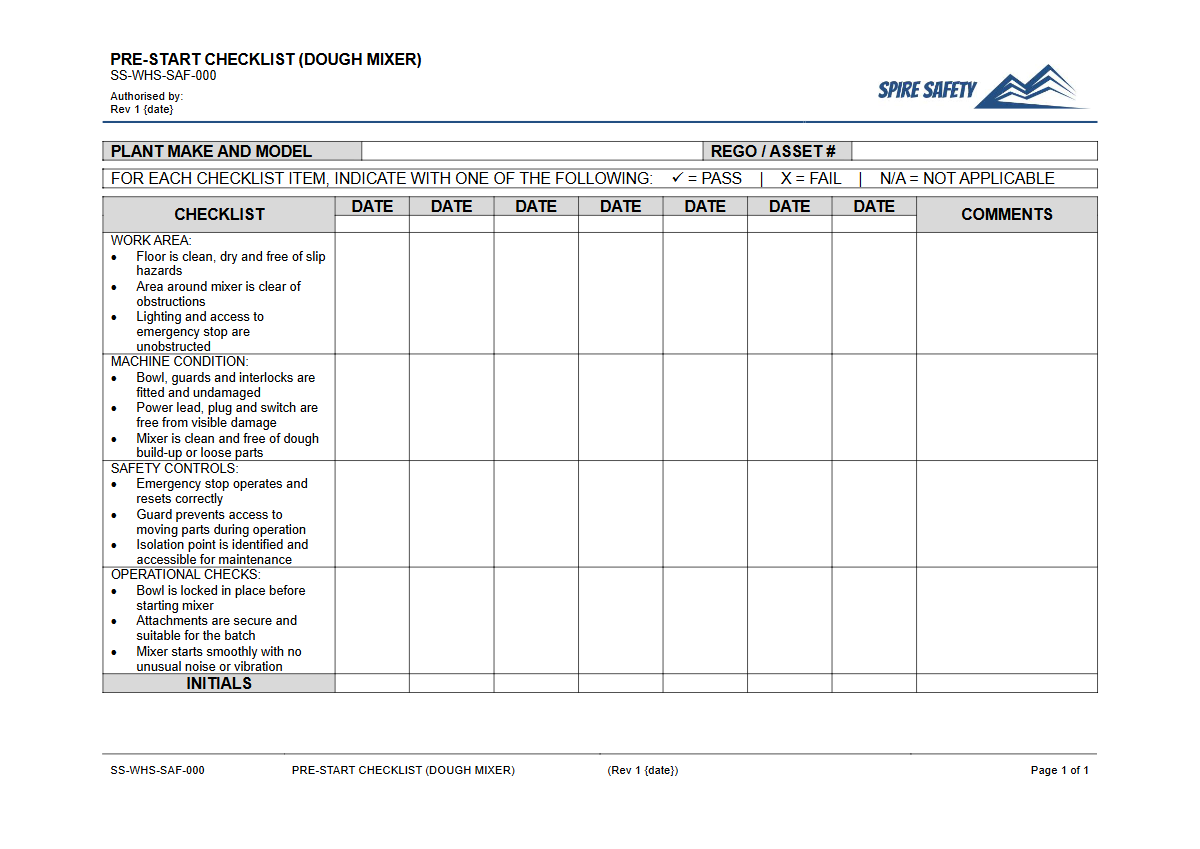
A Free Pre-Start Checklist (Dough Mixer) Template provides a systematic framework for ensuring commercial dough mixers are safe to operate before each use. Found in bakeries, restaurants, and food production facilities, these powerful machines pose significant risks if not properly maintained and inspected.
The primary purpose of this checklist is to guide operators through a series of critical checks, helping to identify mechanical faults, electrical hazards, or hygiene issues before they can cause injury or contamination. By formalising this process, organisations can minimise the risk of incidents, particularly serious injuries from entanglement in moving parts.
Implementing regular pre-start checks demonstrates a commitment to proactive risk management. It creates a documented record that the equipment was in a safe condition at the beginning of a shift, which is a key component of meeting WHS obligations for plant and equipment safety.
To further embed this practice, you can use our Pre-Start Checks and Plant Maintenance Toolbox Talk Template to train your team on the importance of these daily inspections.
Video walkthrough
How to use the Free Pre-Start Checklist (Dough Mixer) Template
This template is designed as a structured starting point. To implement it effectively in your workplace, follow these steps:
- Download: Choose between the DOCX file for easy editing or the PDF for immediate printing.
- Customise: This is the most important step. Review the checklist against your specific dough mixer's make, model, and the manufacturer’s operating manual. Add, remove, or adjust checks to reflect its unique features, such as specific guards, bowl clamps, emergency stop buttons, and cleaning requirements.
- Train: Ensure all operators are trained not only on how to use the mixer safely but also on how to complete the pre-start checklist accurately. They must understand what they are checking for and why it is important.
- Implement: Integrate the checklist into your daily opening procedures. Store completed checklists in a designated location for review by supervisors.
- Review: Periodically review the checklist's effectiveness and update it as necessary, especially if new hazards are identified or after an incident.
Note: It is crucial that you customise this template. We have provided a comprehensive starting point aligned with Australian WHS principles, but you must adapt it to the specific plant, procedures, and risks present in your workplace to ensure it is effective.
While this checklist is for dough mixers, the principle of pre-start inspections applies to all powered equipment. For other common kitchen machinery, a dedicated checklist like our free Pre-Start Checklist (Coffee Grinder) Template should be used.
Integrating these documents is a foundational part of building robust WHS management systems that protect your workers.
When to use it
The Pre-Start Checklist for a dough mixer should be completed before the first use of the machine each day or at the beginning of every shift in a multi-shift operation. This frequency ensures that the equipment's condition is verified before it is put into production, catching any damage or faults that may have occurred overnight or during a previous shift.
The completed checklist should be signed and dated by the operator, creating a clear and auditable record of daily safety compliance. For high-risk machinery, this simple habit is a critical control measure.
This daily check complements, but does not replace, the need for operators to hold the right qualifications, which can be confirmed using a document like a Verification of Competency (Mortar Mixer) Template for similar equipment.
Who should use it
This checklist is intended for use by trained and authorised operators of the dough mixer. This includes bakers, chefs, kitchen hands, and production staff who have received specific training on the safe operation of the machine.
Supervisors or managers also have a role; they should periodically review completed checklists to ensure they are being filled out correctly and to follow up on any reported defects or maintenance requirements promptly. A fault identified on a checklist that is not actioned negates the value of the process.
For other types of mixing equipment with different risk profiles, a different checklist may be needed, such as the Free Pre-Start Checklist (Agitator) Template for industrial agitators.
Using this checklist consistently helps embed safe work practices into your organisation's culture. It forms a key part of your operational risk management and can be an important piece of evidence during safety reviews or WHS compliance auditing activities, demonstrating that proactive steps are being taken to ensure plant safety.
Common mistakes
Common mistakes to avoid
- Using a generic checklist without customising it for the specific make and model of the dough mixer.
- Operators 'pencil-whipping' the form by ticking boxes without physically performing each check.
- Failing to take immediate action when a fault or issue is identified on the checklist, such as not isolating the faulty equipment.
- Not providing adequate training to staff on what each check involves and why it is important for their safety.
Legal references
Legal considerations
The following legal requirements may be relevant to this type of work.
- Work Health and Safety Act (Harmonised) — Provides the primary duties for protecting workers and other people from work health and safety risks.
- Work Health and Safety Regulations (Harmonised) — Sets out requirements supporting the management of workplace hazards and risks.
The following codes may be relevant to this type of work.
- Managing WHS Risks Code of Practice — Provides practical guidance on identifying hazards, assessing risks and applying effective controls.
- Work Health and Safety Consultation, Cooperation and Coordination Code of Practice — Provides practical guidance on consulting workers and coordinating with other duty holders.
- Managing the Work Environment and Facilities Code of Practice — Provides practical guidance on safe work environments, workplace facilities and related controls.
Did you know
Entanglement Hazard
The rotating action of a dough mixer's hook or paddle is a significant entanglement hazard. Loose clothing, hair, and jewellery can be caught in seconds, leading to severe or fatal injuries.
Food Safety Link
Pre-start checks aren't just for mechanical safety; they also play a vital role in food safety. Verifying the cleanliness of food contact surfaces and checking for damage helps prevent cross-contamination and ensures product integrity.
FAQ
Frequently asked questions
01What are the most common hazards with dough mixers?
02Is using this dough mixer checklist a legal requirement?
03How often should a dough mixer be professionally serviced?
04Can I use this template for other kitchen equipment?
Share this resource
Free Pre-Start Checklist (Dough Mixer) Template
Browse Categories
How To Use It
- 1Download and open in Word or PDF.
- 2Replace the placeholders with your business details.
- 3Get it reviewed by a WHS specialist before rollout.
Need it customised?
Our WHS consultants can adapt this template to your site, run a gap analysis, or audit what you already have in place.
Book a Free Consultation WHS consulting servicesor call 1300 156 382