
Free Pre-Start Checklist (Fan Coil Unit) Template
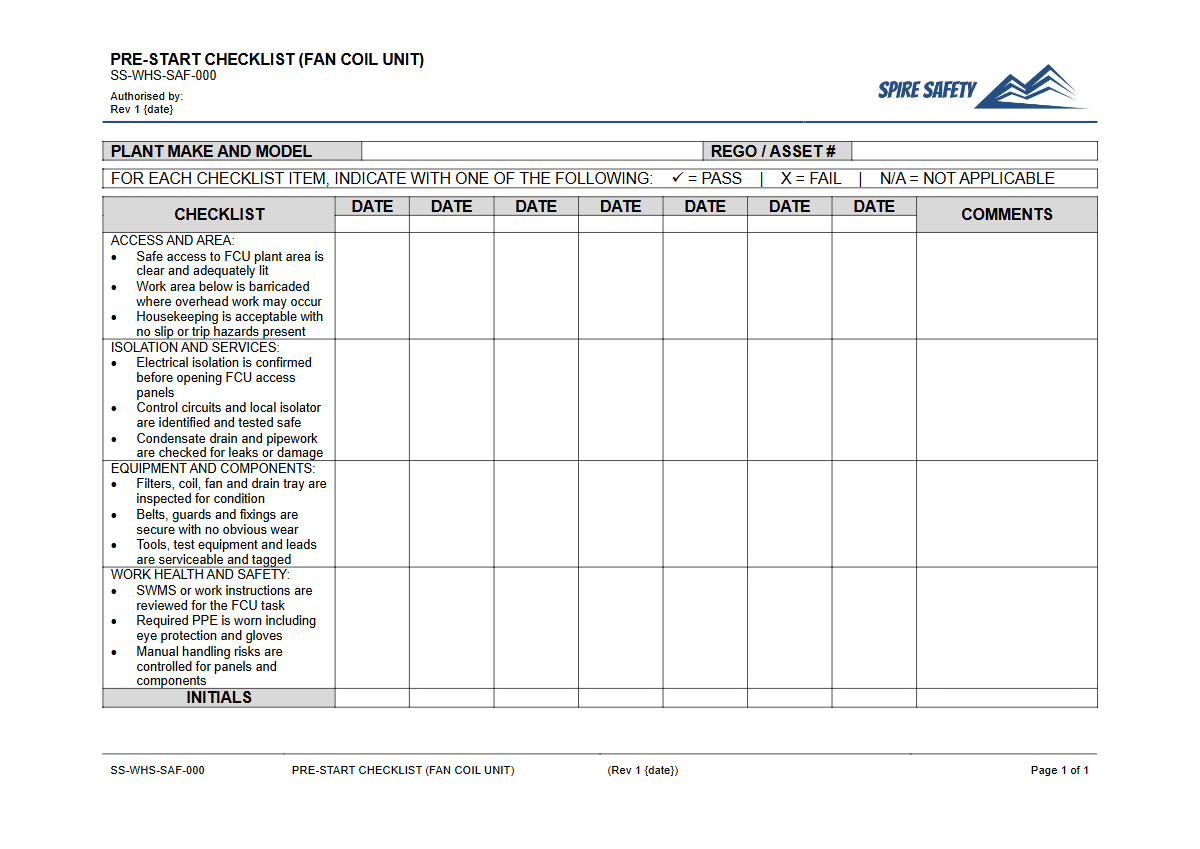
Formalise equipment inspections with our free Pre-Start Checklist (Fan Coil Unit) Template. This DOCX & PDF resource helps identify hazards before use.
Free Pre-Start Checklist (Fan Coil Unit) Template
DOCX • 125 KB + PDF
Updated Oct 2026
No signup required
Purpose of the Free Pre-Start Checklist (Fan Coil Unit) Template
Regularly inspecting HVAC equipment is a critical component of workplace safety and operational efficiency. This Free Pre-Start Checklist (Fan Coil Unit) Template provides a structured framework for conducting and recording pre-operational checks on fan coil units (FCUs).
Using this template helps organisations formalise their inspection process, ensuring that potential hazards such as electrical faults, leaks, or blocked filters are identified and addressed before they lead to equipment failure, property damage, or harm to personnel. Consistent use of pre-start checklists is a practical way to meet Work Health and Safety (WHS) obligations by demonstrating proactive risk management.
Integrating such procedures is a cornerstone of an effective WHS management system, helping to cultivate a safety-conscious culture where equipment is maintained in a safe working condition.
Beyond basic compliance, this checklist encourages a systematic approach to maintenance. By identifying minor issues early, you can prevent them from escalating into costly repairs and unexpected downtime.
It also ensures the unit operates efficiently, maintaining air quality and thermal comfort for building occupants. For reinforcing these principles with your team, our Pre-Start Checks and Plant Maintenance Toolbox Talk can be a valuable supporting resource.
Video walkthrough
How to use the Free Pre-Start Checklist (Fan Coil Unit) Template
To effectively implement this checklist in your workplace, follow these steps:
- Download and Customise: Download the template in your preferred format (DOCX or PDF). The DOCX version is fully editable, allowing you to tailor it to your specific needs.
- Adapt to Your Specifics: It is crucial that you customise this document for your workplace. We are not familiar with your operational specifics, so you must add details relevant to the make, model, and location of your fan coil units. Include site-specific emergency contacts, lockout/tagout procedures, and any unique environmental hazards.
- Train Personnel: Ensure all operators and maintenance staff who will use the checklist are trained on how to conduct each check properly. They must understand what they are looking for and the procedure for reporting any faults or abnormalities they find.
- Implement and Monitor: Integrate the checklist into your daily operational procedures. Supervisors should periodically verify that checks are being completed accurately and that corrective actions are being logged and resolved in a timely manner.
If you require assistance in adapting this template or integrating it into your broader safety framework, consider seeking professional WHS consulting to ensure it aligns perfectly with your operational risks and legal duties.
When to use it
A fan coil unit pre-start checklist should be completed before the commencement of each shift or before the first use of the day. It should also be used after any significant maintenance or repair work has been performed on the unit to verify it has been returned to a safe operational state.
Establishing a consistent schedule for these checks is key to their effectiveness. Regularity ensures that gradual wear and tear or developing faults are caught early.
Furthermore, completed checklists serve as valuable records during safety inspections or WHS compliance audits, providing documented evidence of your organisation's commitment to plant and equipment safety.
Who should use it
This checklist is designed for use by competent individuals who have been trained and authorised to operate or maintain fan coil units. This typically includes HVAC technicians, qualified maintenance personnel, or building facility operators.
The person performing the check should have sufficient knowledge to identify the hazards listed and understand the unit's normal operating condition. While operators perform the checks, supervisors and safety managers have a responsibility to review the completed forms, ensure any identified issues are actioned, and confirm that the process is being followed correctly.
You can browse our free WHS resources library for other templates that support competency and safety processes in your workplace.
Common mistakes
Common mistakes to avoid
- Completing the checklist from memory without physically inspecting the unit ('pencil-whipping').
- Using a generic template without customising it for the specific FCU model and its operating environment.
- Failing to formally report and take corrective action on defects identified during the inspection.
- Neglecting to train personnel on what each checkpoint means and how to identify a non-conformance.
Legal references
Legal considerations
The following legal requirements may be relevant to this type of work.
- Work Health and Safety Act (Harmonised) — Provides the primary duties for protecting workers and other people from work health and safety risks.
- Work Health and Safety Regulations (Harmonised) — Sets out requirements supporting the management of workplace hazards and risks.
The following codes may be relevant to this type of work.
- Managing WHS Risks Code of Practice — Provides practical guidance on identifying hazards, assessing risks and applying effective controls.
- Work Health and Safety Consultation, Cooperation and Coordination Code of Practice — Provides practical guidance on consulting workers and coordinating with other duty holders.
- Managing the Work Environment and Facilities Code of Practice — Provides practical guidance on safe work environments, workplace facilities and related controls.
Did you know
Efficiency and Air Quality
A dirty or clogged filter in a fan coil unit can increase its energy consumption by up to 15% and significantly reduce indoor air quality by failing to capture dust, pollen, and other particulates.
Condensate Risks
The condensate drain pan in an FCU can become a breeding ground for mould and bacteria if not regularly inspected and cleaned. This can contribute to 'sick building syndrome' and pose a health risk to occupants.
FAQ
Frequently asked questions
01What specific hazards should a fan coil unit pre-start check look for?
02How often should a fan coil unit pre-start checklist be reviewed and updated?
03Is this fan coil unit pre-start checklist legally required in Australia?
04Can I use this template for other types of HVAC equipment?
Share this resource
Free Pre-Start Checklist (Fan Coil Unit) Template
Browse Categories
How To Use It
- 1Download and open in Word or PDF.
- 2Replace the placeholders with your business details.
- 3Get it reviewed by a WHS specialist before rollout.
Need it customised?
Our WHS consultants can adapt this template to your site, run a gap analysis, or audit what you already have in place.
Book a Free Consultation WHS consulting servicesor call 1300 156 382