
Free Pre-Start Checklist (Feed Wagon) Template
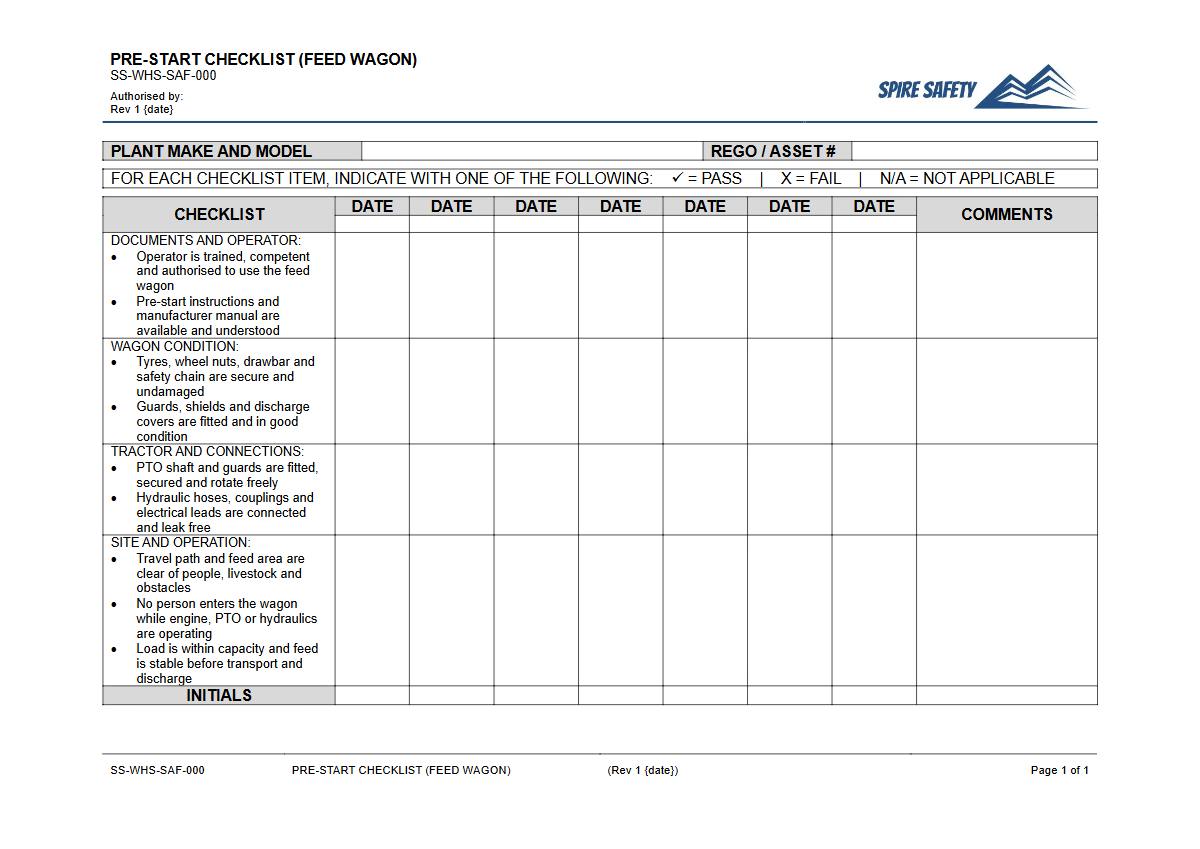
Download our free Pre-Start Checklist for Feed Wagons. This structured DOCX & PDF template helps formalise equipment inspections in Australian agriculture.
Free Pre-Start Checklist (Feed Wagon) Template
DOCX • 125 KB + PDF
Updated Oct 2026
No signup required
Purpose of the Free Pre-Start Checklist (Feed Wagon) Template
Operating agricultural machinery like feed wagons carries significant inherent risks. A systematic inspection process is essential for identifying and controlling hazards before they cause injury or damage.
Our free Pre-Start Checklist (Feed Wagon) Template provides a structured starting point for formalising these critical daily checks. Regular inspections help identify mechanical or structural defects, such as worn hydraulic hoses, damaged PTO guards, or faulty brakes, before they lead to failure during operation.
By documenting these checks, you create a clear record of due diligence and foster a proactive safety culture.
Using this template helps your organisation manage risks associated with mobile plant, including entanglement in rotating augers or PTO shafts, crushing incidents, and hydraulic system failures. Integrating such procedures is a fundamental component of effective WHS management systems, ensuring that safety is consistently addressed at an operational level.
Video walkthrough
How to use the Free Pre-Start Checklist (Feed Wagon) Template
This document is a template, not a finished product. To use it effectively, you must first download the DOCX or PDF file and then adapt it to your specific workplace.
The checklist items provided are general and should be reviewed and modified to reflect the unique makes, models, and configurations of the feed wagons used on your property. Pay close attention to any aftermarket modifications or specific attachments.
Once customised, operators must be trained on how to complete the checklist correctly. This training should cover not just how to tick the boxes, but how to properly inspect each component and what constitutes an acceptable condition versus a defect.
A great way to introduce or reinforce this process is by using a dedicated Pre-Start Checks and Plant Maintenance Toolbox Talk. Finally, establish a clear procedure for what operators should do when they find a fault, including reporting the issue and removing the equipment from service until it is repaired by a competent person.
Customisation is Essential
To be effective and assist in your safety compliance, this checklist must be customised. We don't know the specific hazards of your farm, the exact model of your equipment, or your local operating conditions.
You must adapt this template to align with your own risk assessments and the manufacturer's instructions.
When to use the Pre-Start Checklist
The pre-start checklist should be completed by the operator before the feed wagon is used for the first time on each shift or each day. This routine ensures that the equipment's condition is verified before it is subjected to the demands of operation.
Making this a non-negotiable part of the daily workflow helps catch developing issues early. For example, a small hydraulic leak or a slightly frayed hose identified during a pre-start check can be repaired before it becomes a catastrophic failure in the field, preventing costly downtime and potential injuries.
Who should use the Pre-Start Checklist
Only workers who are trained, authorised, and deemed competent to operate the feed wagon should be responsible for completing the pre-start checklist. Competency involves not only the skill to operate the machine but also the knowledge to identify faults and understand the associated risks.
Supervisors have a responsibility to ensure that these checks are being completed diligently and that any reported defects are addressed in a timely manner. The completed checklists should be reviewed and retained as part of your safety records, similar to how you would manage a Safe Work Method Statement (SWMS) for Concrete Truck Operations or other key safety documents.
Retaining completed checklists provides valuable data for your maintenance program and can be a crucial piece of evidence during safety reviews or WHS compliance audits. These records demonstrate that a systematic process for managing plant safety is in place and being followed. If you require assistance in developing customised safety documents or integrating them into your existing framework, engaging professional WHS consulting services can provide expert guidance.
Common mistakes
Common mistakes to avoid
- Performing a 'tick and flick' without physically inspecting the components.
- Failing to report minor defects that could escalate into major failures.
- Continuing to use equipment after a fault has been identified.
- Using a generic checklist that doesn't match the specific make and model of the feed wagon.
Legal references
Legal considerations
The following legal requirements may be relevant to this type of work.
- Work Health and Safety Act (Harmonised) — Provides the primary duties for protecting workers and other people from work health and safety risks.
- Work Health and Safety Regulations (Harmonised) — Sets out requirements supporting the management of workplace hazards and risks.
The following codes may be relevant to this type of work.
- Managing WHS Risks Code of Practice — Provides practical guidance on identifying hazards, assessing risks and applying effective controls.
- Work Health and Safety Consultation, Cooperation and Coordination Code of Practice — Provides practical guidance on consulting workers and coordinating with other duty holders.
- Managing the Work Environment and Facilities Code of Practice — Provides practical guidance on safe work environments, workplace facilities and related controls.
Did you know
PTO Shaft Dangers
A power take-off (PTO) shaft rotating at a standard 540 RPM can wrap an operator's limb around it more than seven times in a single second, making guards and safe distances absolutely critical.
Farm Machinery Statistics
According to Safe Work Australia, tractors, quad bikes, and other mobile farm machinery are involved in a significant number of on-farm fatalities and serious injuries each year.
FAQ
Frequently asked questions
01What should a feed wagon pre-start check include?
02How often should a feed wagon be inspected?
03Who is responsible for conducting feed wagon pre-start checks?
04Why can't I use this template without customising it?
Share this resource
Free Pre-Start Checklist (Feed Wagon) Template
Browse Categories
How To Use It
- 1Download and open in Word or PDF.
- 2Replace the placeholders with your business details.
- 3Get it reviewed by a WHS specialist before rollout.
Need it customised?
Our WHS consultants can adapt this template to your site, run a gap analysis, or audit what you already have in place.
Book a Free Consultation WHS consulting servicesor call 1300 156 382