
Free Pre-Start Checklist (Feeder) Template
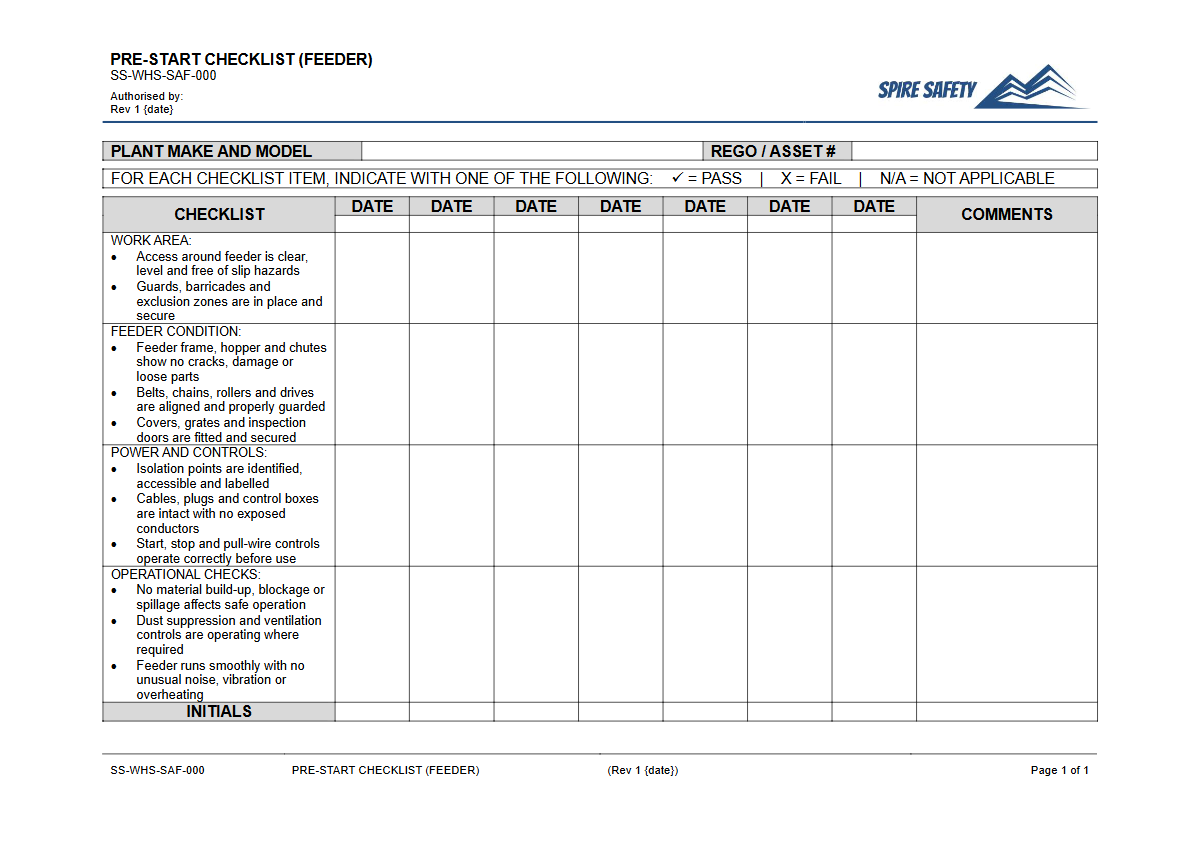
Download our free Pre-Start Checklist (Feeder) Template in Word and PDF. A structured starting point for formalising daily equipment safety checks.
Free Pre-Start Checklist (Feeder) Template
DOCX • 125 KB + PDF
Updated Oct 2026
No signup required
Purpose of the Free Pre-Start Checklist (Feeder) Template
Using a structured checklist before operating any machinery is a fundamental part of workplace safety. This free Pre-Start Checklist (Feeder) Template provides a formal method for operators to inspect equipment before use, ensuring it is safe to operate and identifying potential hazards or maintenance issues before they cause an incident or breakdown.
Systematically checking critical components like guards, emergency stops, controls, and structural integrity helps organisations fulfil their primary duty of care.
This proactive approach helps prevent injuries, minimises costly equipment downtime, and creates a documented record of safety diligence. Regular team discussions using a pre-start checks and plant maintenance toolbox talk can reinforce the importance of these inspections.
Video walkthrough
How to Use the Free Pre-Start Checklist (Feeder) Template
This template, available as a DOCX for easy editing and a PDF for immediate use, is designed as a starting point. The process for implementation is straightforward:
- Download: Get the template in your preferred format.
- Customise: Modify the checklist to match the specific make and model of your feeder, the materials it processes, and the unique risks in your workplace.
- Train: Ensure all operators are trained not only on how to use the feeder but also on how to properly complete the pre-start checklist and what to do if a fault is found.
- Implement: Integrate the checklist into your daily operational procedures. Establish a clear process for filing completed checks and reporting defects for repair.
Important: This document is a template and must be customised. It should be adapted to reflect the specific make, model, configuration, and operating environment of your feeder, along with your organisation’s procedures.
The content is based on common checks, but your own risk assessment must determine the final items included.
These documented checks form a vital part of a comprehensive WHS management system, providing evidence of your safety procedures and due diligence.
When to Use This Pre-Start Checklist
A feeder pre-start check should be completed by the operator before the start of every shift or before its first use of the day. If multiple operators use the same machine during a single shift, a handover inspection may also be necessary to ensure safety standards are maintained.
Consistency is key; making the check a non-negotiable first step of the job reinforces a positive safety culture.
Regular WHS compliance audits can help verify that these procedures are being consistently followed by all staff, ensuring the system remains effective over time.
Who Should Use This Checklist
The checklist should be used by trained and competent operators who have been authorised to use the feeder. Supervisors and managers should also be familiar with the checklist to review completed forms, ensure follow-up actions on identified faults are taken, and confirm that the inspection process is being carried out correctly.
Competency isn't just about knowing how to operate the machine, but also about understanding its hazards and the importance of each check. This principle of linking competency with specific equipment applies across different types of machinery, as seen in similar documents like our pre-start checklist for agitators.
By formalising your equipment inspections, you take a significant step towards a safer and more productive workplace. Explore our library of free WHS resources for more tools to support your safety management system.
Common mistakes
Common mistakes to avoid
- Failing to customise the generic template for the specific feeder model and workplace.
- Operators 'pencil-whipping' the form without physically conducting the checks.
- Not having a clear procedure for reporting, isolating, and repairing faulty equipment identified during a check.
- Inadequate training for operators on why the checks are important and how to perform them correctly.
Legal references
Legal considerations
The following legal requirements may be relevant to this type of work.
- Work Health and Safety Act (Harmonised) — Provides the primary duties for protecting workers and other people from work health and safety risks.
- Work Health and Safety Regulations (Harmonised) — Sets out requirements supporting the management of workplace hazards and risks.
The following codes may be relevant to this type of work.
- Managing WHS Risks Code of Practice — Provides practical guidance on identifying hazards, assessing risks and applying effective controls.
- Work Health and Safety Consultation, Cooperation and Coordination Code of Practice — Provides practical guidance on consulting workers and coordinating with other duty holders.
- Managing the Work Environment and Facilities Code of Practice — Provides practical guidance on safe work environments, workplace facilities and related controls.
Did you know
Duty of Care
Under Australian WHS law, the 'person conducting a business or undertaking' (PCBU) has the primary duty of care to ensure the health and safety of workers, which includes providing and maintaining safe plant and structures.
Leading Cause
According to Safe Work Australia, contact with machinery is one of the leading causes of serious workplace injuries. Thorough pre-start checks are a critical control measure to mitigate this risk.
FAQ
Frequently asked questions
01What is a feeder pre-start checklist?
02Why are pre-start checks for feeders important?
03How often should I conduct a feeder pre-start check?
04Is this template compliant with Australian WHS law?
Share this resource
Free Pre-Start Checklist (Feeder) Template
Browse Categories
How To Use It
- 1Download and open in Word or PDF.
- 2Replace the placeholders with your business details.
- 3Get it reviewed by a WHS specialist before rollout.
Need it customised?
Our WHS consultants can adapt this template to your site, run a gap analysis, or audit what you already have in place.
Book a Free Consultation WHS consulting servicesor call 1300 156 382