
Free Pre-Start Checklist (Feller Buncher) Template
Download our Free Pre-Start Checklist (Feller Buncher) Template.
Free Pre-Start Checklist (Feller Buncher) Template
DOCX • 125 KB + PDF
Updated Oct 2026
No signup required
Purpose of the Free Pre-Start Checklist (Feller Buncher) Template
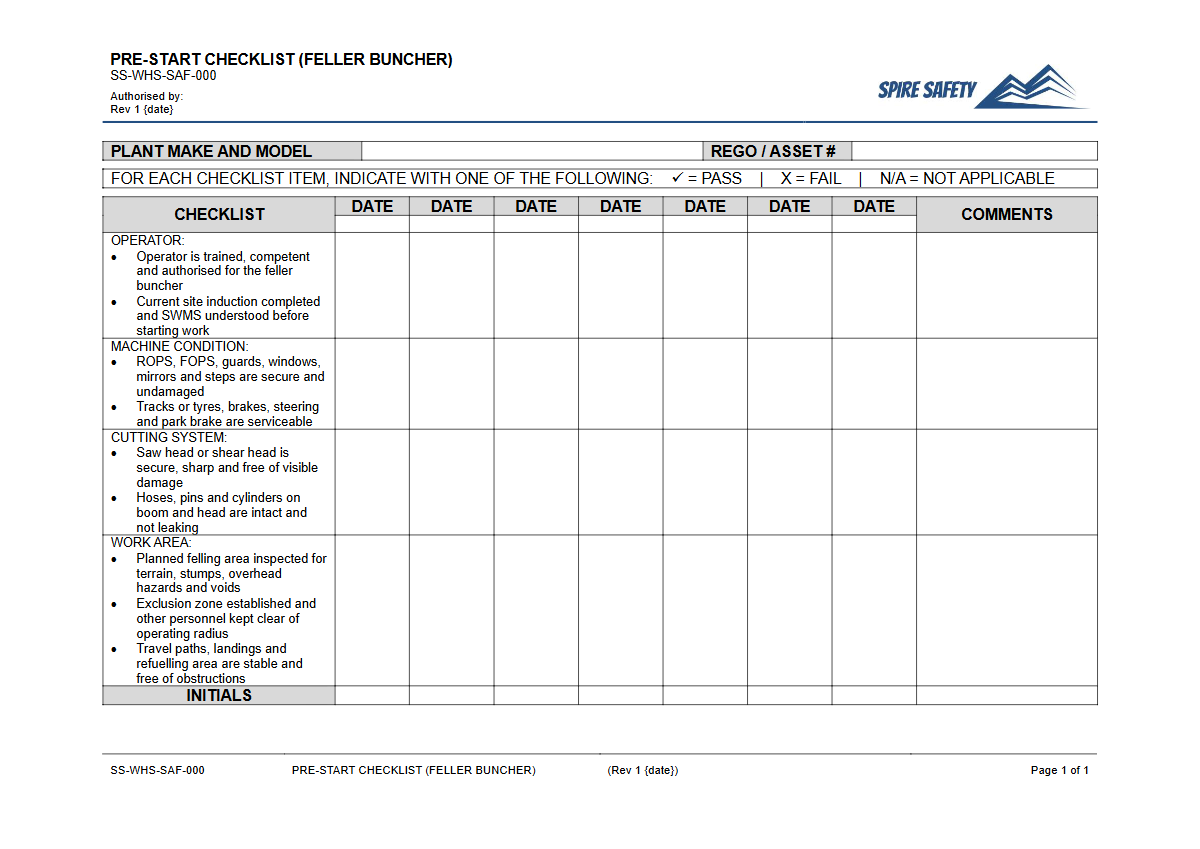
Operating a feller buncher involves significant risks associated with heavy machinery, hydraulic systems, and powerful cutting heads. This Free Pre-Start Checklist (Feller Buncher) Template provides a structured framework for operators to conduct thorough, documented inspections before starting work.
Its primary purpose is to systematically identify any mechanical defects, fluid leaks, structural damage, or safety system malfunctions that could lead to an incident, equipment failure, or injury. By formalising daily checks, your organisation can proactively manage risks, demonstrate due diligence, and foster a stronger safety culture around plant operation.
Formalising your approach to pre-start checks and plant maintenance is a critical step in fulfilling your duty of care.
Video walkthrough
How to use the Free Pre-Start Checklist (Feller Buncher) Template
This checklist is provided as a fully editable DOCX file and a print-ready PDF. After downloading, you can implement it immediately for paper-based checks or use the DOCX version as a base to integrate into your digital safety systems.
The template includes sections for recording operator details, machine identification, date, and a comprehensive list of inspection points covering the engine, hydraulics, cutting head, cabin, tracks or wheels, and emergency systems. There is also a sign-off area to confirm the machine is either fit for use or has been reported for maintenance.
IMPORTANT: This document is a template and must be customised to your specific workplace. You are responsible for adapting it to reflect the make, model, and configuration of your feller buncher(s), along with site-specific hazards and operational procedures.
We are not liable for any incidents arising from the use of this template without proper customisation. For best results, integrate this checklist as part of a comprehensive WHS management system.
When to use it
A feller buncher pre-start checklist should be completed by the operator at the beginning of every shift or before the machine is used for the first time each day. If operators change over mid-shift, the incoming operator should also conduct a check to verify the machine's condition.
Should a safety-critical defect be discovered, the check serves as the trigger point for taking the equipment out of service. The machine must be isolated, tagged out, and reported to a supervisor immediately.
It must not be used until a competent person has completed repairs and deemed it safe.
Who should use it
The primary user of this checklist is the trained and competent feller buncher operator. They have the hands-on knowledge to physically inspect the equipment and recognise deviations from safe operating condition.
Supervisors and WHS managers should also use the completed checklists as a tool for oversight. They can review the records to verify that inspections are being completed correctly, identify recurring mechanical issues, and ensure that faults are being addressed in a timely manner.
Ensuring operators are not just competent in operation but also in conducting these inspections is a key part of your safety obligations.
Integrating with Other Safety Documents
This pre-start checklist does not exist in isolation. It forms a crucial part of the plant's overall safety documentation, which should also include Safe Work Method Statements (SWMS) for felling operations, maintenance and service logs, risk assessments, and operator training records.
The data gathered from these checklists provides valuable input for your maintenance schedules and risk assessment reviews. The core principles of a pre-start check are universal across different types of machinery. For example, the principles are similar whether you're using this document or a pre-start checklist for a CNC router.
Record Keeping and Review
Maintaining a file of completed pre-start checklists is a vital WHS practice. These records demonstrate that your organisation is actively monitoring the condition of its plant and equipment, which can provide crucial evidence during WHS compliance audits or in the event of an incident investigation. They also create a historical log that can help mechanics and technicians diagnose recurring problems more effectively. Management should periodically review these logs to spot trends that may indicate a need for changes in maintenance strategy, operator training, or equipment replacement. You can explore more templates across various industries in our free WHS resources library to build out your safety systems.
Common mistakes
Common mistakes to avoid
- Pencil-whipping' the checklist without physically inspecting each item.
- Failing to customise the template for the specific feller buncher model and its attachments.
- Not having a clear 'tag-out' and reporting procedure for when defects are identified.
- Treating the checklist as a paperwork exercise instead of a critical safety function.
Legal references
Legal considerations
The following legal requirements may be relevant to this type of work.
- Work Health and Safety Act (Harmonised) — Provides the primary duties for protecting workers and other people from work health and safety risks.
- Work Health and Safety Regulations (Harmonised) — Sets out requirements supporting the management of workplace hazards and risks.
The following codes may be relevant to this type of work.
- Managing WHS Risks Code of Practice — Provides practical guidance on identifying hazards, assessing risks and applying effective controls.
- Work Health and Safety Consultation, Cooperation and Coordination Code of Practice — Provides practical guidance on consulting workers and coordinating with other duty holders.
- Managing the Work Environment and Facilities Code of Practice — Provides practical guidance on safe work environments, workplace facilities and related controls.
Did you know
Mechanical Harvesting
Feller bunchers revolutionised the forestry industry by allowing a single operator to fell and bunch multiple trees at once, significantly increasing efficiency and improving safety compared to traditional chainsaw methods.
The 'Hot Saw'
Many modern feller bunchers use a high-speed disc saw, often called a 'hot saw,' which can cut through large trees in seconds. This technology requires rigorous safety checks to ensure the saw teeth, guards, and hydraulic systems are in perfect working order.
FAQ
Frequently asked questions
01Is a pre-start checklist for a feller buncher legally required in Australia?
02What happens if a defect is found during a feller buncher pre-start check?
03How long should we keep completed feller buncher pre-start checklists?
04Can I use a digital app instead of this paper template?
Share this resource
Free Pre-Start Checklist (Feller Buncher) Template
Browse Categories
How To Use It
- 1Download and open in Word or PDF.
- 2Replace the placeholders with your business details.
- 3Get it reviewed by a WHS specialist before rollout.
Need it customised?
Our WHS consultants can adapt this template to your site, run a gap analysis, or audit what you already have in place.
Book a Free Consultation WHS consulting servicesor call 1300 156 382