
Free Pre-Start Checklist (Forwarder) Template
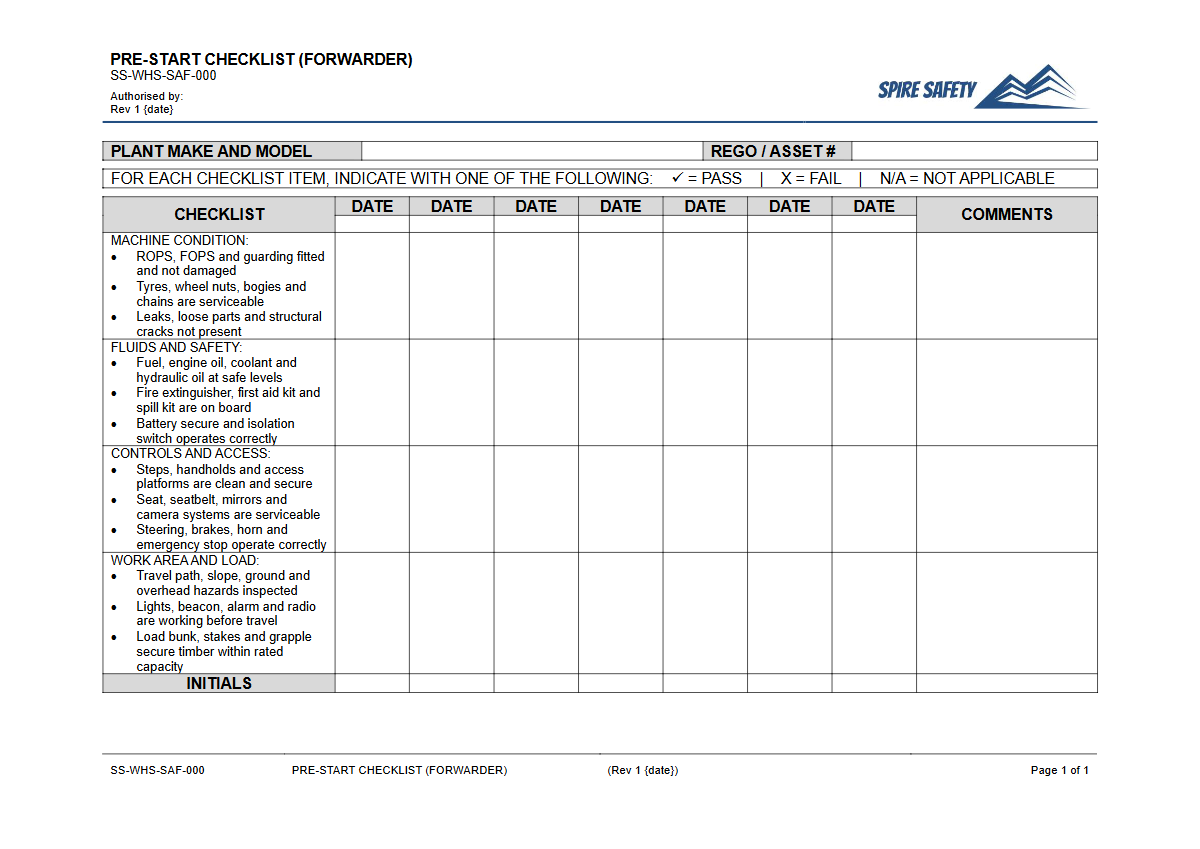
Formalise your forestry equipment safety checks with our free Pre-Start Checklist (Forwarder) Template.
Free Pre-Start Checklist (Forwarder) Template
DOCX • 125 KB + PDF
Updated Oct 2026
No signup required
Purpose of the Free Pre-Start Checklist (Forwarder) Template
A forwarder is a powerful and complex piece of mobile plant used in demanding forestry environments. Daily pre-start inspections are a fundamental safety requirement, helping to identify mechanical issues, fluid leaks, or damage before they lead to equipment failure, costly downtime, or a serious workplace incident.
Using a structured document like this Free Pre-Start Checklist (Forwarder) Template formalises this process, providing a consistent method for operators to conduct thorough checks.
This template serves as a tangible record that safety checks are being performed, which is a key component of demonstrating due diligence. Systematically documenting inspections supports a proactive safety culture by ensuring machinery is fit for use.
To further embed this practice, consider running regular training sessions using our Pre-Start Checks and Plant Maintenance Toolbox Talk, which helps reinforce the importance of these daily routines with your team.
Video walkthrough
How to use the Free Pre-Start Checklist (Forwarder) Template
Our template is provided as a starting point, available in both DOCX for easy editing and PDF for straightforward printing. The most critical step is to adapt the document to the specific context of your workplace.
Different makes and models of forwarders have unique features, and your site's specific hazards, terrain, and operational tasks must be considered during customisation.
Important: This is a template, not a finished document. We cannot know the specific hazards of your machinery, site, or operations.
You must customise this checklist by adding, removing, or modifying items to ensure it is comprehensive for your specific forwarder and its attachments. This process should be completed in consultation with operators and maintenance personnel.
A pre-start check is part of a broader safe system of work. It should integrate with other documents that define safe operation, similar to how a Safe Work Method Statement (SWMS) for Concrete Truck Operation outlines procedures for another type of heavy vehicle.
Ensure the checklist aligns with the manufacturer's recommendations and your organisation's overall risk management framework.
What Should a Forwarder Pre-Start Inspection Cover?
A comprehensive check should cover all critical safety and operational components of the machine. While you must customise the list, a good starting point includes:
- General & Exterior: Look for signs of damage, leaks, or loose parts. Check fluid levels (engine oil, hydraulic fluid, coolant, fuel).
- Cabin & Controls: Ensure the cabin is clean and free of debris. Test steering, brakes, lights, horn, and communication devices (e.g., two-way radio). Verify that all controls are clearly labelled and function correctly.
- Safety Systems: Check the condition and functionality of ROPS/FOPS structures, seatbelts, fire extinguishers, and first aid kits. Test all emergency stop mechanisms.
- Hydraulics & Attachments: Inspect all hydraulic hoses and connections for leaks or wear. Check the condition of the crane, boom, and grapple, ensuring all pins and guards are secure.
- Undercarriage & Wheels: For wheeled forwarders, check tyre pressure and condition, looking for cuts or damage. For tracked machines, inspect track tension and the condition of sprockets and rollers.
Regularly verifying that these checks are being completed correctly and that any identified issues are being resolved is a key part of an effective safety program. This verification can be integrated into your routine WHS compliance auditing activities.
When to use it
The pre-start checklist should be completed by the operator at the beginning of every shift, before the forwarder is first used. It should also be completed any time a new operator takes over the machine during a shift.
Additionally, a full inspection is recommended after any significant maintenance or repair work has been carried out to ensure the machine is safe to return to service.
Who should use it
The primary person responsible for completing the forwarder pre-start checklist is the machine operator. They have the most hands-on interaction with the equipment and are best placed to notice changes in its condition or performance.
Supervisors or safety officers should also periodically review completed checklists to identify trends, supports your compliance efforts, and follow up on any reported defects. Effective implementation requires clear roles and responsibilities, an area where expert WHS consulting can provide valuable guidance and structure for your organisation.
Common mistakes
Common mistakes to avoid
- Using a generic, non-customised checklist that misses model-specific components or attachments.
- "Pencil-whipping" or ticking boxes without physically verifying each item.
- Failing to formally report and track minor defects, which can escalate into major failures.
- Not providing operators with adequate training on what to look for during the inspection.
Legal references
Legal considerations
The following legal requirements may be relevant to this type of work.
- Work Health and Safety Act (Harmonised) — Provides the primary duties for protecting workers and other people from work health and safety risks.
- Work Health and Safety Regulations (Harmonised) — Sets out requirements supporting the management of workplace hazards and risks.
The following codes may be relevant to this type of work.
- Managing WHS Risks Code of Practice — Provides practical guidance on identifying hazards, assessing risks and applying effective controls.
- Work Health and Safety Consultation, Cooperation and Coordination Code of Practice — Provides practical guidance on consulting workers and coordinating with other duty holders.
- Managing the Work Environment and Facilities Code of Practice — Provides practical guidance on safe work environments, workplace facilities and related controls.
Did you know
Preventable Incidents
A significant number of incidents involving mobile plant like forwarders are linked to mechanical failure. Many of these failures are preventable through diligent pre-start inspections and routine maintenance.
Telematics Integration
Modern forwarders often include advanced telematics systems that can automatically log operator checks, flag faults in real-time, and track maintenance schedules, supplementing and enhancing the manual checklist process.
FAQ
Frequently asked questions
01Who is responsible for providing a forwarder pre-start checklist?
02What happens if a fault is found during the pre-start check?
03How long should we keep completed forwarder pre-start checklists?
04Is a digital checklist better than a paper one?
Share this resource
Free Pre-Start Checklist (Forwarder) Template
Browse Categories
How To Use It
- 1Download and open in Word or PDF.
- 2Replace the placeholders with your business details.
- 3Get it reviewed by a WHS specialist before rollout.
Need it customised?
Our WHS consultants can adapt this template to your site, run a gap analysis, or audit what you already have in place.
Book a Free Consultation WHS consulting servicesor call 1300 156 382