
Free Pre-Start Checklist (Freezer) Template
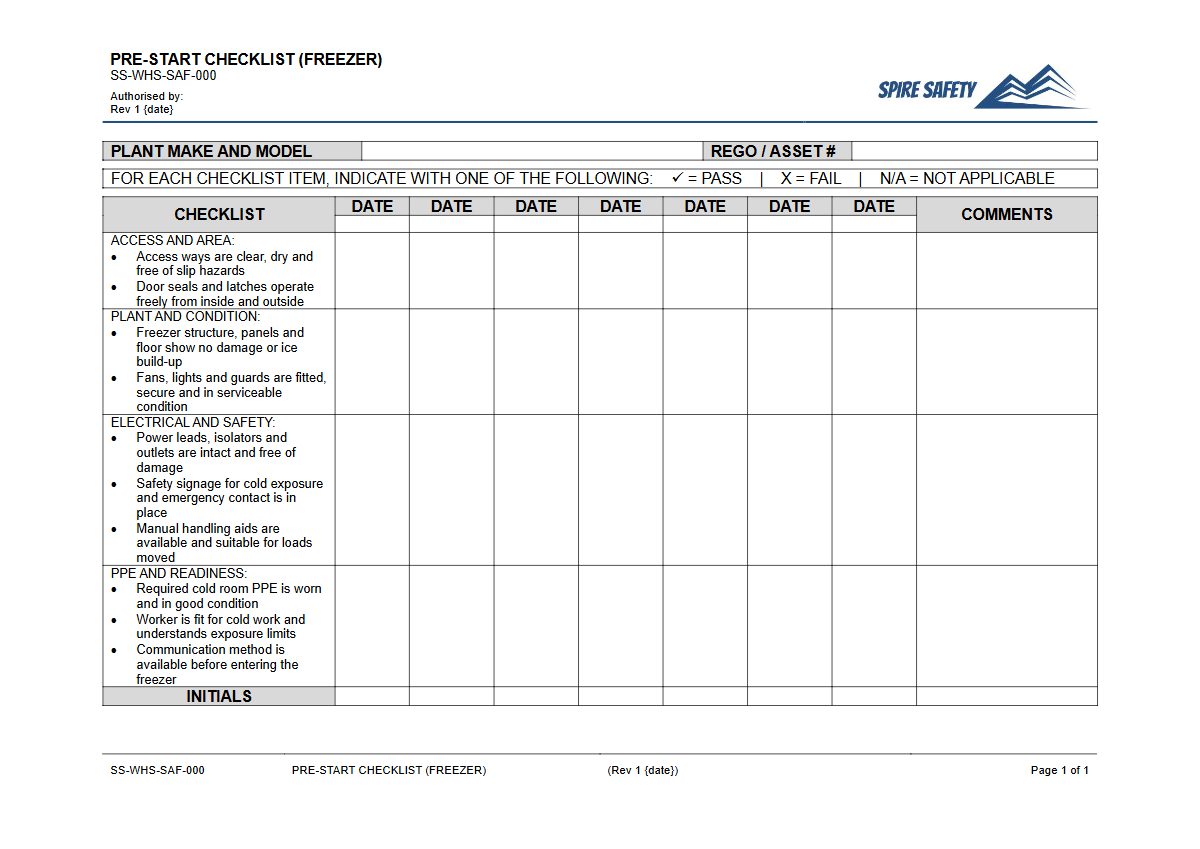
Download our Free Pre-Start Checklist (Freezer) Template to formalise daily inspections and manage WHS risks. Get your structured DOCX and PDF now.
Free Pre-Start Checklist (Freezer) Template
DOCX • 125 KB + PDF
Updated Oct 2026
No signup required
Purpose of the Free Pre-Start Checklist (Freezer) Template
Regularly inspecting commercial freezers is essential for maintaining a safe and efficient workplace. This Free Pre-Start Checklist (Freezer) Template provides a structured starting point for formalising daily inspections of both upright and walk-in freezer units.
Consistent checks help identify potential hazards before they lead to incidents, such as electrical faults from condensation, slip hazards from leaks or ice build-up, or ergonomic issues with faulty doors and seals. Furthermore, diligent pre-start checks ensure the freezer operates at the correct temperature, protecting valuable stock from spoilage and upholding food safety standards.
Using a documented checklist demonstrates a commitment to proactive risk management. It creates a clear record of inspections, which is a fundamental component of Australian WHS practice.
These daily checks are the first line of defence in preventing equipment failure, reducing costly downtime, and ensuring the safety of workers who interact with the appliance.
Video walkthrough
How to use the Free Pre-Start Checklist (Freezer) Template
This resource is available in a fully editable DOCX format and a print-ready PDF. The DOCX file allows for complete customisation to suit the specific makes and models of freezers in your workplace, as well as the unique operational risks associated with their location and use. Integrating this checklist into your daily procedures is a key step in building robust WHS management systems.
Important: This is a template, not a finished safety document. You must customise it to reflect the specific hazards and control measures relevant to your equipment and work environment.
We are not liable for any incidents that may occur from the use of this template. It is your responsibility as a PCBU (Person Conducting a Business or Undertaking) to ensure your safety documentation is adequate for your workplace.
When to use this Pre-Start Checklist
A freezer Pre-Start Checklist should be completed at the beginning of every shift or, at a minimum, once per day before the freezer is heavily used. The goal is to catch issues early.
This routine inspection is distinct from scheduled preventative maintenance, which should be carried out by qualified technicians according to the manufacturer's specifications. A great way to reinforce the importance of these daily checks is with a relevant pre-start checks and plant maintenance toolbox talk.
Who should use this checklist
This checklist is designed for use by any worker tasked with operating or interacting with commercial freezers. This includes kitchen staff, warehouse personnel, food preparation workers, and supervisors.
All personnel responsible for completing the checklist should be trained on the specific inspection points for the freezer model they are checking. Supervisors should periodically review completed checklists to ensure they are being filled out correctly and that any reported faults are being addressed promptly.
Regular WHS compliance audits can help verify that these procedures are being followed effectively.
While this checklist focuses on the equipment itself, associated tasks like stocking walk-in freezers also carry risks. Workers should be trained in safe manual handling techniques to prevent musculoskeletal injuries when lifting boxes and organising stock on shelves.
Similar systematic checks are beneficial for a wide range of workplace equipment, especially in fast-paced environments like hospitality or manufacturing. For example, applying the same pre-start discipline with a dedicated pre-start checklist for a coffee grinder can help maintain equipment and prevent injuries. You can find more templates like this across our extensive library of free WHS resources.
Common mistakes
Common mistakes to avoid
- Ticking boxes without physically inspecting the item (pencil-whipping).
- Failing to report or tag out equipment when a fault is found.
- Using a generic checklist that doesn't cover model-specific features or hazards.
- Ignoring minor issues like gradual ice build-up, which can become major slip or mechanical hazards.
Legal references
Legal considerations
The following legal requirements may be relevant to this type of work.
- Work Health and Safety Act (Harmonised) — Provides the primary duties for protecting workers and other people from work health and safety risks.
- Work Health and Safety Regulations (Harmonised) — Sets out requirements supporting the management of workplace hazards and risks.
The following codes may be relevant to this type of work.
- Managing WHS Risks Code of Practice — Provides practical guidance on identifying hazards, assessing risks and applying effective controls.
- Work Health and Safety Consultation, Cooperation and Coordination Code of Practice — Provides practical guidance on consulting workers and coordinating with other duty holders.
- Managing the Work Environment and Facilities Code of Practice — Provides practical guidance on safe work environments, workplace facilities and related controls.
Did you know
Entrapment Risk
In Australia, walk-in freezers manufactured or imported after January 2012 must be fitted with an alarm and be able to be opened from the inside without a key to prevent worker entrapment.
Temperature Danger Zone
The 'temperature danger zone' for food is between 5°C and 60°C, where bacteria can grow most rapidly. A failing freezer can quickly allow food to enter this zone, creating a significant health risk.
FAQ
Frequently asked questions
01What is the difference between a pre-start check and preventative maintenance for a freezer?
02Why do I need a formal checklist for a simple freezer?
03Can I use this template for a walk-in freezer as well as an upright freezer?
04How often should freezer temperature be checked and recorded?
Share this resource
Free Pre-Start Checklist (Freezer) Template
Browse Categories
How To Use It
- 1Download and open in Word or PDF.
- 2Replace the placeholders with your business details.
- 3Get it reviewed by a WHS specialist before rollout.
Need it customised?
Our WHS consultants can adapt this template to your site, run a gap analysis, or audit what you already have in place.
Book a Free Consultation WHS consulting servicesor call 1300 156 382