
Free Pre-Start Checklist (Franking Machine) Template
Download our free Pre-Start Checklist for franking machines. This DOCX & PDF template helps formalise daily safety inspections and manage WHS risks.
Free Pre-Start Checklist (Franking Machine) Template
DOCX • 125 KB + PDF
Updated Oct 2026
No signup required
Purpose of the Free Pre-Start Checklist (Franking Machine) Template
A franking machine, while common in many offices, contains moving parts, electrical components, and pinch points that present a risk of injury if not properly maintained. Using our Free Pre-Start Checklist (Franking Machine) Template helps your organisation formalise the process of inspecting this equipment before use.
Regular checks are a fundamental part of a proactive safety culture, designed to identify and control hazards before they can cause harm.
This checklist provides a structured framework for operators to verify that the machine is in safe working order. It prompts a physical and visual inspection of critical components, helping to ensure the equipment is fit for purpose each day.
Documenting these checks also creates a valuable record, demonstrating due diligence in managing workplace safety. Consistent use of pre-start checklists is a key element of any effective WHS management systems, reinforcing safe work habits and operator responsibility.
Video walkthrough
How to use the Free Pre-Start Checklist (Franking Machine) Template
This resource is available as a fully editable Microsoft Word (DOCX) document and a print-ready PDF. To begin, download the template and integrate it into your daily operational procedures.
Operators should be trained on how to complete the checklist thoroughly before their first use of the franking machine each day or at the start of their shift.
IMPORTANT: This is a template document. We have based it on common franking machine models and general safety principles, but you must review and customise it to suit the specific make and model used in your workplace, your operational procedures, and your specific risks.
Add your company name, logo, and any other relevant site-specific information, such as emergency contact details or specific lock-out/tag-out procedures.
What to Check on a Franking Machine
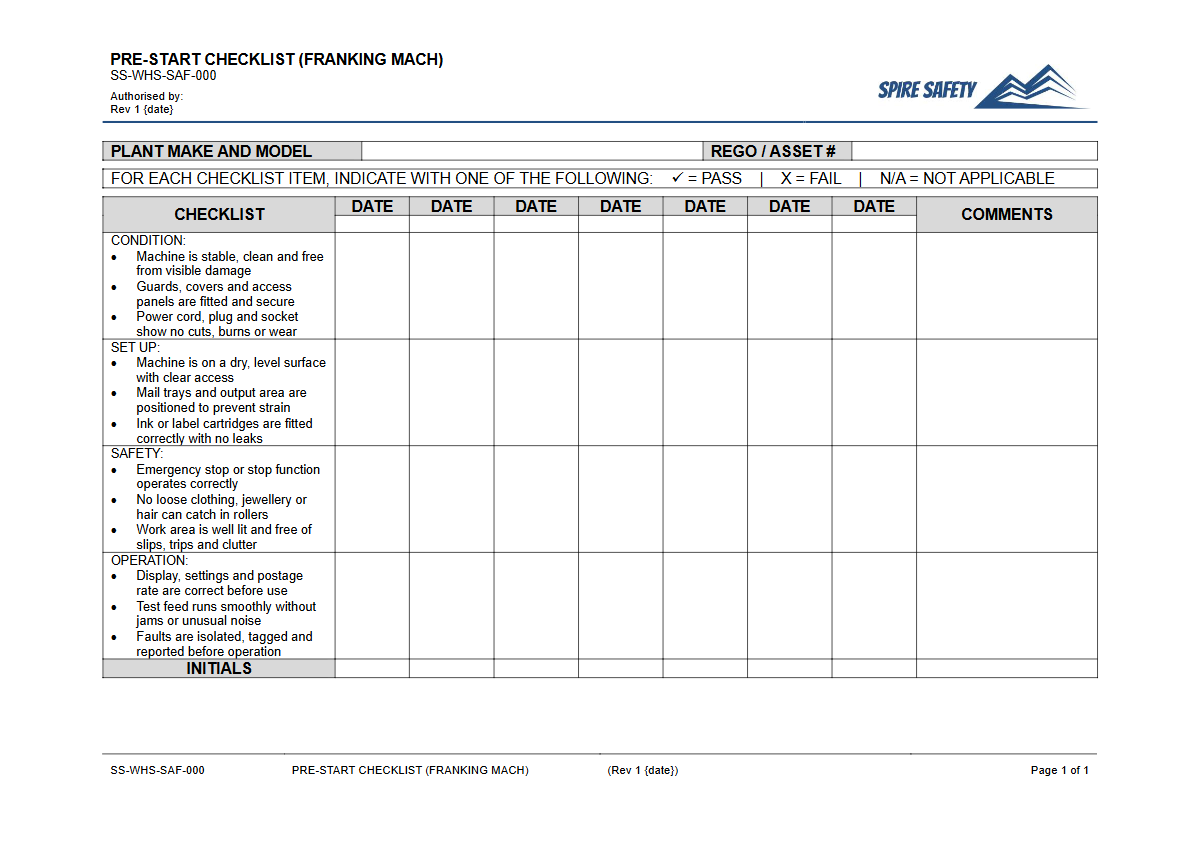
A thorough pre-start inspection covers several key areas to ensure the machine is safe to operate. Our template guides the user through a logical sequence, including:
- General Work Area: Confirming the area around the machine is clean, tidy, and free from slip or trip hazards like boxes, paper stacks, or trailing cables.
- Electrical Safety: Inspecting the power cord and plug for any signs of damage, fraying, or exposed wires. Ensure it is connected correctly and that any associated RCDs (Residual Current Devices) are tested according to your site schedule.
- Machine Condition: Checking the external casing for cracks or damage, and ensuring all safety guards, covers, and access panels are securely in place.
- Moving Parts: Verifying that rollers and other moving components are free from obstruction before powering on the machine.
- Operational Checks: Testing basic functions to ensure the machine operates smoothly and without unusual noises. If the machine has an emergency stop button, its function should be verified. Similar principles apply to inspecting other small office equipment, as detailed in our pre-start checklist for a coffee grinder.
- Corrective Actions: A critical section for the operator to record any faults, damage, or concerns. This provides a clear trigger for maintenance and ensures unsafe equipment is not used.
When to use this Pre-Start Checklist
The checklist should be completed before the franking machine is used for the first time each day or at the beginning of every shift in workplaces with multiple operators. The frequency of checks should ultimately be determined by a risk assessment, considering factors like the age and condition of the equipment, the intensity of use, and the operating environment.
The goal is to identify issues before they escalate. This proactive approach is a core theme in our pre-start checks and plant maintenance toolbox talk.
Who should use it
This checklist is designed for the direct operators of the franking machine. These are the individuals best placed to notice subtle changes in the machine's condition or performance from one day to the next.
Supervisors and managers also have a role in ensuring the checks are being completed correctly and that any reported defects are addressed promptly. The completed checklists should be reviewed periodically as part of your broader safety assurance activities, which can be verified through a formal WHS compliance auditing program.
Ultimately, a simple tool like this pre-start checklist supports an organisation’s duty of care to provide and maintain safe plant and equipment. It empowers workers to take an active role in their own safety.
If you need assistance developing comprehensive safety procedures for your machinery, consider engaging with a WHS consulting firm. For more templates, you can browse our entire free WHS resources library.
Common mistakes
Common mistakes to avoid
- Failing to customise the template to match the specific franking machine model used.
- Completing the checklist from memory without performing the physical and visual checks.
- Neglecting to immediately tag out and report equipment with identified safety faults.
- Ignoring seemingly 'minor' issues like worn power cords, which can pose significant electrical or fire hazards.
Legal references
Legal considerations
The following legal requirements may be relevant to this type of work.
- Work Health and Safety Act (Harmonised) — Provides the primary duties for protecting workers and other people from work health and safety risks.
- Work Health and Safety Regulations (Harmonised) — Sets out requirements supporting the management of workplace hazards and risks.
The following codes may be relevant to this type of work.
- Managing WHS Risks Code of Practice — Provides practical guidance on identifying hazards, assessing risks and applying effective controls.
- Work Health and Safety Consultation, Cooperation and Coordination Code of Practice — Provides practical guidance on consulting workers and coordinating with other duty holders.
- Managing the Work Environment and Facilities Code of Practice — Provides practical guidance on safe work environments, workplace facilities and related controls.
Did you know
Invention of Franking
The first franking machine was invented by Norwegian Engle Frankmussler in 1884, but it was Arthur Pitney's invention in 1902, later commercialised with Walter Bowes in 1920, that created the Pitney Bowes Postage Meter company.
Electrical Safety
According to electrical safety regulators, faults in electrical equipment are a leading cause of office fires. Regular inspection of cords, plugs, and connections is a simple but critical step in fire prevention.
FAQ
Frequently asked questions
01What is the purpose of a franking machine pre-start check?
02How often should a franking machine be inspected?
03Who is responsible for conducting pre-start checks on office equipment?
04Can this template be used for any type of franking machine?
Share this resource
Free Pre-Start Checklist (Franking Machine) Template
Browse Categories
How To Use It
- 1Download and open in Word or PDF.
- 2Replace the placeholders with your business details.
- 3Get it reviewed by a WHS specialist before rollout.
Need it customised?
Our WHS consultants can adapt this template to your site, run a gap analysis, or audit what you already have in place.
Book a Free Consultation WHS consulting servicesor call 1300 156 382