
Free Pre-Start Checklist (Grab Attachment) Template
Download our Free Pre-Start Checklist for Grab Attachments in DOCX & PDF. A structured template to formalise equipment inspections and manage WHS risks.
Free Pre-Start Checklist (Grab Attachment) Template
DOCX • 125 KB + PDF
Updated Oct 2026
No signup required
Purpose of the Free Pre-Start Checklist (Grab Attachment) Template
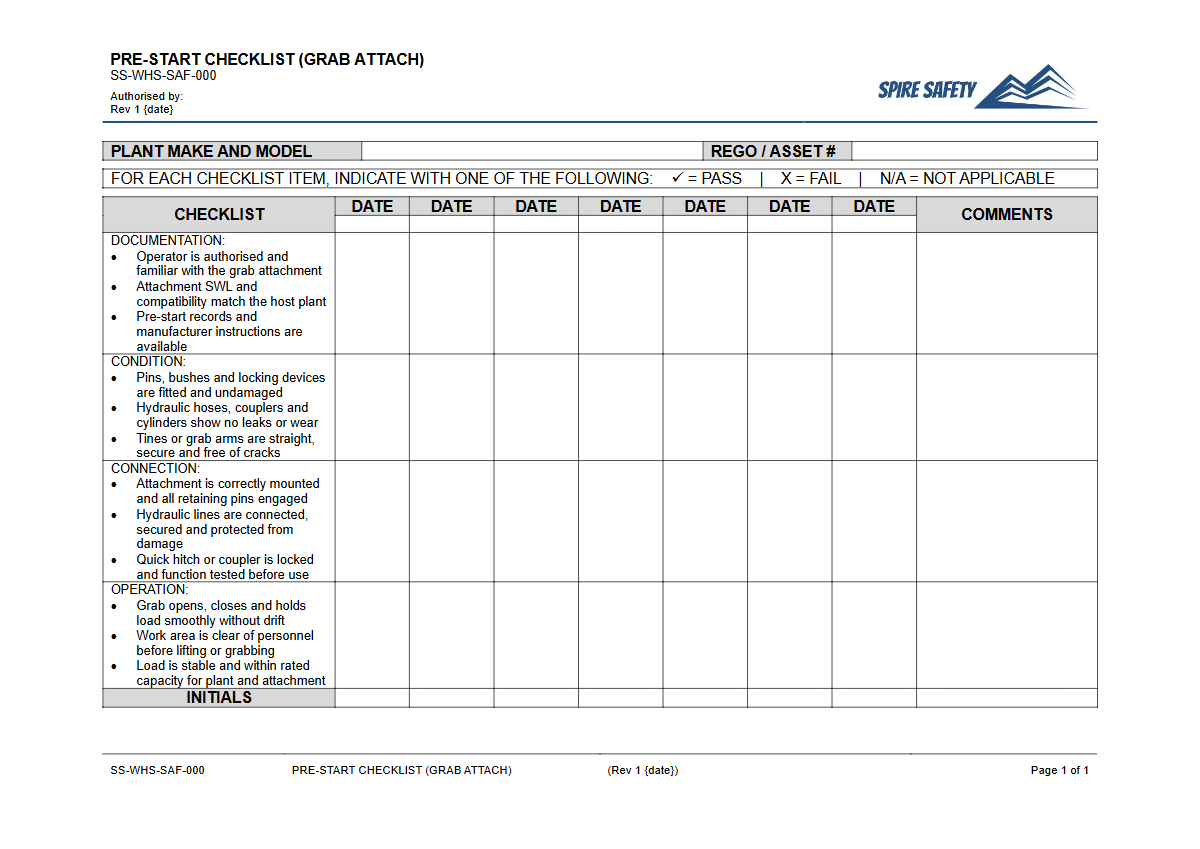
Operating heavy machinery with attachments like grabs presents significant risks if the equipment is not properly inspected. This Free Pre-Start Checklist (Grab Attachment) Template provides a structured starting point for formalising daily or pre-shift inspections.
Using a checklist ensures that operators systematically check critical components, from hydraulic hoses and connectors to the structural integrity of the tines or jaws. Regular, documented checks are a cornerstone of a proactive safety culture, helping to identify potential faults before they lead to equipment failure, dropped loads, or serious incidents.
A documented pre-start process demonstrates a commitment to managing workplace health and safety risks associated with plant and equipment. It forms a critical part of your overall safety management system, providing a record that safety procedures are being followed.
These daily checks are a fundamental aspect of proactive equipment care, which you can reinforce with your team using our pre-start checks and plant maintenance toolbox talk template.
Video walkthrough
How to Use the Free Pre-Start Checklist (Grab Attachment) Template
This template is designed to be a practical tool for your workplace. To implement it effectively:
- Download: Choose between the DOCX and PDF formats. The DOCX file is fully editable.
- Customise: This is the most important step. You must adapt the checklist to your specific circumstances. Review it against the grab attachment's manufacturer specifications, your site's specific risks, and any state or territory-specific regulations. We have provided a general template, but you are responsible for ensuring it is comprehensive for your unique equipment and operational context.
- Train: Ensure all relevant operators are trained on how and when to use the checklist, what each checkpoint means, and the procedure for reporting faults or defects.
- Implement: Integrate the checklist into your daily operational procedures. Make it a non-negotiable step before any work involving the grab attachment begins.
- Review: Store completed checklists as a record of inspection. These records are vital for maintenance planning, incident investigations, and demonstrating compliance.
This checklist should not be used in isolation. It should be integrated within a comprehensive safe work system that includes risk assessments and safe work procedures.
For complex tasks, this checklist complements higher-level documents like a SWMS for Concrete Truck Operations by ensuring the machinery itself is fit for purpose before the high-risk work commences.
By customising and consistently using this template, you help create a safer work environment. Proper documentation and procedural adherence are key pillars when implementing a robust WHS management system that effectively manages plant-related risks.
When to Conduct Pre-Start Checks on Grab Attachments
Consistency is key to an effective pre-start inspection program. The check should be performed:
- Daily or at the beginning of each shift: This is the minimum frequency to catch issues that may have developed overnight or between shifts.
- After installing the attachment: Whenever the grab is attached to the host machine (e.g., an excavator), a full check should be performed to ensure it is connected securely and all systems are functioning correctly.
- After maintenance or repairs: Following any repair work on the attachment or its hydraulic systems, a pre-start check confirms that the equipment is safe to return to service.
- If the operator changes: A new operator should conduct their own pre-start check to familiarise themselves with the equipment's condition before they begin work.
Who Should Use This Checklist?
The primary person responsible for completing the pre-start checklist is the plant operator. They must be deemed competent to both operate the machinery and conduct a thorough inspection.
Their training should empower them to recognise potential defects, understand the implications, and know the correct procedure for reporting and isolating unsafe equipment.
While the operator performs the check, supervisors and managers have a responsibility to ensure the system is working. This includes providing the right templates, training operators, and regularly verifying that checks are being completed correctly and that identified faults are being addressed promptly.
Periodic reviews of completed checklists can be an important input for independent WHS compliance auditing to verify that safety procedures are being followed in practice.
This checklist is just one example of the many specific templates available to support your operations. If your work involves other types of machinery, you may find our pre-start checklist for an aerator useful as another example of a machine-specific inspection document.
You can find many more templates in our free WHS resources library to build out your safety toolkit.
Common mistakes
Common mistakes to avoid
- Ignoring 'minor' hydraulic fluid leaks, which can indicate impending hose failure.
- Failing to physically check that the attachment is securely locked onto the quick hitch mechanism.
- Using a generic checklist that doesn't account for the specific model or type of grab attachment.
- Treating the check as a 'tick and flick' exercise without thoroughly inspecting each component.
Legal references
Legal considerations
The following legal requirements may be relevant to this type of work.
- Work Health and Safety Act (Harmonised) — Provides the primary duties for protecting workers and other people from work health and safety risks.
- Work Health and Safety Regulations (Harmonised) — Sets out requirements supporting the management of workplace hazards and risks.
The following codes may be relevant to this type of work.
- Managing WHS Risks Code of Practice — Provides practical guidance on identifying hazards, assessing risks and applying effective controls.
- Work Health and Safety Consultation, Cooperation and Coordination Code of Practice — Provides practical guidance on consulting workers and coordinating with other duty holders.
- Managing the Work Environment and Facilities Code of Practice — Provides practical guidance on safe work environments, workplace facilities and related controls.
Did you know
Attachment Failures
A significant percentage of mobile plant incidents involve the failure or incorrect use of attachments. These incidents can lead to dropped loads, striking hazards, and catastrophic equipment damage.
Host Machine Integration
The safety of a grab attachment depends heavily on its compatibility and secure connection with the host machine. An incorrect or poorly fitted attachment can place unexpected stress on the plant, leading to failure.
FAQ
Frequently asked questions
01What are the key safety checks for a grab attachment before use?
02How often should pre-start checks be done on excavator attachments?
03Who is responsible for completing a grab attachment pre-start checklist?
04Can a digital checklist be used instead of this paper template?
Share this resource
Free Pre-Start Checklist (Grab Attachment) Template
Browse Categories
How To Use It
- 1Download and open in Word or PDF.
- 2Replace the placeholders with your business details.
- 3Get it reviewed by a WHS specialist before rollout.
Need it customised?
Our WHS consultants can adapt this template to your site, run a gap analysis, or audit what you already have in place.
Book a Free Consultation WHS consulting servicesor call 1300 156 382