
Free Pre-Start Checklist (Grader) Template
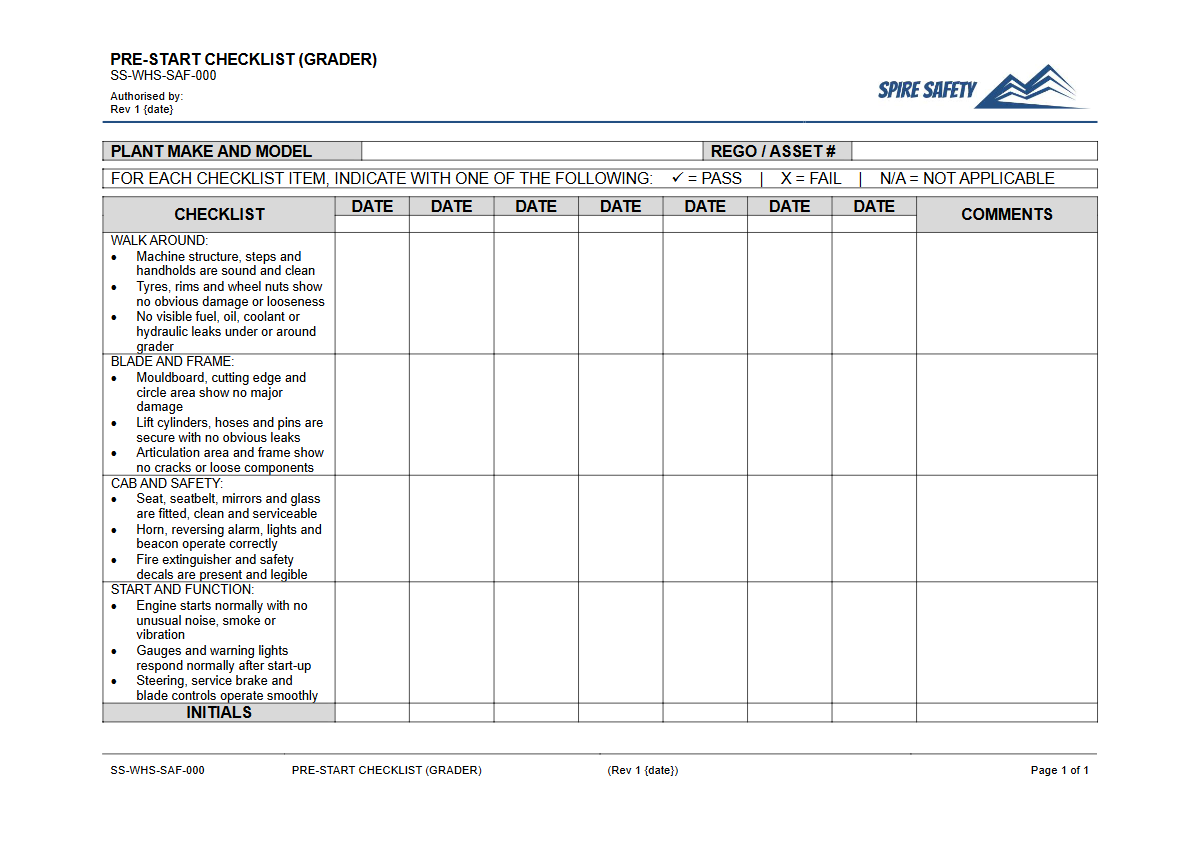
Download our Free Pre-Start Checklist (Grader) Template (DOCX & PDF). This structured resource helps formalise daily safety inspections for graders.
Free Pre-Start Checklist (Grader) Template
DOCX • 125 KB + PDF
Updated Oct 2026
No signup required
Purpose of the Free Pre-Start Checklist (Grader) Template
A grader is a powerful piece of heavy machinery used in construction, road maintenance, and mining. Ensuring it is safe to operate before each use is a critical WHS responsibility.
This Free Pre-Start Checklist (Grader) Template provides a structured format for operators to conduct thorough pre-operational inspections. Regular checks help identify potential faults, leaks, or damage that could lead to accidents, equipment failure, or costly downtime.
Using a formal checklist helps standardise the inspection process, creates a documented record of due diligence, and ensures key safety components are never overlooked.
Integrating these daily checks into your operational workflow is a fundamental part of demonstrating proactive risk management. These records serve as valuable input for maintenance scheduling and form a key component of robust WHS management systems, helping to build a stronger safety culture within your organisation.
Video walkthrough
How to use the Free Pre-Start Checklist (Grader) Template
This template is available for immediate download in both DOCX and PDF formats. The DOCX file can be easily edited to suit your specific operational needs, while the PDF is ready for printing and immediate use.
The checklist covers common inspection points for a standard grader, including engine, hydraulics, tyres, operator cabin, and safety features.
Important: This document is a template, not a finished product. You must customise it to align with the specific make and model of your grader(s), any attachments used (like rippers or scarifiers), your site-specific hazards, and your organisation's safety procedures.
We cannot know your exact equipment or work environment, so thorough customisation is essential for effective risk management. Similar principles apply when documenting checks for other heavy equipment, such as our Pre-Start Checklist for Forwarders.
When to use a Grader Pre-Start Checklist
A pre-start check should be completed by the operator at the beginning of every shift, or before the grader is used for the first time on any given day. It is a pre-operational task, meaning it must be done before the engine is started and the machine is put to work.
This routine ensures that the equipment is in a safe condition for the entire duration of the shift. If multiple operators use the same machine in a single day, a handover inspection process should also be considered to ensure continuous safety.
Supervisors should periodically review completed checklists to identify recurring faults or patterns of wear and tear, which can inform preventative maintenance strategies. The consistent application of these checks is often a focus during a WHS compliance auditing process, as it demonstrates a commitment to plant safety.
Who should use this Pre-Start Checklist
This checklist is designed to be used by trained, authorised, and competent grader operators. The person operating the machinery holds the primary responsibility for ensuring it is safe to use.
They are in the best position to notice subtle changes in the machine's condition or performance. Supervisors and safety managers should also be familiar with the checklist to ensure it is being completed correctly and to follow up on any reported defects.
It's crucial that operators are empowered to tag out and report any grader that fails its pre-start inspection, without fear of reprisal, until it has been cleared as safe by a qualified mechanic or technician.
The fundamental process of operator-led inspections is transferable across different types of plant and equipment. For example, the same duty of care applies when conducting pre-start checks for floor saws used in construction.
Integrating Checks into Your Safety System
A checklist on its own is just a piece of paper. Its true value is realised when it is integrated into a comprehensive safety system.
This means having clear procedures for what to do when a fault is found, a system for tracking repairs, and a process for reviewing the data collected. The information gathered can highlight the need for additional training, changes in maintenance schedules, or even the need to replace ageing equipment.
Just as a bench grinder pre-start checklist is a small but vital part of workshop safety, this grader checklist is a key part of managing risk on a larger scale.
By treating pre-start checks as a valuable source of data, you can move from a reactive to a proactive approach to safety. For more tools to help build out your safety framework, explore our complete free WHS resources library.
Common mistakes
Common mistakes to avoid
- ‘Pencil-whipping’ the checklist without physically inspecting the itemised components.
- Ignoring minor hydraulic drips or fluid leaks that can indicate a larger impending failure.
- Failing to formally report defects and tag out faulty equipment, potentially allowing another person to use an unsafe machine.
- Using a generic, non-customised checklist that misses specific safety features or attachments on the machine.
Legal references
Legal considerations
The following legal requirements may be relevant to this type of work.
- Work Health and Safety Act (Harmonised) — Provides the primary duties for protecting workers and other people from work health and safety risks.
- Work Health and Safety Regulations (Harmonised) — Sets out requirements supporting the management of workplace hazards and risks.
The following codes may be relevant to this type of work.
- Managing WHS Risks Code of Practice — Provides practical guidance on identifying hazards, assessing risks and applying effective controls.
- Work Health and Safety Consultation, Cooperation and Coordination Code of Practice — Provides practical guidance on consulting workers and coordinating with other duty holders.
- Managing the Work Environment and Facilities Code of Practice — Provides practical guidance on safe work environments, workplace facilities and related controls.
Did you know
Operator Visibility
Graders have significant blind spots, particularly to the rear and sides. A thorough pre-start check of mirrors, cameras, and reversing alarms is a critical control for preventing serious incidents involving ground personnel.
Tyre Pressure is Key
Grader tyres are expensive and essential for stability and performance. Operating on incorrect tyre pressure can cause poor handling, accelerated wear, and in severe cases, increase the risk of a rollover.
FAQ
Frequently asked questions
01What should be included in a grader pre-start checklist?
02How often should a grader pre-start check be done?
03Who is responsible for completing the grader pre-start checklist?
04What happens if a fault is found during the pre-start inspection?
Share this resource
Free Pre-Start Checklist (Grader) Template
Browse Categories
How To Use It
- 1Download and open in Word or PDF.
- 2Replace the placeholders with your business details.
- 3Get it reviewed by a WHS specialist before rollout.
Need it customised?
Our WHS consultants can adapt this template to your site, run a gap analysis, or audit what you already have in place.
Book a Free Consultation WHS consulting servicesor call 1300 156 382