
Free Pre-Start Checklist (Line Striper) Template
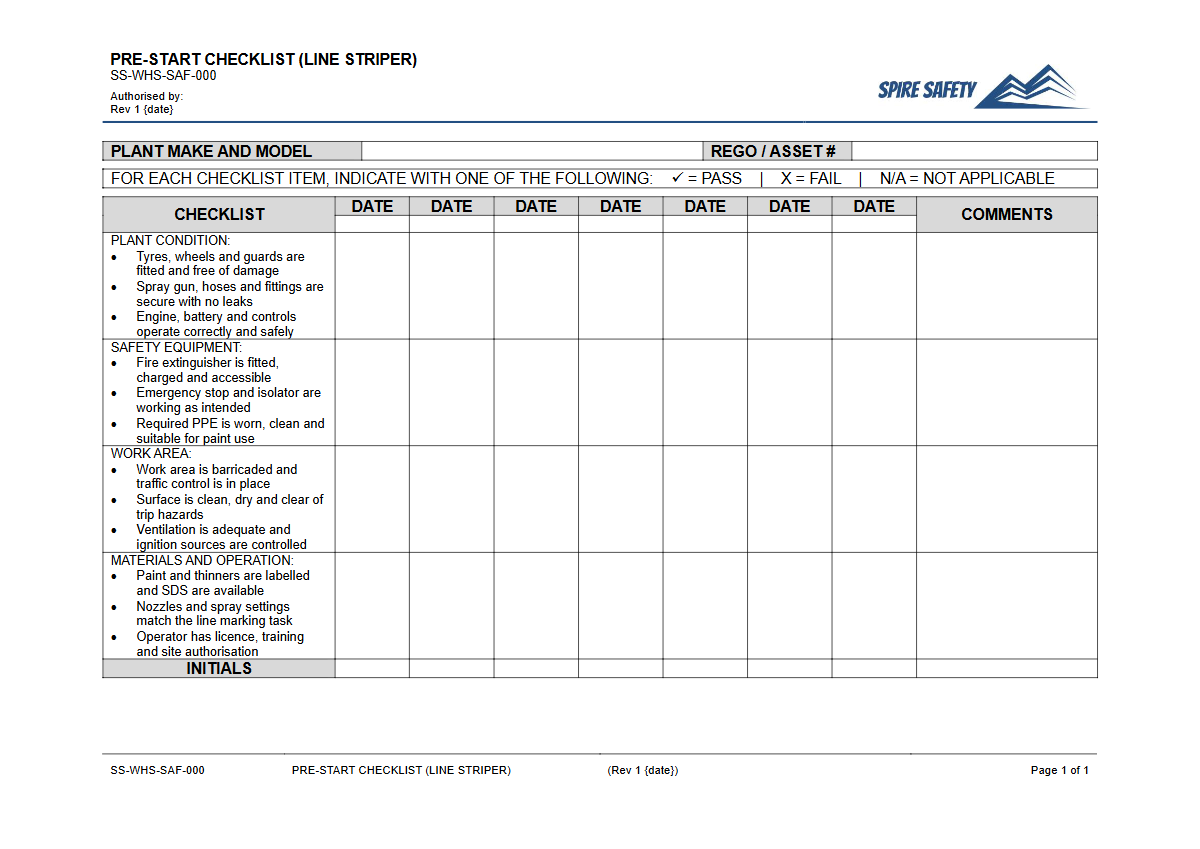
Download our free Pre-Start Checklist (Line Striper) Template. This structured DOCX & PDF resource helps formalise equipment safety inspections.
Free Pre-Start Checklist (Line Striper) Template
DOCX • 125 KB + PDF
Updated Oct 2026
No signup required
Purpose of the Free Pre-Start Checklist (Line Striper) Template
Using a line striper involves risks from high-pressure systems, chemical exposure from paints, and mechanical hazards. Implementing a routine inspection with our Free Pre-Start Checklist (Line Striper) Template is a critical step in managing these risks.
Systematically checking the equipment before each use helps identify potential faults, leaks, or damage that could lead to equipment failure, operator injury, or environmental contamination. This simple process formalises an essential part of a safe system of work, promoting a proactive safety culture where potential issues are found and fixed before they cause harm.
A documented check also creates a record of the equipment's condition over time, assisting with maintenance planning and demonstrating due diligence. To further reinforce the importance of these inspections, consider running a session with our Pre-Start Checks and Plant Maintenance Toolbox Talk.
Video walkthrough
How to use the Free Pre-Start Checklist (Line Striper) Template
This template provides a structured starting point for developing a site-specific checklist. To implement it effectively, follow these steps:
- Download: Get the template in your preferred format (DOCX or PDF).
- Customise: Modify the checklist to suit the specific make and model of your line striper(s), the types of paint used, and the unique conditions of your work environment (e.g., indoor, outdoor, high-traffic areas).
- Train: Ensure all operators are trained on how to properly conduct the inspection, what each item means, and the procedure for reporting any identified defects.
- Implement: Integrate the checklist into your daily operational procedures, making it a mandatory step before any line striping work begins.
Important: This is a template, not a finished document. We have no way of knowing your specific equipment or workplace hazards.
You must customise this checklist to ensure it is relevant and comprehensive for your organisation's needs. Integrating these checks into your broader WHS management systems ensures they are part of a holistic approach to safety.
Key Inspection Areas
While your customised checklist will be more detailed, a thorough line striper pre-start inspection should generally cover:
- General Condition: Check for obvious signs of damage, loose parts, or fluid leaks on the frame and chassis.
- Engine/Power Source: Inspect fuel and oil levels, look for leaks, and ensure guards are in place.
- Wheels and Tyres: Check tyre pressure and condition, ensuring they are free from significant wear or damage.
- Paint System: Inspect hoses, fittings, and the spray gun for leaks, cracks, or blockages. Ensure the pressure relief valve is functioning correctly.
- Safety Features: Verify that all emergency stops, guards, and warning labels are present and in good working order.
The principles of checking power sources and moving parts apply to many types of plant, from complex road equipment to groundskeeping machinery like that covered in our Free Pre-Start Checklist (Aerator) Template.
When to use it
A pre-start checklist for a line striper should be completed by the operator before every shift or prior to each use. This frequency ensures that the equipment's condition is verified before it is put into operation, catching any issues that may have developed overnight or during transport.
These daily checks are a vital part of daily safety planning, which can be further structured using a Free Pre-Start Meeting Template to discuss the day's tasks and hazards.
Who should use it
The pre-start checklist should be completed by a competent person who is trained and authorised to operate the line striper. This is typically the operator assigned to the equipment for the shift.
They have the most hands-on knowledge to accurately assess its condition. Supervisors or managers should be responsible for reviewing the completed checklists periodically to ensure checks are being performed correctly and to follow up on any reported defects.
These records are often reviewed during a WHS compliance auditing process to verify that safety procedures are being followed.
Line striping is often one of many activities occurring on a busy worksite. Managing the associated risks alongside other tasks is essential for overall site safety, similar to how one would manage risks for other mobile plant using a SWMS for Concrete Truck Operation. For more tools to help manage your safety obligations, browse our complete free WHS resources library.
Common mistakes
Common mistakes to avoid
- Using a generic checklist that doesn't match the specific line striper model.
- Ticking boxes without physically inspecting the corresponding component ('pencil-whipping').
- Failing to report minor defects, which can escalate into major failures.
- Skipping checks on the paint system, particularly hoses and fittings, which are prone to wear.
Legal references
Legal considerations
The following legal requirements may be relevant to this type of work.
- Work Health and Safety Act (Harmonised) — Provides the primary duties for protecting workers and other people from work health and safety risks.
- Work Health and Safety Regulations (Harmonised) — Sets out requirements supporting the management of workplace hazards and risks.
The following codes may be relevant to this type of work.
- Managing WHS Risks Code of Practice — Provides practical guidance on identifying hazards, assessing risks and applying effective controls.
- Work Health and Safety Consultation, Cooperation and Coordination Code of Practice — Provides practical guidance on consulting workers and coordinating with other duty holders.
- Managing the Work Environment and Facilities Code of Practice — Provides practical guidance on safe work environments, workplace facilities and related controls.
Did you know
Pressure Hazard
The fluid pressure in a professional airless line striper can exceed 3,000 PSI. A high-pressure injection injury from paint or solvent can be severe, causing tissue damage that may require amputation if not treated immediately as a medical emergency.
FAQ
Frequently asked questions
01What are the main hazards of operating a line striper?
02Is a pre-start checklist a legal requirement in Australia?
03How often should a line striper be fully serviced?
04What should an operator do if they find a defect during a pre-start check?
Share this resource
Free Pre-Start Checklist (Line Striper) Template
Browse Categories
How To Use It
- 1Download and open in Word or PDF.
- 2Replace the placeholders with your business details.
- 3Get it reviewed by a WHS specialist before rollout.
Need it customised?
Our WHS consultants can adapt this template to your site, run a gap analysis, or audit what you already have in place.
Book a Free Consultation WHS consulting servicesor call 1300 156 382