
Free Pre-Start Checklist (Salamander) Template
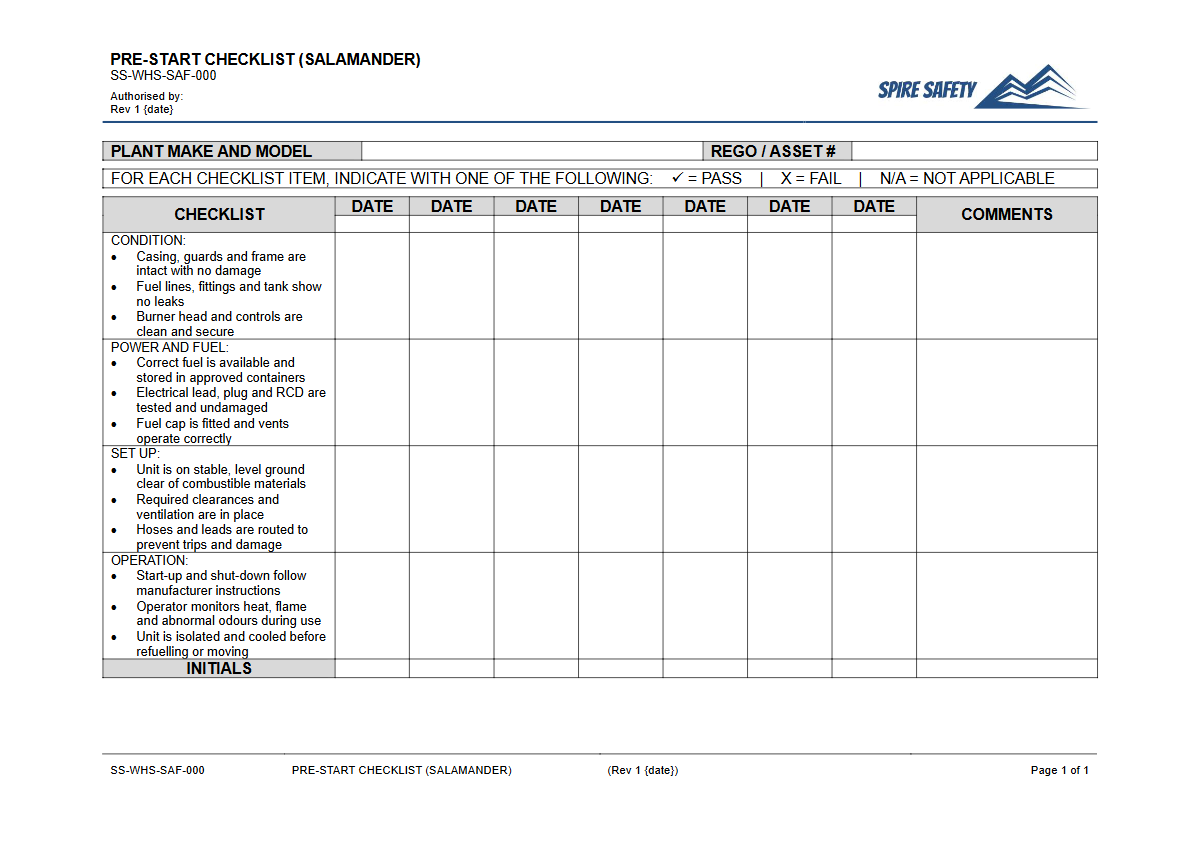
Download our free Pre-Start Checklist (Salamander) Template to improve kitchen safety. This DOCX & PDF resource helps formalise daily equipment checks.
Free Pre-Start Checklist (Salamander) Template
DOCX • 125 KB + PDF
Updated Oct 2026
No signup required
Purpose of the Free Pre-Start Checklist (Salamander) Template
A commercial salamander grill is a high-powered piece of kitchen equipment essential for browning, glazing, and melting. However, it also presents significant risks, including severe burns, electrical hazards, and potential gas leaks or fires.
Our Free Pre-Start Checklist (Salamander) Template provides a structured starting point for operators to systematically inspect the equipment before use. Regularly completing these checks is a practical way to identify and control hazards, document safety actions, and ensure the appliance is in a safe and hygienic condition for operation.
Integrating this checklist into your daily kitchen routine helps formalise safety procedures and demonstrates a commitment to proactive risk management. It forms a crucial part of an effective WHS management system by creating auditable records and encouraging a consistent safety-first mindset among all staff.
Video walkthrough
How to use the Free Pre-Start Checklist (Salamander) Template
Using this template effectively involves more than just ticking boxes. Follow these steps to integrate it into your workplace safety procedures:
- Download and Customise: Download the template in your preferred format (DOCX or PDF). The key step is to adapt it to your specific salamander model, workplace environment, and unique operational risks. Add your company branding and any site-specific safety rules.
- Train Your Team: Ensure all kitchen staff, chefs, and supervisors who will use the salamander are trained on how to conduct the pre-start check correctly. They need to understand what each checkpoint means and why it is important. This process can be reinforced with regular safety meetings, using a resource like our Pre-Start Checks and Plant Maintenance Toolbox Talk to guide discussion.
- Implement Daily Checks: Make the pre-start check a non-negotiable part of the daily opening procedure for the kitchen. The checklist should be completed before the salamander is used for the first time each day or at the start of each shift.
- Document and Act: Completed checklists should be filed and stored as part of your safety records. If any faults or issues are identified, the equipment must be immediately taken out of service, tagged, and reported to a supervisor for repair. Never operate faulty equipment.
IMPORTANT: This document is a template and must be customised to suit the specific needs of your business, the equipment you use, and your operational risks. We are not responsible for the implementation or compliance of the final document you create.
It serves as a starting point, aligned with Australian WHS principles.
When to use a Salamander Pre-Start Checklist
A Pre-Start Checklist for a salamander grill should be completed:
- Daily: Before the first use of the equipment at the start of each day.
- Per Shift: In kitchens with multiple shifts, it's good practice for the incoming operator to conduct their own check.
- After Maintenance: Following any repair, service, or cleaning that involved dismantling parts of the unit.
- After an Incident: If any incident or near-miss involving the equipment occurs, a thorough inspection should be part of the investigation.
Integrating these checks into daily briefings is an excellent way to reinforce safety culture. You can use our free Pre-Start Meeting Template to help structure these discussions and record attendance.
Who should use it
This Pre-Start Checklist is designed for several key roles within a commercial kitchen or hospitality environment:
- Chefs and Kitchen Staff: The primary users are the individuals who operate the salamander grill. They are best placed to identify any changes or faults in the equipment's condition.
- Supervisors and Kitchen Managers: These individuals are responsible for ensuring the checks are completed correctly, reviewing the completed forms, and taking appropriate action when faults are reported.
- WHS Representatives: Safety officers or representatives should use the completed checklists as part of their regular workplace inspections and safety audits to verify that procedures are being followed.
For organisations looking to develop more robust, site-wide safety protocols for all plant and equipment, engaging specialised WHS consulting can provide expert guidance and help build a comprehensive safety framework. Regular review and verification of these processes, for instance through WHS compliance audits, ensures the system remains effective over time.
Explore our comprehensive library of free WHS resources for more tools to support your safety programs.
Common mistakes
Common mistakes to avoid
- "Pencil-whipping" the checklist without physically inspecting the equipment.
- Ignoring seemingly minor issues like excessive grease buildup or a flickering indicator light.
- Failing to remove a faulty salamander from service, creating a serious risk for the next user.
- Not training staff on why each check is important, leading to a lack of engagement and thoroughness.
Legal references
Legal considerations
The following legal requirements may be relevant to this type of work.
- Work Health and Safety Act (Harmonised) — Provides the primary duties for protecting workers and other people from work health and safety risks.
- Work Health and Safety Regulations (Harmonised) — Sets out requirements supporting the management of workplace hazards and risks.
The following codes may be relevant to this type of work.
- Managing WHS Risks Code of Practice — Provides practical guidance on identifying hazards, assessing risks and applying effective controls.
- Work Health and Safety Consultation, Cooperation and Coordination Code of Practice — Provides practical guidance on consulting workers and coordinating with other duty holders.
- Managing the Work Environment and Facilities Code of Practice — Provides practical guidance on safe work environments, workplace facilities and related controls.
Did you know
Fiery Origins
The name "salamander" for a broiler comes from the mythical reptile of the same name, which was once believed to be able to live in fire. This association with intense heat made it a fitting name for the powerful overhead cooking appliance.
FAQ
Frequently asked questions
01What are the main hazards of a commercial salamander grill?
02Is this pre-start checklist ready to use after downloading?
03What should I do if a fault is found during a salamander pre-start check?
04How often should a salamander grill be professionally serviced?
Share this resource
Free Pre-Start Checklist (Salamander) Template
Browse Categories
How To Use It
- 1Download and open in Word or PDF.
- 2Replace the placeholders with your business details.
- 3Get it reviewed by a WHS specialist before rollout.
Need it customised?
Our WHS consultants can adapt this template to your site, run a gap analysis, or audit what you already have in place.
Book a Free Consultation WHS consulting servicesor call 1300 156 382