
Free Pre-Start Checklist (Sandwich Press) Template
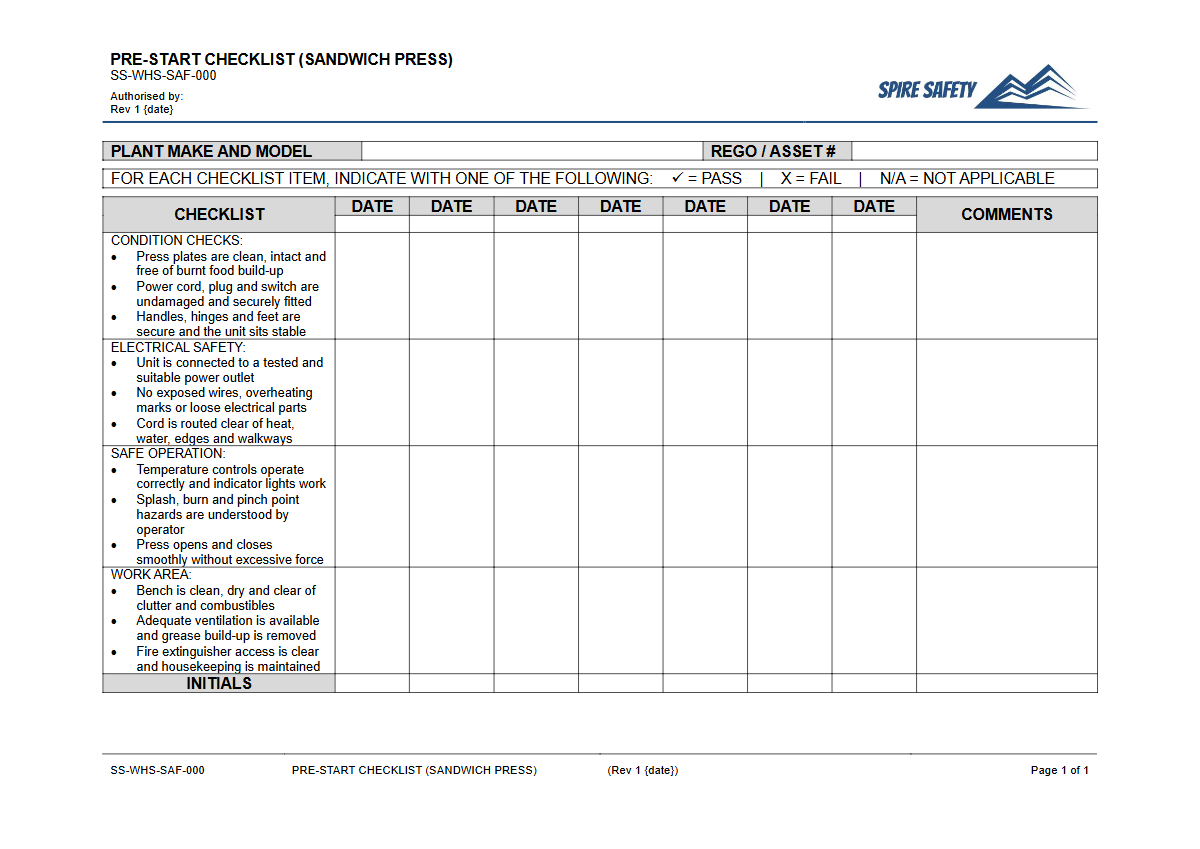
Download our Free Pre-Start Checklist (Sandwich Press) Template to formalise safety inspections for your kitchen equipment. Customise this DOCX & PDF.
Free Pre-Start Checklist (Sandwich Press) Template
DOCX • 125 KB + PDF
Updated Oct 2026
No signup required
Purpose of the Free Pre-Start Checklist (Sandwich Press) Template
Regularly inspecting kitchen appliances is a critical step in preventing workplace incidents, particularly burns and electrical shocks. This Free Pre-Start Checklist (Sandwich Press) Template provides a structured format for workers to verify that equipment is safe to operate before they begin their shift.
Using this checklist helps to formalise your inspection process, identify potential hazards before they cause harm, and create a documented record of your safety diligence.
A consistent pre-start inspection routine fosters a proactive safety culture where equipment care is everyone's responsibility. It encourages workers to be more aware of the condition of their tools and report issues promptly.
For further reinforcement, you can use our Pre-Start Checks and Plant Maintenance Toolbox Talk to train your team on the importance of these daily inspections.
Video walkthrough
How to Use the Free Pre-Start Checklist (Sandwich Press) Template
This template is provided in both DOCX and PDF formats for your convenience. The DOCX file is fully editable, allowing you to tailor it to the specific sandwich press models and unique environmental risks present in your workplace.
Follow these steps to implement the checklist effectively:
- Download: Select the DOCX or PDF version and save it to your system.
- Customise: Open the document and add your company branding, specific site details, and the make and model of the sandwich press. Adjust the checklist items to reflect the features and known risks of your particular equipment.
- Train: Ensure all operators are trained on how to properly complete the checklist, what each item means, and the procedure for reporting any identified faults or 'No' answers.
- Implement: Integrate the checklist into your daily opening procedures. Store completed checklists in a designated location for record-keeping and review.
Note: This document is a template and must be customised to suit your specific workplace, equipment, and operational risks. We are not responsible for the outcomes of any documentation you produce using this template. Integrating customised templates like this one is a key component of effective WHS management systems.
When to Use This Pre-Start Checklist
The Pre-Start Checklist for a sandwich press should be completed before its first use on any given day or at the beginning of each new shift in a multi-shift operation. This ensures that the equipment's condition has not changed overnight or between operators.
Additional checks are also recommended in specific situations, such as after a period of inactivity, following any cleaning or maintenance procedures, or if a previous operator has reported a potential issue. These checks can be discussed during daily team briefings, which can be structured using our free Pre-Start Meeting Template.
Who Should Use This Checklist
This checklist is designed for use by any person operating the sandwich press. This includes kitchen hands, cooks, café staff, and any other workers authorised to use the appliance.
The responsibility for using the equipment safely begins with the operator conducting the pre-start check.
Supervisors and managers also have a key role. They are responsible for ensuring that workers are trained and competent in performing the checks, that the procedure is consistently followed, and that corrective actions are taken when faults are reported.
The consistent completion and review of these records are often a focus area during a formal WHS compliance auditing process. This diligence helps demonstrate that the PCBU (Person Conducting a Business or Undertaking) is actively managing risks associated with plant and equipment.
Common mistakes
Common mistakes to avoid
- Ignoring frayed electrical cords or damaged plugs, creating a serious electrical hazard.
- Failing to clean the press daily, allowing grease and carbon to build up, which is a significant fire risk.
- Using the equipment without checking that the temperature controls and indicator lights are functioning correctly.
- Not training new staff on the specific safety and cleaning procedures for the model in use.
Legal references
Legal considerations
The following legal requirements may be relevant to this type of work.
- Work Health and Safety Act (Harmonised) — Provides the primary duties for protecting workers and other people from work health and safety risks.
- Work Health and Safety Regulations (Harmonised) — Sets out requirements supporting the management of workplace hazards and risks.
The following codes may be relevant to this type of work.
- Managing WHS Risks Code of Practice — Provides practical guidance on identifying hazards, assessing risks and applying effective controls.
- Work Health and Safety Consultation, Cooperation and Coordination Code of Practice — Provides practical guidance on consulting workers and coordinating with other duty holders.
- Managing the Work Environment and Facilities Code of Practice — Provides practical guidance on safe work environments, workplace facilities and related controls.
Did you know
Surface Temperature
The plates on a commercial sandwich press or contact grill can reach temperatures exceeding 250°C, capable of causing serious third-degree burns in less than a second of contact.
Kitchen Fires
According to Fire and Rescue NSW, around 20% of all structure fires they attend start in the kitchen, with unattended cooking and faulty appliances being major contributing factors.
FAQ
Frequently asked questions
01What are the main hazards of a commercial sandwich press?
02How often should a sandwich press pre-start check be done?
03Is a pre-start checklist a legal requirement for a sandwich press in Australia?
04Who is responsible for cleaning a sandwich press at work?
Share this resource
Free Pre-Start Checklist (Sandwich Press) Template
Browse Categories
How To Use It
- 1Download and open in Word or PDF.
- 2Replace the placeholders with your business details.
- 3Get it reviewed by a WHS specialist before rollout.
Need it customised?
Our WHS consultants can adapt this template to your site, run a gap analysis, or audit what you already have in place.
Book a Free Consultation WHS consulting servicesor call 1300 156 382