
Free Pre-Start Checklist (School Kiln) Template
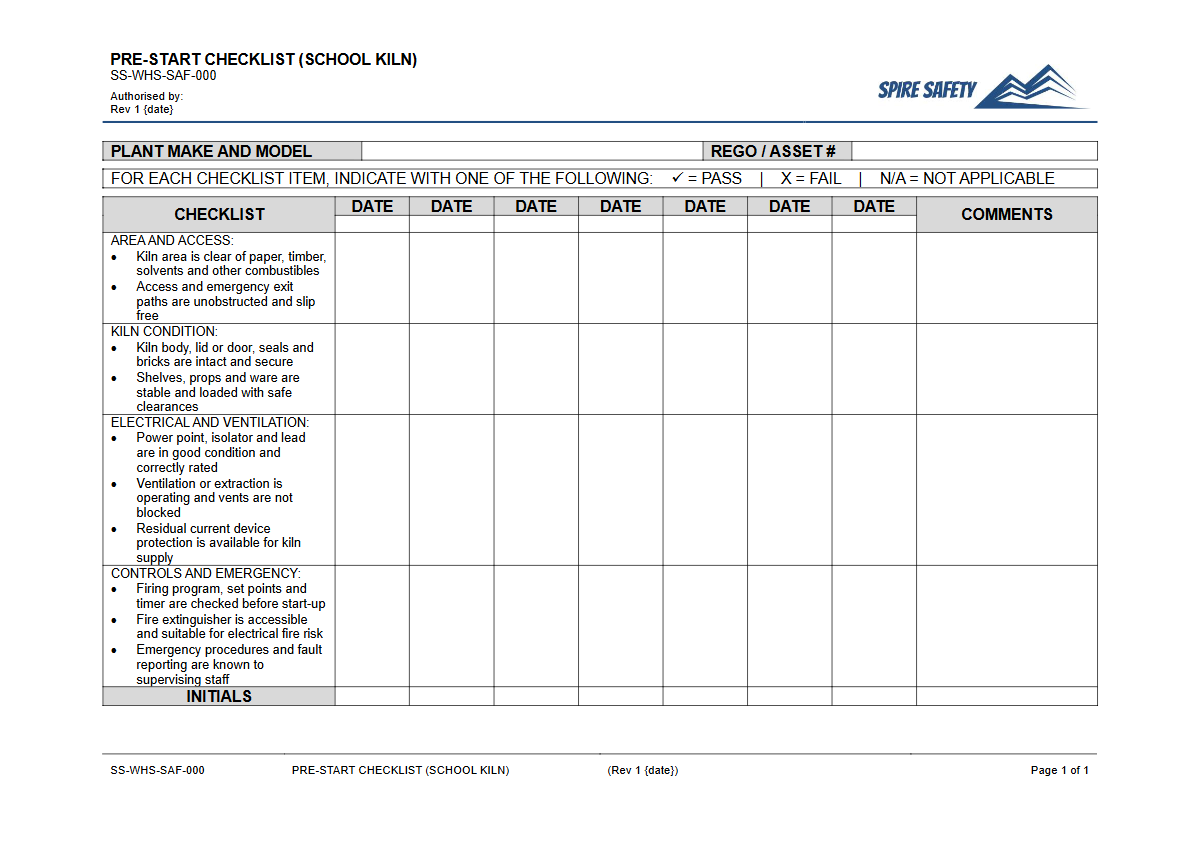
Download our free Pre-Start Checklist (School Kiln) Template. This structured DOCX & PDF resource helps teachers and technicians formalise kiln safety checks.
Free Pre-Start Checklist (School Kiln) Template
DOCX • 125 KB + PDF
Updated Oct 2026
No signup required
Purpose of the Free Pre-Start Checklist (School Kiln) Template
Operating a kiln involves significant hazards, including extreme heat, electrical risks, and potential exposure to harmful fumes. This Free Pre-Start Checklist (School Kiln) Template provides a structured framework for teachers, art technicians, and other authorised staff to conduct essential safety inspections before firing.
Using a formal checklist helps to systematically identify and address potential faults, preventing incidents and ensuring the kiln is safe for operation. It serves as a critical tool for hazard identification and creates a tangible record of safety due diligence.
Integrating regular, documented inspections is a fundamental part of maintaining a safe educational environment. These checks form a crucial component of proactive risk management and are an essential element within broader comprehensive WHS management systems. By formalising the process, schools can demonstrate a commitment to the health and safety of students and staff, moving beyond informal checks to a more robust and accountable system.
Video walkthrough
How to use the Free Pre-Start Checklist (School Kiln) Template
This template is provided as a DOCX file for easy customisation and a PDF for immediate use. First, download the document and review the checklist items against the specific make and model of the kiln at your school.
It is crucial to adapt the template to reflect your kiln’s unique features, controls, safety mechanisms, and the specific environment it operates in. Add your school’s name and logo, and modify, add, or remove checkpoints to ensure they are entirely relevant to your equipment.
Once customised, the checklist should be readily available near the kiln. Before each use, the designated operator should methodically go through each item, physically verifying the condition of each component.
This process should be an active inspection, not a paperwork exercise. For more information on embedding this behaviour, our Pre-Start Checks and Plant Maintenance Toolbox Talk Template can help guide discussions with your team.
Important: This document is a template and must be customised to your specific workplace. The items listed are a starting point based on common kiln types.
We have no knowledge of your specific equipment, operational context, or local procedures. It is your responsibility to ensure the final document is comprehensive and accurate for your school's kiln.
When to use the Pre-Start Checklist
The Pre-Start Checklist for a school kiln should be completed before every firing cycle. Given the high temperatures and long operating times, a kiln’s condition can change, and faults can develop unexpectedly.
A check before every use ensures that any issues that have arisen since the last firing—such as damage from unloading a previous batch or a newly developed electrical fault—are caught before the kiln is energised. This frequency is a key part of demonstrating ongoing safety management, a process often reviewed during WHS compliance auditing.
Who should use it
Only staff members who have been trained, deemed competent, and are authorised to operate the kiln should conduct the pre-start inspection. This typically includes art department teachers, specialist technicians, or other designated personnel.
The user must have sufficient knowledge of the kiln to understand what they are checking and why it is important. They must also be empowered to halt the process and report any faults identified, ensuring the kiln is not used in an unsafe condition. This principle of specific checks applies to other technical equipment in schools, as seen in our pre-start checklist for 3D printers.
A critical but often overlooked part of a kiln inspection is checking the ventilation system. Ensure the checklist includes items for verifying that exhaust fans are operational and that vents are clear of obstructions.
A separate air handler pre-start checklist may be useful for maintenance staff responsible for the broader building HVAC system that supports the kiln area. Proper ventilation is vital for removing heat and potentially hazardous off-gassing from clays and glazes.
Embedding this checklist into your school's standard operating procedures is an effective way to ensure its consistent use. If your organisation requires assistance in developing or refining safety processes for specialised equipment, engaging specialised WHS consulting can provide expert guidance tailored to the education sector.
This ensures your safety documentation is practical, relevant, and aligned with Australian WHS standards.
Common mistakes
Common mistakes to avoid
- Failing to customise the template for the specific kiln model and its location.
- Ticking the boxes without physically inspecting the corresponding components ('pencil-whipping').
- Proceeding with a firing even after a minor fault has been identified.
- Not formally removing a faulty kiln from service with a 'Danger' tag and lock-out procedure.
Legal references
Legal considerations
The following legal requirements may be relevant to this type of work.
- Work Health and Safety Act (Harmonised) — Provides the primary duties for protecting workers and other people from work health and safety risks.
- Work Health and Safety Regulations (Harmonised) — Sets out requirements supporting the management of workplace hazards and risks.
The following codes may be relevant to this type of work.
- Managing WHS Risks Code of Practice — Provides practical guidance on identifying hazards, assessing risks and applying effective controls.
- Work Health and Safety Consultation, Cooperation and Coordination Code of Practice — Provides practical guidance on consulting workers and coordinating with other duty holders.
- Managing the Work Environment and Facilities Code of Practice — Provides practical guidance on safe work environments, workplace facilities and related controls.
Did you know
Extreme Temperatures
Modern electric kilns used in schools can reach temperatures over 1,200°C (2,200°F). This is hot enough to melt many metals, highlighting the immense thermal hazards involved in their operation.
Ancient Technology
The earliest known kilns date back to around 6,000 BC in the Middle East. While technology has advanced, the fundamental principle of using a thermally insulated chamber to harden materials remains the same.
FAQ
Frequently asked questions
01Why is a specific pre-start checklist for a school kiln necessary?
02What should happen if a fault is found during the pre-start check?
03How often should the school kiln pre-start check be completed?
04Can this template be used for a commercial pottery studio?
Share this resource
Free Pre-Start Checklist (School Kiln) Template
Browse Categories
How To Use It
- 1Download and open in Word or PDF.
- 2Replace the placeholders with your business details.
- 3Get it reviewed by a WHS specialist before rollout.
Need it customised?
Our WHS consultants can adapt this template to your site, run a gap analysis, or audit what you already have in place.
Book a Free Consultation WHS consulting servicesor call 1300 156 382