
Free Pre-Start Checklist (Scraper) Template
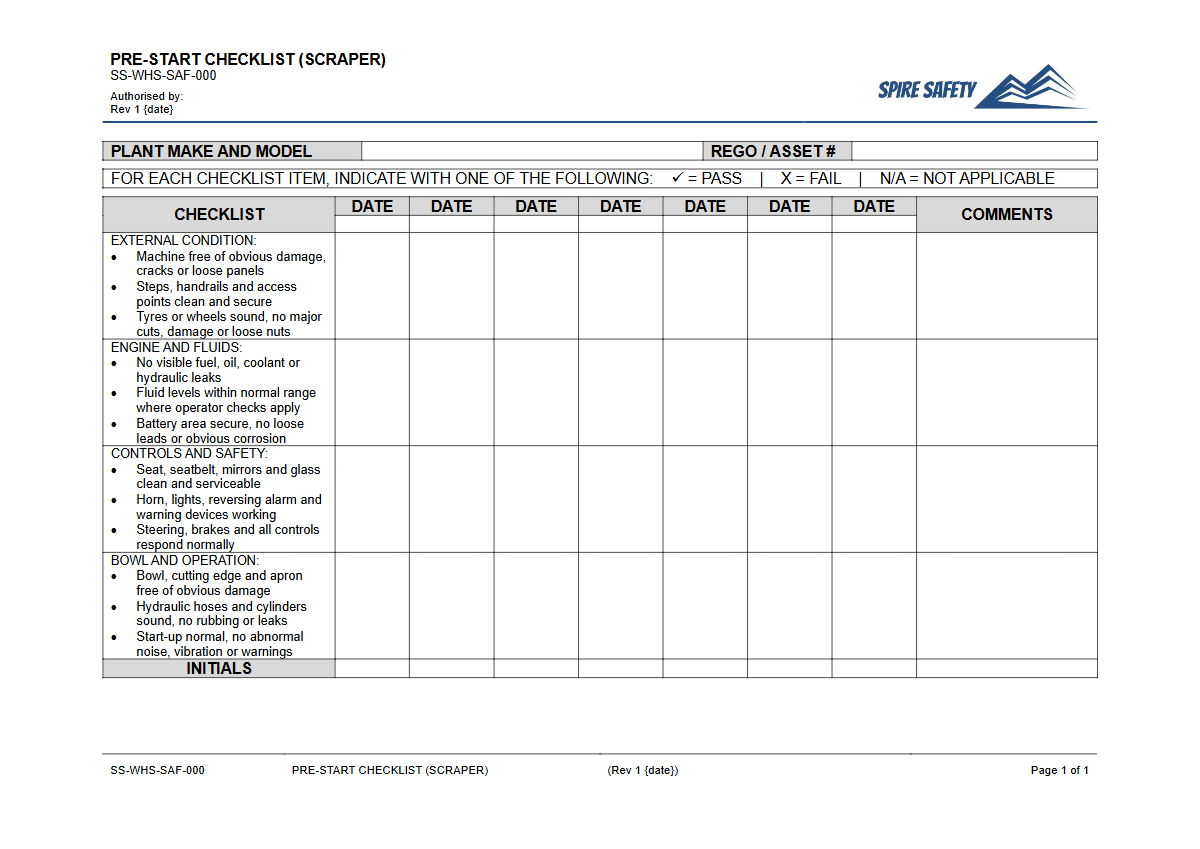
Download our Free Pre-Start Checklist (Scraper) Template. This DOCX & PDF resource helps formalise safety inspections for earthmoving equipment.
Free Pre-Start Checklist (Scraper) Template
DOCX • 125 KB + PDF
Updated Oct 2026
No signup required
Purpose of the Free Pre-Start Checklist (Scraper) Template
Operating heavy earthmoving equipment like scrapers comes with significant safety responsibilities. A key control measure for managing these risks is a thorough pre-start inspection.
This Free Pre-Start Checklist (Scraper) Template provides a structured starting point for organisations to formalise their daily equipment checks, helping to identify potential faults before they lead to incidents. A scraper pre-start checklist is more than just a piece of paper; it's a critical tool in your safety arsenal.
Its primary purpose is to guide a competent operator through a systematic inspection of the machine's key components and safety features before operation. This process helps identify wear and tear, fluid leaks, damaged parts, or malfunctioning safety systems.
By catching these issues early, you can prevent equipment failure, reduce costly downtime, and, most importantly, protect workers from harm. Documenting these checks also creates a clear record of due diligence, which is a fundamental component of robust WHS management systems.
Video walkthrough
How to use the Free Pre-Start Checklist (Scraper) Template
Start by downloading the template in your preferred format (DOCX or PDF). Because scrapers vary significantly between manufacturers and models, and operating conditions differ from site to site, this template must be customised.
Please note: We are not a law firm. The information and templates we provide are for general guidance and should not be considered legal advice. You must adapt this template to your specific equipment, workplace, and operational risks. Involve competent operators and maintenance staff in reviewing and modifying the checklist to ensure it covers all relevant items for your specific scraper. This might include adding checks for GPS systems, specific hydraulic attachments, or unique safety features.
Once finalised, ensure all operators are trained on how to use the checklist correctly and understand the importance of each check. The process should be integrated into the daily start-of-shift routine as a non-negotiable task.
What's covered?
The checklist provides a framework for inspecting critical areas, aligned with Australian WHS practice. This includes:
- General Condition: Checks for structural damage, cracks, or leaks on the bowl, apron, and ejector.
- Operator's Cabin: Ensuring the ROPS/FOPS is sound, controls are functional, windows are clear, and the seatbelt is in good condition.
- Engine & Fluids: Verifying levels for engine oil, coolant, hydraulic fluid, and fuel.
- Tyres & Wheels: Inspecting for correct inflation, cuts, damage, and security of wheel nuts.
- Safety Equipment: Checking fire extinguishers, communication devices, lights, horns, and reversing alarms.
While this checklist is specific to scrapers, we also provide resources for other heavy equipment, such as our free Pre-Start Checklist (Forwarder) Template.
When to use it
The pre-start inspection should be completed at the beginning of every shift before the scraper is first used. It should also be performed if a new operator takes control of the machine mid-shift.
Furthermore, a thorough check is advisable after the equipment has undergone maintenance or repairs to verify its safe operational status. Consistent use demonstrates a proactive approach to safety and is often reviewed during a WHS compliance auditing process.
Who should use it
The responsibility for completing the Pre-Start Checklist lies with the person operating the scraper. They must be deemed competent, meaning they have the necessary training, experience, and knowledge to not only operate the machine but also to recognise potential defects or hazards during the inspection.
Supervisors have a responsibility to ensure these checks are being completed diligently and that any reported issues are addressed promptly. Maintenance personnel will be involved when defects are identified that require technical repair, ensuring the equipment is returned to a safe condition.
For organisations needing more hands-on support in defining these roles and responsibilities, engaging external expertise through WHS consulting can provide valuable clarity and direction.
Implementing a formal checklist system helps standardise safety procedures across your entire fleet. It moves your organisation away from informal, ad-hoc checks and towards a documented, repeatable process.
This level of organisation is invaluable for managing risk effectively. Similar principles apply to other high-risk construction equipment, which is why we also offer a free Pre-Start Checklist for Floor Saws to help formalise checks on different types of plant.
Don't forget to explore our entire free WHS resources library for more templates, tool-box talks, and guides to support your safety initiatives.
Common mistakes
Common mistakes to avoid
- Using a generic, non-customised checklist that misses model-specific features or risks.
- "Pencil-whipping" or ticking boxes without physically verifying each item.
- Failing to remove the machine from service when a serious ('Not Safe to Use') defect is found.
- Poor record-keeping, making it difficult to track defect history and demonstrate compliance.
Legal references
Legal considerations
The following legal requirements may be relevant to this type of work.
- Work Health and Safety Act (Harmonised) — Provides the primary duties for protecting workers and other people from work health and safety risks.
- Work Health and Safety Regulations (Harmonised) — Sets out requirements supporting the management of workplace hazards and risks.
The following codes may be relevant to this type of work.
- Managing WHS Risks Code of Practice — Provides practical guidance on identifying hazards, assessing risks and applying effective controls.
- Work Health and Safety Consultation, Cooperation and Coordination Code of Practice — Provides practical guidance on consulting workers and coordinating with other duty holders.
- Managing the Work Environment and Facilities Code of Practice — Provides practical guidance on safe work environments, workplace facilities and related controls.
Did you know
Tale of Two Engines
Many larger scrapers are 'twin-engine' or 'push-pull' models, featuring a second engine at the rear. This configuration allows two scrapers to link up and assist each other in loading, eliminating the need for a separate dozer to act as a pusher.
Inspection is Prevention
Industry data consistently shows that a significant percentage of mobile plant incidents are linked to mechanical failure. Thorough pre-start inspections are one of the most effective controls for preventing these events.
FAQ
Frequently asked questions
01What is a scraper pre-start checklist?
02Why are daily checks on earthmoving scrapers so important?
03Who is responsible for completing the scraper pre-start checklist?
04Can I use a digital version of this checklist?
Share this resource
Free Pre-Start Checklist (Scraper) Template
Browse Categories
How To Use It
- 1Download and open in Word or PDF.
- 2Replace the placeholders with your business details.
- 3Get it reviewed by a WHS specialist before rollout.
Need it customised?
Our WHS consultants can adapt this template to your site, run a gap analysis, or audit what you already have in place.
Book a Free Consultation WHS consulting servicesor call 1300 156 382