
Free Pre-Start Checklist (Screen Printer) Template
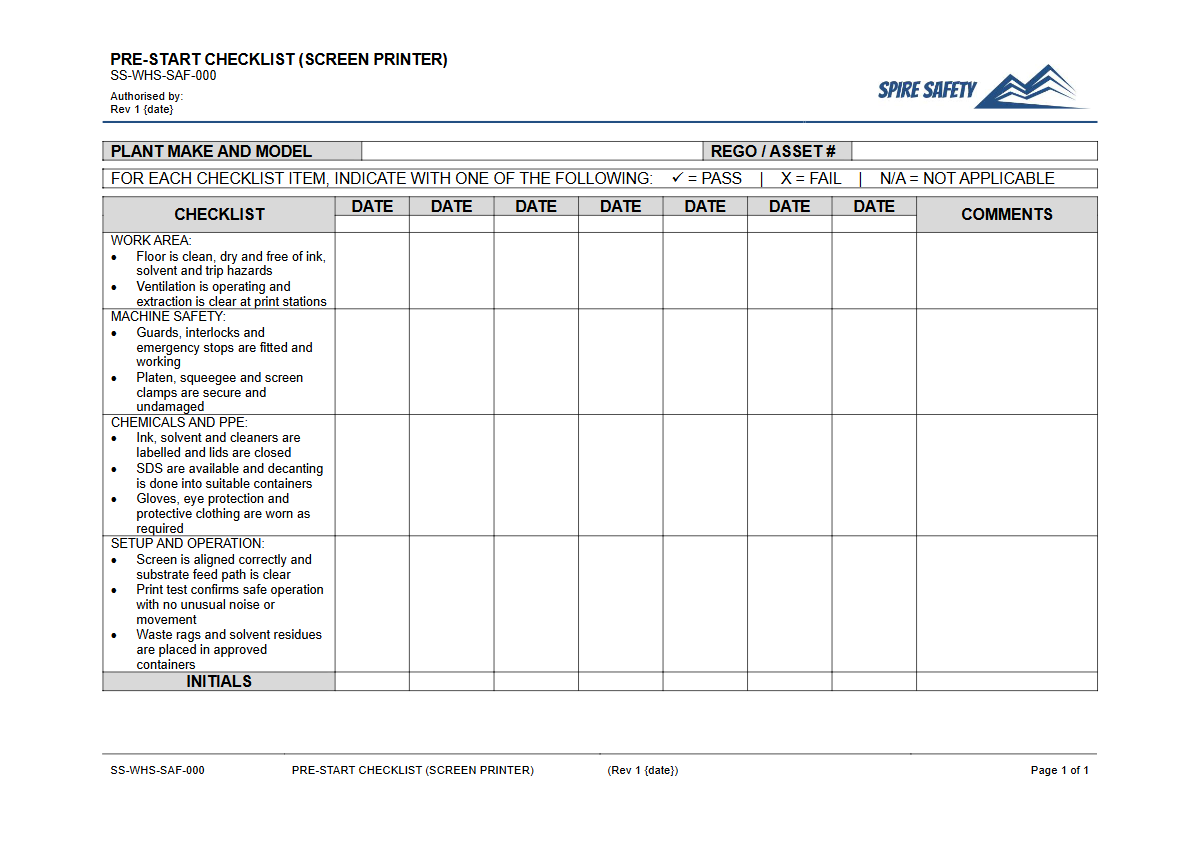
Download our free Pre-Start Checklist (Screen Printer) Template. This DOCX & PDF resource helps formalise safety checks for screen printing equipment.
Free Pre-Start Checklist (Screen Printer) Template
DOCX • 125 KB + PDF
Updated Oct 2026
No signup required
Purpose of the Free Pre-Start Checklist (Screen Printer) Template
Using a structured checklist before operating any machinery is a cornerstone of workplace safety. Our Free Pre-Start Checklist (Screen Printer) Template provides a formalised way to inspect your equipment, helping to identify and control hazards before they cause an incident.
This document is a solid starting point for organisations looking to improve their safety procedures for both manual and automatic screen printing presses. The primary purpose is to systematically verify that the equipment is safe to operate before each use.
Screen printing environments present a unique combination of hazards, including mechanical risks from moving parts (e.g., rotating carousels, squeegee arms), exposure to hazardous chemicals in inks and cleaning solvents, electrical dangers, and potential for burns from flash cure units. This Pre-Start Checklist prompts operators to check critical safety components like emergency stops, guarding, and ventilation systems.
Regular use helps create a proactive safety culture, reduces the risk of equipment failure, and assists in meeting your duties under WHS legislation. Documenting these checks is a vital part of effective WHS management systems and provides a clear record of due diligence.
Video walkthrough
How to use the Free Pre-Start Checklist (Screen Printer) Template
To effectively implement this Pre-Start Checklist, download the DOCX file and adapt it to your specific operational needs. The template is structured to cover common checks but must be tailored to the specific make and model of screen printer used in your workplace.
Important Note: This is a template, not a finished document. We cannot guarantee it covers every hazard unique to your specific equipment and processes.
You must customise it by adding, removing, or modifying checklist items to reflect your plant, tasks, and the outcomes of your risk assessments. Once tailored, integrate the checklist into your daily workflow.
For further guidance on reinforcing this practice, our Pre-Start Checks and Plant Maintenance Toolbox Talk can help train your team on the importance of these inspections.
When to use it
This Pre-Start Checklist should be completed by a competent operator before the start of each shift or before using the screen printing equipment for the first time that day. It should be considered a non-negotiable part of the setup process.
Using the checklist more frequently, such as after a major change in ink type or following a lengthy break, may also be appropriate depending on your workplace's specific risk profile and procedures. Scheduling these checks consistently helps maintain a high standard of operational safety.
Who should use it
The pre-start check should be conducted by the person operating the equipment. They are best placed to notice any changes, damage, or faults from the previous use.
Supervisors or team leaders should also be familiar with the checklist to oversee the process and ensure it is being completed correctly and consistently. The completed forms serve as important records that can be reviewed during WHS compliance auditing. Additionally, maintenance personnel may use the completed checklists to identify recurring faults that could indicate a need for preventative maintenance or a more detailed technical inspection.
Integrating Checklists into Broader Safety Procedures
Pre-start checks are just one component of a comprehensive approach to plant safety. They should be supported by a regular maintenance schedule, formal operator training, and clear safe operating procedures (SOPs).
A well-documented SOP outlines the step-by-step process for using equipment safely, complementing the daily check. To see how safety information can be shared effectively before work begins, our Pre-Start Meeting Template offers a useful structure for team briefings.
Many modern workshops use a variety of automated equipment alongside screen printers. If your facility also operates machinery like computer-controlled routers or additive manufacturing systems, it is essential to apply the same diligence.
You can adapt our Free Pre-Start Checklist (CNC Router) Template or the Free Pre-Start Checklist (3D Printer) Template as starting points for those machines. By embedding this pre-start process into your daily operations for all relevant plant, you take a significant step towards a safer workplace. For more tools to support your safety framework, browse our complete free WHS resources library.
Common mistakes
Common mistakes to avoid
- Using a generic checklist that hasn't been customised for the specific screen printer model.
- Operators rushing or skipping checks to save time at the start of a shift.
- Failing to properly train workers on what each checklist item means and why it's important.
- Not having a clear procedure for tagging out and reporting faulty equipment.
Legal references
Legal considerations
The following legal requirements may be relevant to this type of work.
- Work Health and Safety Act (Harmonised) — Provides the primary duties for protecting workers and other people from work health and safety risks.
- Work Health and Safety Regulations (Harmonised) — Sets out requirements supporting the management of workplace hazards and risks.
The following codes may be relevant to this type of work.
- Managing WHS Risks Code of Practice — Provides practical guidance on identifying hazards, assessing risks and applying effective controls.
- Work Health and Safety Consultation, Cooperation and Coordination Code of Practice — Provides practical guidance on consulting workers and coordinating with other duty holders.
- Managing the Work Environment and Facilities Code of Practice — Provides practical guidance on safe work environments, workplace facilities and related controls.
Did you know
Chemical Exposure
Many screen printing inks and cleaning solvents contain Volatile Organic Compounds (VOCs), which can pose significant health risks without adequate ventilation and personal protective equipment (PPE).
Ergonomic Strain
Manual screen printing involves highly repetitive motions that can lead to musculoskeletal disorders (MSDs) over time. Job rotation and ergonomic workstation design are key controls.
FAQ
Frequently asked questions
01What are the main hazards of screen printing equipment?
02Is a pre-start check a legal requirement in Australia?
03How often should a screen printer be inspected?
04What should I do if I find a fault during a pre-start check?
Share this resource
Free Pre-Start Checklist (Screen Printer) Template
Browse Categories
How To Use It
- 1Download and open in Word or PDF.
- 2Replace the placeholders with your business details.
- 3Get it reviewed by a WHS specialist before rollout.
Need it customised?
Our WHS consultants can adapt this template to your site, run a gap analysis, or audit what you already have in place.
Book a Free Consultation WHS consulting servicesor call 1300 156 382