
Free Pre-Start Checklist (Scooter) Template
Formalise daily safety inspections for electric scooters with our free Pre-Start Checklist (Scooter) Template. Download your DOCX & PDF today.
Free Pre-Start Checklist (Scooter) Template
DOCX • 125 KB + PDF
Updated Oct 2026
No signup required
Purpose of the Free Pre-Start Checklist (Scooter) Template
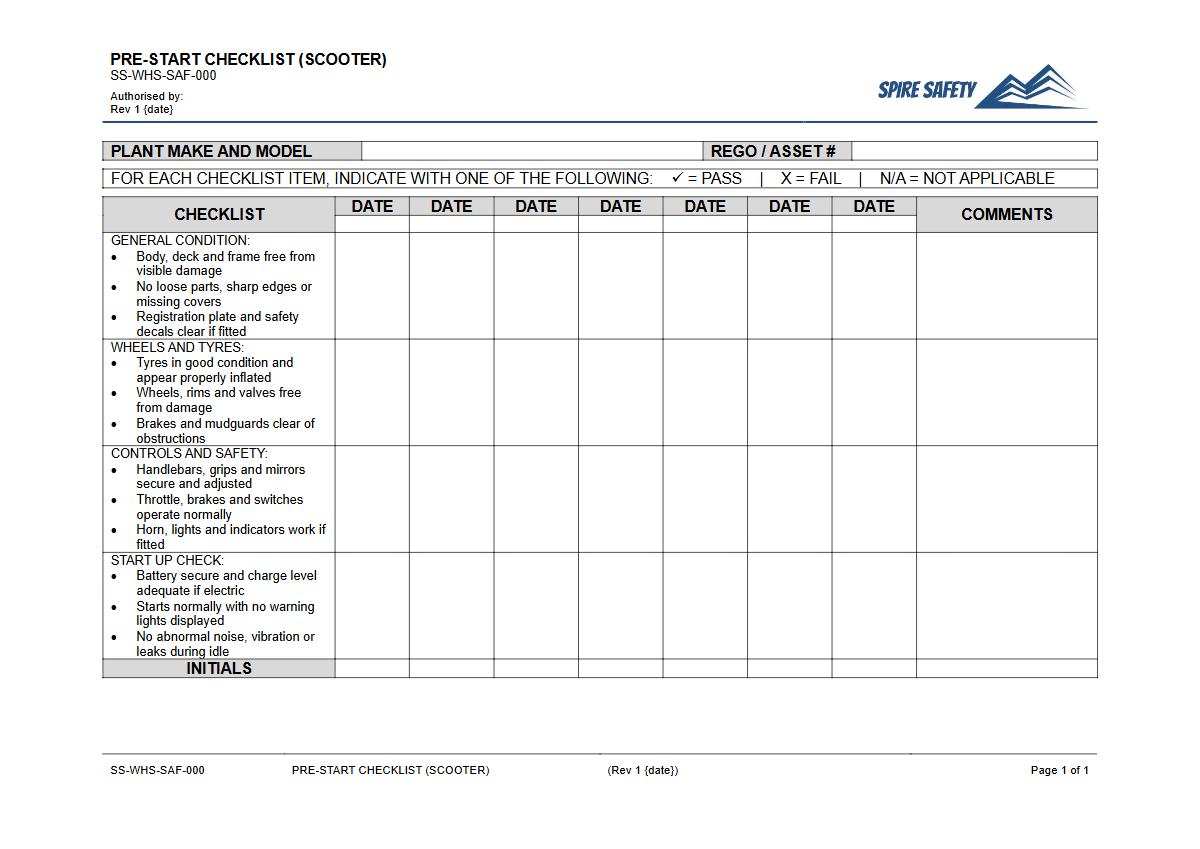
Using a structured checklist before operating any plant or equipment is a fundamental practice in Australian workplaces. This Free Pre-Start Checklist (Scooter) Template provides a formal method for operators to verify that a scooter is safe to use before their shift begins.
The primary goal is to systematically identify any faults, damage, or maintenance issues—such as worn brakes, low tyre pressure, or battery faults—that could pose a risk of injury. Regularly completing these checks helps create a safer work environment and provides documented evidence of due diligence, forming a critical component of broader WHS management systems.
Video walkthrough
How to use the Free Pre-Start Checklist (Scooter) Template
This resource is provided as a downloadable DOCX and PDF file. The DOCX version is fully editable, allowing you to tailor it to the specific models of scooters used in your workplace and your operational requirements.
To implement it effectively, start by downloading the template and adding your company branding and details. Compare the checklist items against the manufacturer's instructions for your specific scooter, adding or removing checks as needed.
Once finalised, integrate the checklist into your daily operational procedures and ensure all operators are trained on how to complete it correctly. A similar process applies when adapting other equipment checks, like a lawn tractor pre-start checklist.
Important: This is a template document that provides a starting point. We are not WHS lawyers. You must customise this document to reflect the specific hazards, risks, and operational needs of your workplace, as well as the make and model of the scooter in use.
When to use it
A scooter pre-start inspection should be conducted at the beginning of every shift or before the first use of the day. This frequency ensures that any issues that may have developed overnight or since the last use are caught before the scooter is put into operation.
Additionally, a check should be performed after any incident or near-miss involving the equipment, or following any significant maintenance or repair work. This consistent process supports proactive hazard management and is a key item reviewed during formal WHS compliance auditing.
Who should use it
The checklist is designed to be completed by the person operating the scooter. They are in the best position to physically inspect the equipment and identify any potential issues.
Supervisors or managers should also be involved in the process by reviewing completed checklists, ensuring they are being filled out correctly, and taking prompt action on any reported faults. This creates a clear line of communication and responsibility for equipment safety.
If you need assistance in defining these roles and responsibilities, our WHS consulting services can provide expert guidance.
Key Items on a Scooter Pre-Start Checklist
While your customised checklist will be unique, it should generally cover several key areas to ensure a thorough inspection. A good template provides a logical flow for the operator to follow.
Just as a pre-start checklist for a bin lifter focuses on hydraulic and mechanical lifting components, a scooter checklist should focus on its specific operational parts.
- Frame and General Condition: Check for cracks, dents, or other signs of structural damage.
- Brakes: Test both front and rear brakes (if applicable) to ensure they are responsive and effective.
- Tyres: Inspect for correct inflation, excessive wear, and any embedded objects.
- Lights and Reflectors: Verify that headlights, tail lights, and any reflectors are clean, secure, and functional.
- Throttle and Controls: Ensure the throttle is smooth and returns to the off position correctly. Check all other controls.
- Battery: Check the battery charge level to ensure it is sufficient for the intended use.
- Steering and Handlebars: Make sure the handlebars are secure and steering is smooth and unrestricted.
- Standing Deck: Ensure the deck surface provides adequate grip and is free from damage or debris.
By using a comprehensive checklist, organisations can better fulfil their duty of care to provide safe plant and equipment. For more templates and safety documents, explore our complete free WHS resources library.
Common mistakes
Common mistakes to avoid
- Failing to remove a faulty scooter from service immediately after a failed check.
- Operators 'pencil-whipping' the form without performing the physical checks.
- Using a generic template without customising it for the specific scooter models in use.
- Poor record-keeping, making it difficult to track maintenance issues or prove due diligence.
Legal references
Legal considerations
The following legal requirements may be relevant to this type of work.
- Work Health and Safety Act (Harmonised) — Provides the primary duties for protecting workers and other people from work health and safety risks.
- Work Health and Safety Regulations (Harmonised) — Sets out requirements supporting the management of workplace hazards and risks.
The following codes may be relevant to this type of work.
- Managing WHS Risks Code of Practice — Provides practical guidance on identifying hazards, assessing risks and applying effective controls.
- Work Health and Safety Consultation, Cooperation and Coordination Code of Practice — Provides practical guidance on consulting workers and coordinating with other duty holders.
- Managing the Work Environment and Facilities Code of Practice — Provides practical guidance on safe work environments, workplace facilities and related controls.
Did you know
Rising Injury Toll
As e-scooters become more common in cities and workplaces, related injuries have risen sharply. Many incidents are linked to equipment malfunction, highlighting the importance of regular pre-start inspections.
Duty of Care
Under Australian WHS law, a Person Conducting a Business or Undertaking (PCBU) has a primary duty of care to provide and maintain safe plant and equipment, which includes vehicles like workplace scooters.
FAQ
Frequently asked questions
01What should be included in a scooter pre-start checklist?
02Why is it important to customise a pre-start checklist template?
03How often should a scooter pre-start check be completed?
04Is a digital pre-start checklist better than a paper one?
Share this resource
Free Pre-Start Checklist (Scooter) Template
Browse Categories
How To Use It
- 1Download and open in Word or PDF.
- 2Replace the placeholders with your business details.
- 3Get it reviewed by a WHS specialist before rollout.
Need it customised?
Our WHS consultants can adapt this template to your site, run a gap analysis, or audit what you already have in place.
Book a Free Consultation WHS consulting servicesor call 1300 156 382