
Free Pre-Start Checklist (Sheet Roller) Template
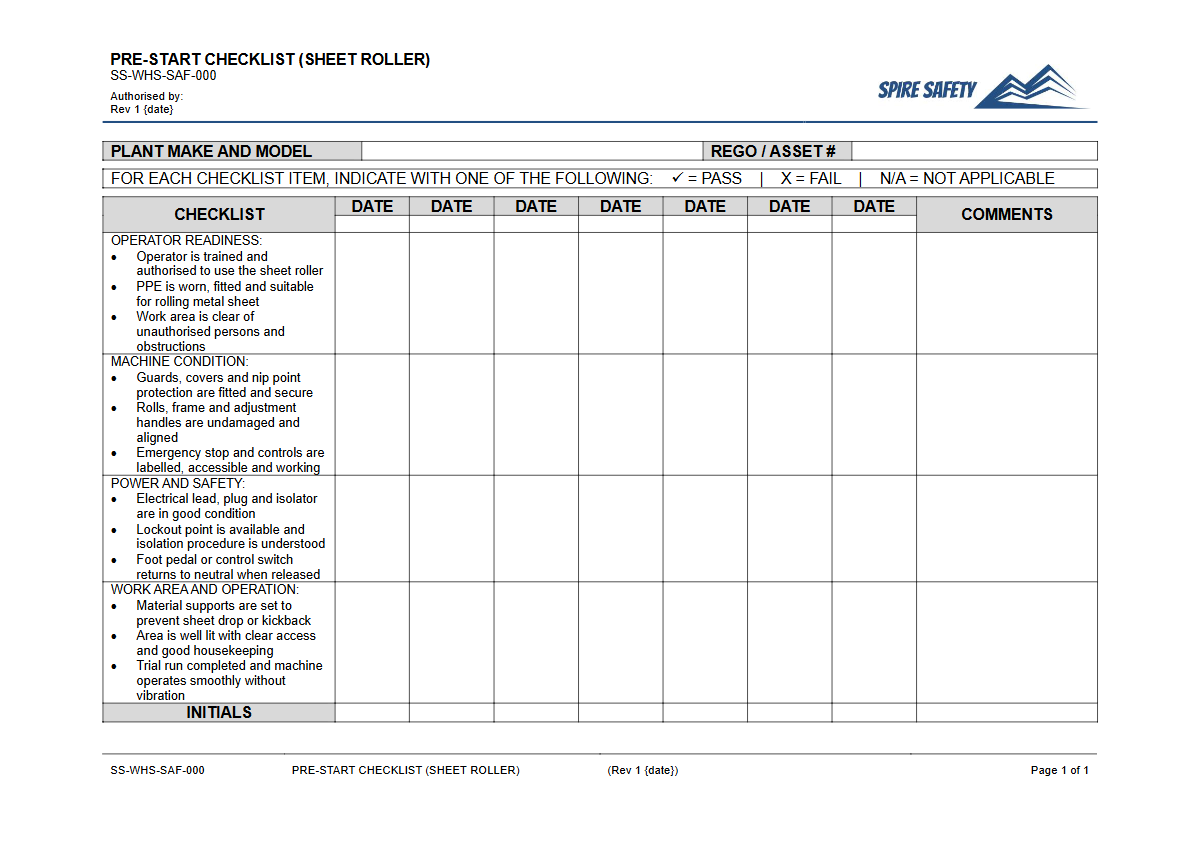
Download our free Pre-Start Checklist (Sheet Roller) Template to formalise your equipment safety inspections.
Free Pre-Start Checklist (Sheet Roller) Template
DOCX • 125 KB + PDF
Updated Oct 2026
No signup required
Purpose of the Free Pre-Start Checklist (Sheet Roller) Template
Integrating a formal inspection process is a critical step in managing the risks associated with operating machinery. This Free Pre-Start Checklist (Sheet Roller) Template provides a structured starting point for organisations to verify that their sheet rollers are safe to operate before each use.
A consistent pre-start routine helps identify potential mechanical or electrical faults, fluid leaks, or damage that could lead to incidents, equipment failure, or injury. By documenting these checks, you create a clear record of due diligence, demonstrating a proactive approach to workplace health and safety.
These daily checks are a fundamental component of a broader safety framework. Formalising this process helps embed safety-conscious behaviour among operators and supports the primary duty of care for a Person Conducting a Business or Undertaking (PCBU).
This template can be integrated into your existing WHS management systems to ensure plant safety procedures are consistently followed and documented.
Video walkthrough
How to use the Free Pre-Start Checklist (Sheet Roller) Template
This template is provided in both DOCX and PDF formats for your convenience. The DOCX file is fully editable, allowing you to tailor the checklist to the specific make, model, and configuration of the sheet rollers used in your workplace.
Simply download the document and add, remove, or modify checklist items to reflect your operational reality and risk profile. We recommend involving competent operators and maintenance personnel in the customisation process to ensure the checklist is practical and comprehensive.
A well-rounded safety procedure goes beyond just the pre-start inspection. This checklist should be used in conjunction with other key safety documents, such as a Roller SOP (Safe Operating Procedure) template, which outlines the step-by-step process for operating the machinery safely.
Once customised, the checklist should be printed and stored near the equipment or made available digitally for operators to complete before they begin work.
Important: This is a template document that must be customised. Every workplace is unique, and so is the plant used within it.
You must review and amend this template to ensure it is suitable for your specific equipment, processes, and the WHS risks present in your operations. We take no responsibility for any omissions or errors in the final customised document.
When to use it
A pre-start checklist for a sheet roller should be completed before the first use of the equipment on any given day or shift. If the machine is used by multiple operators during a single shift, it is good practice for each new operator to conduct their own check to verify its condition.
This regular, systematic inspection ensures that the equipment's state is assessed before it is subjected to operational stresses, minimising the chance of failure during use.
Regular safety discussions also help reinforce the importance of these checks. You can use a Pre-Start Checks and Plant Maintenance Toolbox Talk to remind teams why these inspections are non-negotiable and to discuss any recurring faults or maintenance trends.
Who should use it
The pre-start checklist should be completed by a worker who is trained, competent, and authorised to operate the specific sheet roller. This operator is best placed to identify any abnormalities or changes in the machine's condition compared to its previous state.
Supervisors or managers also have a role in ensuring these checks are being completed correctly and consistently. They should periodically review completed checklists to identify any patterns of defects that may indicate a need for scheduled maintenance or further investigation.
For high-risk activities involving rollers, a Safe Work Method Statement is also required. Our Safe Work Method Statement (Multi-Tyre Roller Operation) template provides a framework for identifying hazards and outlining control measures for similar types of plant.
Documenting these pre-start procedures is an essential part of your safety management system. Regular reviews of completed checklists can provide valuable data for your maintenance schedules and risk assessments.
If you require assistance in reviewing your current safety processes, consider engaging a professional for WHS compliance auditing to identify any gaps.
This document is just one of many templates designed to assist Australian businesses in managing their WHS obligations. Explore our complete free WHS resources library for more templates, checklists, and guides.
Common mistakes
Common mistakes to avoid
- Pencil-whipping the checklist without actually inspecting the equipment.
- Using a generic checklist not tailored to the specific sheet roller model.
- Failing to tag out and report faulty equipment found during an inspection.
- Not reviewing completed checklists to identify recurring maintenance issues.
Legal references
Legal considerations
The following legal requirements may be relevant to this type of work.
- Work Health and Safety Act (Harmonised) — Provides the primary duties for protecting workers and other people from work health and safety risks.
- Work Health and Safety Regulations (Harmonised) — Sets out requirements supporting the management of workplace hazards and risks.
The following codes may be relevant to this type of work.
- Managing WHS Risks Code of Practice — Provides practical guidance on identifying hazards, assessing risks and applying effective controls.
- Work Health and Safety Consultation, Cooperation and Coordination Code of Practice — Provides practical guidance on consulting workers and coordinating with other duty holders.
- Managing the Work Environment and Facilities Code of Practice — Provides practical guidance on safe work environments, workplace facilities and related controls.
Did you know
Nip Points
The rotating rollers on a sheet roller create dangerous 'nip points' where a person or their clothing can be drawn into the machine. Adequate guarding is one of the most critical safety features to check during a pre-start inspection.
FAQ
Frequently asked questions
01What should be included in a sheet roller pre-start checklist?
02Is a digital pre-start checklist better than a paper one?
03How often should a sheet roller be formally inspected?
04What happens if a fault is found during a pre-start check?
Share this resource
Free Pre-Start Checklist (Sheet Roller) Template
Browse Categories
How To Use It
- 1Download and open in Word or PDF.
- 2Replace the placeholders with your business details.
- 3Get it reviewed by a WHS specialist before rollout.
Need it customised?
Our WHS consultants can adapt this template to your site, run a gap analysis, or audit what you already have in place.
Book a Free Consultation WHS consulting servicesor call 1300 156 382