
Free Pre-Start Checklist (Side by Side) Template
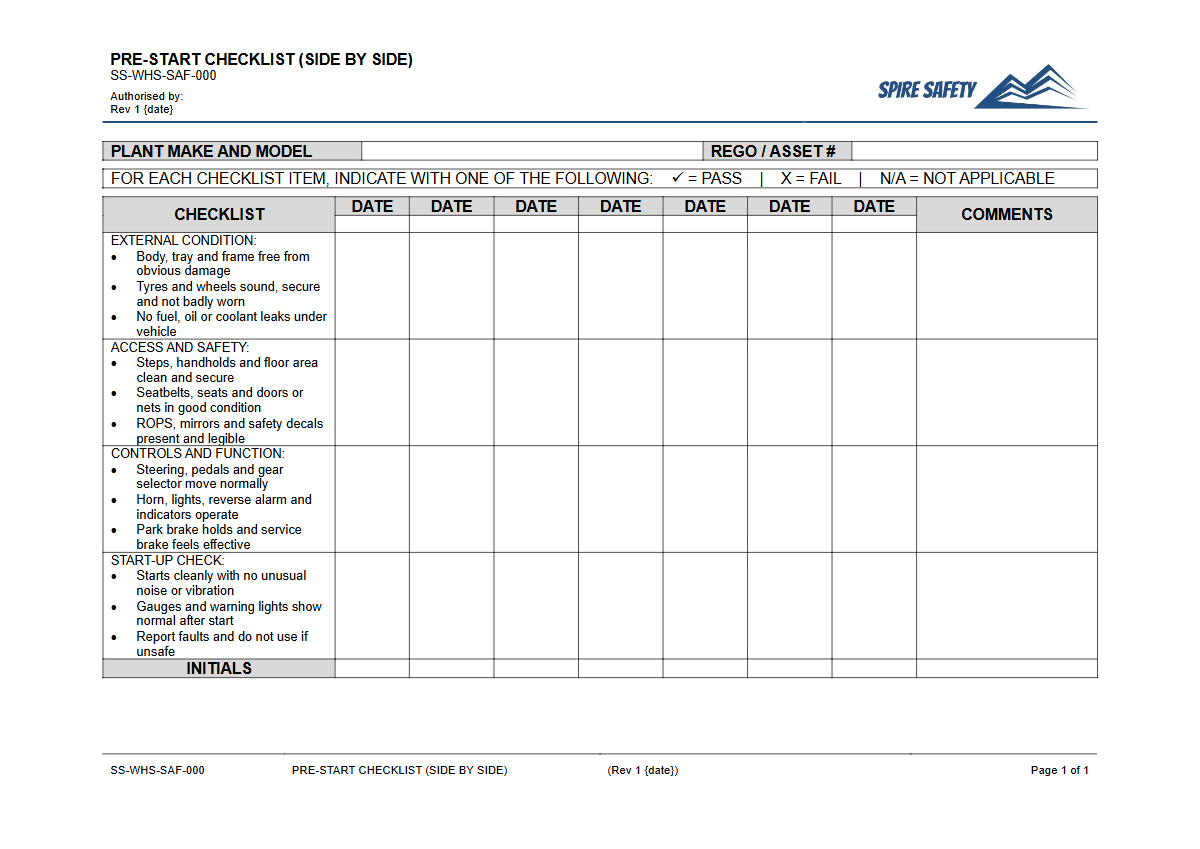
Download our Free Pre-Start Checklist for Side by Side vehicles. This structured DOCX and PDF template helps formalise daily equipment checks.
Free Pre-Start Checklist (Side by Side) Template
DOCX • 125 KB + PDF
Updated Oct 2026
No signup required
Purpose of the Free Pre-Start Checklist (Side by Side) Template
Side-by-side vehicles (SSVs), also known as utility-task vehicles (UTVs), are common in agriculture, construction, and recreational settings. However, their use comes with significant risks, including rollovers, collisions, and mechanical failures.
This Free Pre-Start Checklist (Side by Side) Template provides a structured framework for operators to conduct thorough safety inspections before commencing work. Regular pre-start checks are a fundamental safety practice that helps identify potential defects or damage before they lead to an incident, ensuring the vehicle is in a safe operating condition.
Using a documented checklist formalises the inspection process, creates a record of compliance, and helps fulfil a PCBU's duty of care under Australian WHS legislation. It encourages a proactive safety culture by empowering operators to take responsibility for their equipment's safety.
These checks are a fundamental component of a comprehensive approach to managing risks associated with plant and equipment. Integrating these checklists into your broader WHS management systems ensures they are not just a tick-box exercise, but a meaningful part of your safety culture.
Video walkthrough
How to use the Free Pre-Start Checklist (Side by Side) Template
This resource is provided as a downloadable DOCX file, allowing for easy customisation to suit your specific operational needs. A PDF version is also available for straightforward printing and use. To use the template effectively, follow these steps:
- Download: Select the DOCX format for editing or the PDF for immediate use.
- Customise: This is the most critical step. The provided checklist is a general guide. You must modify it to include checks specific to the make, model, and configuration of your side-by-side vehicle(s). Consider adding checks for any after-market attachments like spray tanks, trailers, or cargo cages.
- Train: Ensure all operators are trained on how to conduct the pre-start inspection correctly and understand the importance of each checkpoint. They must know the process for reporting defects and removing a vehicle from service.
- Implement: Integrate the checklist into your daily routine. The check should be completed by the operator before the vehicle's first use each day or at the start of each shift.
Please note: This document is a template and not a complete safety solution. It is your organisation's responsibility to ensure the checklist is customised and implemented appropriately for your specific vehicles, tasks, and workplace environment.
When to use a Pre-Start Checklist
A pre-start check for a side-by-side vehicle should be conducted at several key moments to ensure ongoing safety:
- Before the first use of the day: This is the most common and essential time to perform a full inspection.
- At the start of each shift: If the vehicle is used by multiple operators across different shifts, each operator should perform a check before they begin.
- After a long period of inactivity: If the vehicle has been idle for several days or weeks, a thorough check is necessary to ensure no issues have developed.
- After maintenance or repairs: To verify that the vehicle is safe and that all components have been correctly reassembled.
The principles of pre-start inspections are universal across different types of plant. For instance, the same systematic approach to checking safety features, controls, and fluid levels is required for our free Pre-Start Checklist (Forwarder) Template, which is designed for heavy forestry machinery.
Who should use it
The responsibility for using this checklist falls to several key personnel within an organisation:
- Vehicle Operators: The primary user of the checklist. The person operating the side-by-side is responsible for conducting the inspection before use.
- Supervisors and Managers: Responsible for ensuring that operators are completing the checks consistently and correctly. They must also manage the process for rectifying reported defects and signing off on repairs.
- Maintenance Personnel: Use the completed checklists to identify recurring faults and inform preventative maintenance schedules.
- WHS Officers: Use the records as evidence of safety procedures during safety audits and incident investigations.
Regularly reviewing the effectiveness of your pre-start process is also important. A formal WHS compliance auditing program can help identify gaps or inconsistencies in how checks are performed and documented across your organisation.
Whether the equipment is a large vehicle or a smaller piece of machinery like a ride-on mower, the process of verifying its condition before use is critical. You can see similar principles applied in our Pre-Start Checklist for Lawn Tractors.
Common mistakes
Common mistakes to avoid
- "Pencil-whipping" the checklist without physically and thoroughly inspecting each item on the vehicle.
- Failing to customise the generic template for the specific vehicle model, its attachments, and the operating environment.
- Continuing to use the vehicle after a significant defect has been identified, instead of immediately tagging it out of service.
- Overlooking critical safety items like tyre pressure/condition, seatbelt function, and the integrity of the Rollover Protective Structure (ROPS).
Legal references
Legal considerations
The following legal requirements may be relevant to this type of work.
- Work Health and Safety Act (Harmonised) — Provides the primary duties for protecting workers and other people from work health and safety risks.
- Work Health and Safety Regulations (Harmonised) — Sets out requirements supporting the management of workplace hazards and risks.
The following codes may be relevant to this type of work.
- Managing WHS Risks Code of Practice — Provides practical guidance on identifying hazards, assessing risks and applying effective controls.
- Work Health and Safety Consultation, Cooperation and Coordination Code of Practice — Provides practical guidance on consulting workers and coordinating with other duty holders.
- Managing the Work Environment and Facilities Code of Practice — Provides practical guidance on safe work environments, workplace facilities and related controls.
Did you know
Rollover Risk
Side-by-side vehicles (UTVs) have a high centre of gravity, making them susceptible to rollovers. The majority of fatalities and serious injuries involving UTVs are due to rollovers where the operator or passenger was not wearing a seatbelt and the vehicle was not fitted with, or had a compromised, Rollover Protective Structure (ROPS).
FAQ
Frequently asked questions
01What is a side-by-side vehicle pre-start checklist?
02Why are daily checks important for UTVs/Side-by-Sides?
03Who is responsible for completing the pre-start check?
04Can I use this template for any brand of side-by-side?
Share this resource
Free Pre-Start Checklist (Side by Side) Template
Browse Categories
How To Use It
- 1Download and open in Word or PDF.
- 2Replace the placeholders with your business details.
- 3Get it reviewed by a WHS specialist before rollout.
Need it customised?
Our WHS consultants can adapt this template to your site, run a gap analysis, or audit what you already have in place.
Book a Free Consultation WHS consulting servicesor call 1300 156 382