
Free Pre-Start Checklist (Skid Steer) Template
Download our free Pre-Start Checklist (Skid Steer) template to formalise daily equipment checks and manage WHS risks.
Free Pre-Start Checklist (Skid Steer) Template
DOCX • 125 KB + PDF
Updated Oct 2026
No signup required
Purpose of the Free Pre-Start Checklist (Skid Steer) Template
Operating a skid steer loader without verifying its condition introduces significant risks to the operator and others in the workplace. This Free Pre-Start Checklist (Skid Steer) Template provides a structured framework for operators to conduct thorough, routine inspections before use.
Using this checklist helps identify and control hazards associated with mechanical failures, hydraulic issues, or damaged safety components before they lead to an incident.
Formalising this process demonstrates a commitment to proactive safety management. The checklist serves as a daily record that the plant has been inspected, which is a key component of a PCBU’s duty of care.
Integrating these documented checks is a fundamental practice within robust WHS management systems, helping to ensure plant is maintained in a safe condition and creating a safer work environment for everyone.
What's included in this Pre-Start Checklist?
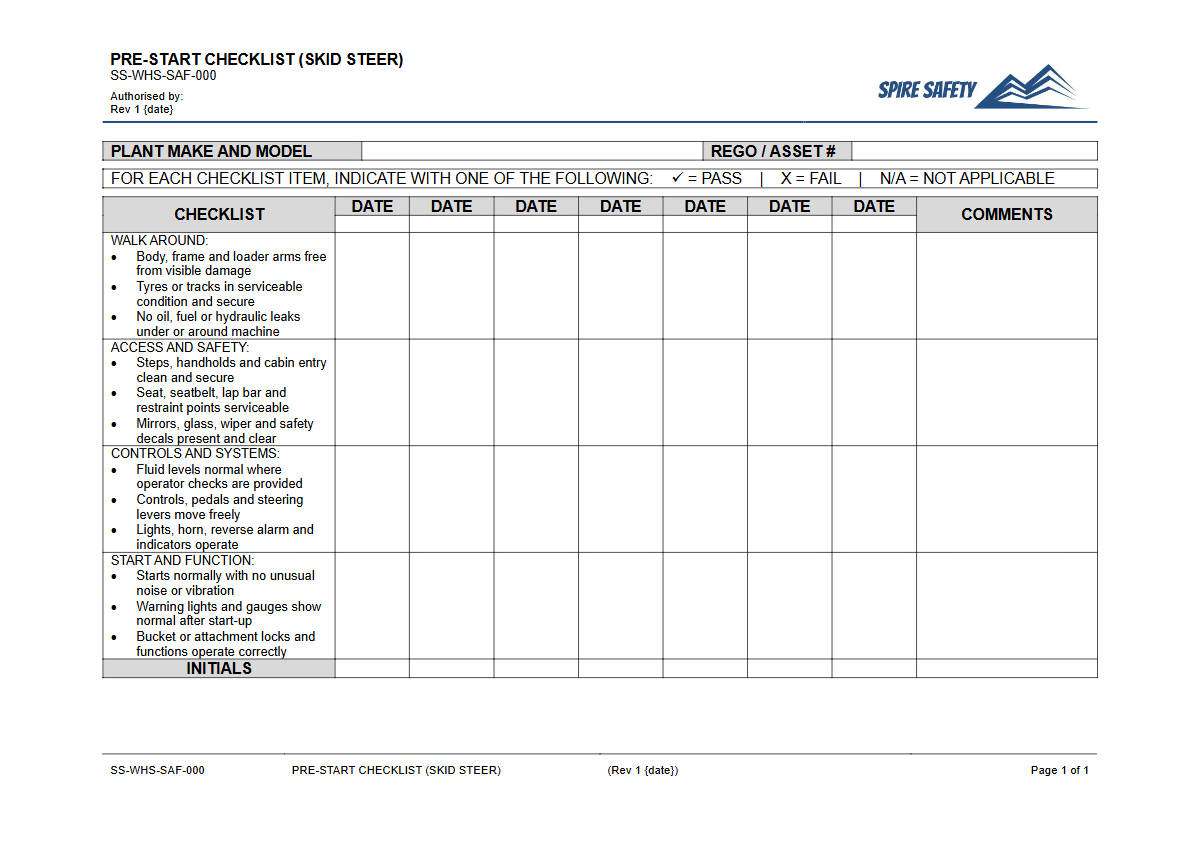
Our template is designed as a comprehensive starting point, aligned with Australian WHS practice. It prompts the operator to inspect critical components and functions, including:
- General Condition: Checks for fluid leaks, structural damage, and cleanliness.
- Operator's Compartment: Verifies controls, seatbelts, alarms, and visibility.
- Safety Features: Ensures roll-over protective structures (ROPS), falling object protective structures (FOPS), and interlock systems are functional.
- Tyres and Tracks: Inspection of pressure, wear, and tension.
- Attachments: Checks the security and condition of buckets, forks, or other implements.
- Fluid Levels: Verification of engine oil, hydraulic fluid, and coolant.
While this template is thorough, the fundamental principles of a pre-start inspection are universal across many types of machinery. Whether you are checking a skid steer or a floor saw, the goal is always to identify faults before the machine is energised.
Video walkthrough
How to use the Free Pre-Start Checklist (Skid Steer) Template
Using this template effectively involves more than just downloading it. The first step is to download the DOCX or PDF and adapt it to your specific operational needs.
For example, if your skid steers use unique attachments or operate in particularly harsh environments, you may need to add specific checkpoints.
Important: This is a template that must be customised. We are not familiar with your specific machinery, operational context, or unique workplace risks.
You must adapt this document by adding, removing, or modifying sections to ensure it is fully relevant and effective for your business. Once customised, ensure all operators are trained on how to complete the checklist correctly and understand the procedure for reporting faults.
The process should be clear: inspect the item, mark its condition, and sign off. If a defect is found that poses a safety risk, the machine must be taken out of service immediately, tagged, and the fault reported to a supervisor for rectification. This process is similar for other mobile plant, as seen in our Free Pre-Start Checklist (Forwarder) Template.
When to use it
A skid steer pre-start check should be conducted before the first use of the machine on every shift. If an operator changes during a shift, the incoming operator should also perform a check to verify the machine's condition before they begin work.
This consistent, daily routine ensures that potential issues are caught early and prevents the use of unsafe equipment. The completion of these records should be regularly monitored by supervisors, and the effectiveness of the process can be verified during a WHS compliance auditing process.
Who should use it
The primary user of this Pre-Start Checklist is the authorised and competent operator of the skid steer. They have the most immediate responsibility for ensuring the equipment they are about to use is safe. However, the document is also crucial for supervisors and managers, who must review the completed checklists to monitor the condition of their fleet and ensure faults are being reported and rectified promptly. For PCBUs, these records are vital evidence of the organisation’s efforts to meet its WHS obligations for plant safety. The responsibility is the same whether you are managing checks for a bin lifter or heavy earthmoving equipment. If you need help integrating these processes, you can seek expert WHS consulting to ensure your systems are effective and practical. For more templates and safety documents, browse our extensive free WHS resources library.
Common mistakes
Common mistakes to avoid
- Performing a 'tick and flick' by signing the form without physically inspecting the components.
- Failing to immediately tag out and report faulty equipment, allowing it to remain in service.
- Not customising the generic template to include checks for specific attachments or site conditions.
- Skipping the full walk-around inspection and only checking controls from inside the cab.
Legal references
Legal considerations
The following legal requirements may be relevant to this type of work.
- Work Health and Safety Act (Harmonised) — Provides the primary duties for protecting workers and other people from work health and safety risks.
- Work Health and Safety Regulations (Harmonised) — Sets out requirements supporting the management of workplace hazards and risks.
The following codes may be relevant to this type of work.
- Managing WHS Risks Code of Practice — Provides practical guidance on identifying hazards, assessing risks and applying effective controls.
- Work Health and Safety Consultation, Cooperation and Coordination Code of Practice — Provides practical guidance on consulting workers and coordinating with other duty holders.
- Managing the Work Environment and Facilities Code of Practice — Provides practical guidance on safe work environments, workplace facilities and related controls.
Did you know
Skid Steer Blind Spots
Skid steer loaders have significant blind spots to the rear and sides of the machine. Many serious incidents occur during reversing or turning, which highlights the critical importance of functional mirrors and reversing alarms that are verified during a pre-start check.
The First Skid Steer
The first three-wheeled skid steer loader was invented in 1957 by brothers Cyril and Louis Keller in Minnesota, USA. It was originally designed to help a farmer clean out turkey barns more efficiently.
FAQ
Frequently asked questions
01What's the difference between a pre-start check and a scheduled service?
02Is a completed skid steer checklist a legal document?
03How often should a skid steer pre-start check be done?
04What should happen if a fault is found during a pre-start inspection?
Share this resource
Free Pre-Start Checklist (Skid Steer) Template
Browse Categories
How To Use It
- 1Download and open in Word or PDF.
- 2Replace the placeholders with your business details.
- 3Get it reviewed by a WHS specialist before rollout.
Need it customised?
Our WHS consultants can adapt this template to your site, run a gap analysis, or audit what you already have in place.
Book a Free Consultation WHS consulting servicesor call 1300 156 382