
Free Pre-Start Checklist (Site 4WD) Template
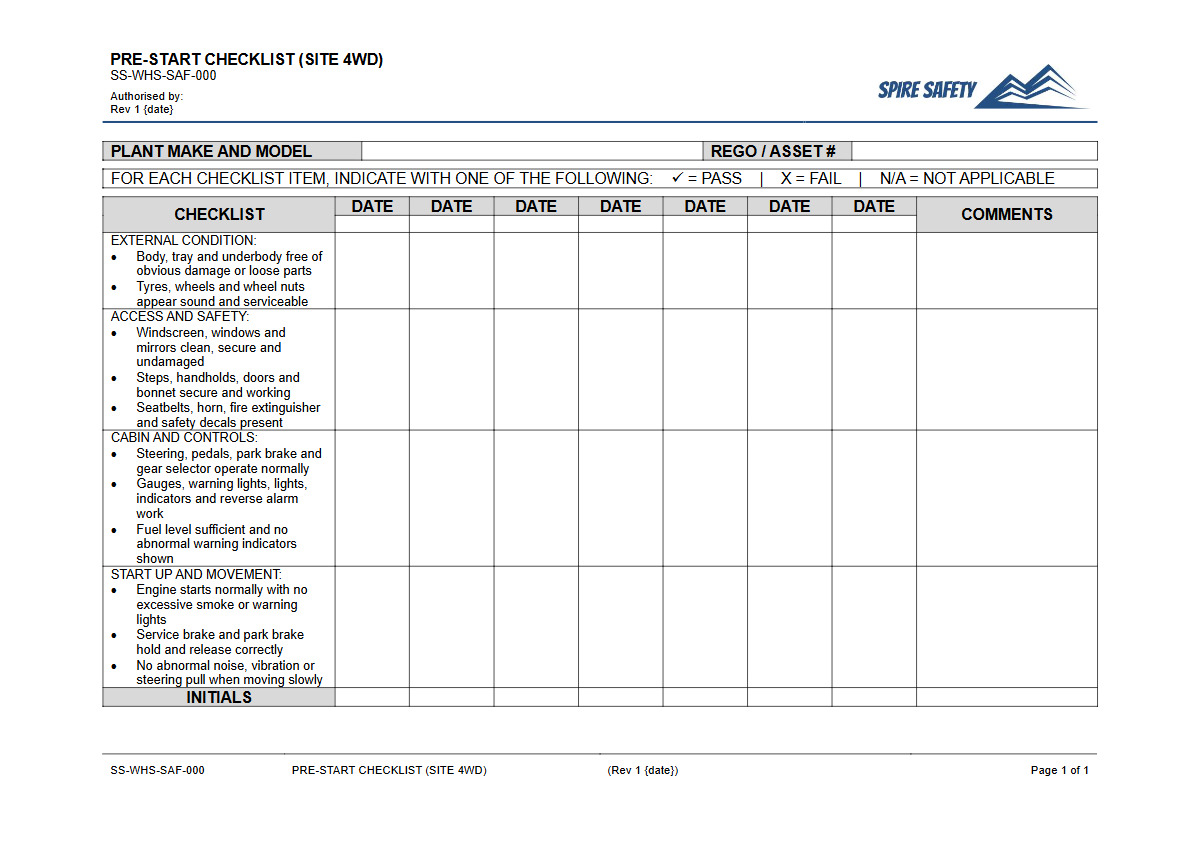
Formalise daily vehicle inspections with our free Pre-Start Checklist (Site 4WD) Template. This structured document helps identify faults and manage WHS risks.
Free Pre-Start Checklist (Site 4WD) Template
DOCX • 125 KB + PDF
Updated Oct 2026
No signup required
Purpose of the Free Pre-Start Checklist (Site 4WD) Template
Using a structured Free Pre-Start Checklist (Site 4WD) Template is a crucial step in ensuring vehicle safety and managing risk on any Australian worksite. This simple yet effective tool helps operators systematically inspect their four-wheel-drive vehicles before use, identifying potential mechanical faults, damage, or safety hazards before they can lead to an incident.
Site 4WDs often operate on uneven terrain, carry heavy loads, and work in close proximity to other workers, making them a significant workplace hazard if not properly maintained. Integrating this checklist into daily operations helps formalise safety procedures and provides a clear record that inspections have occurred.
By formalising these daily checks, organisations can foster a stronger safety culture, maintain their vehicle assets, and demonstrate due diligence. This process is a fundamental component of effective WHS management systems, helping to systematically identify and control risks associated with plant and equipment.
Consistent use of a Pre-Start Checklist supports compliance with duties under model WHS laws, which require a person conducting a business or undertaking (PCBU) to ensure, so far as is reasonably practicable, that plant is safe to use.
Video walkthrough
How to use the Free Pre-Start Checklist (Site 4WD) Template
This Pre-Start Checklist for a site 4WD is provided as a downloadable DOCX file for easy customisation and a PDF for immediate use. While it is designed as a comprehensive starting point aligned with Australian WHS principles, it is essential that you adapt it to your specific operational needs.
Effective safety management requires that procedures and documents reflect the actual risks in your workplace. We strongly recommend you add, remove, or modify checklist items to suit the specific make and model of your vehicles, the tasks they perform, and the unique environmental conditions of your site.
This may include checks for specific attachments, communication equipment like two-way radios, or emergency response gear.
For organisations operating a diverse fleet, it's important to use equipment-specific checklists. For example, the checks required for a 4WD are very different from those needed for specialised machinery, highlighting the need for a tailored Pre-Start Checklist for Forwarders in a forestry setting.
Customisation ensures the checklist is a relevant and practical tool for operators, not just a paperwork exercise.
When to use it
A Pre-Start Checklist should be completed by the operator before the first use of the vehicle on any given day or at the beginning of each shift. This ensures that the vehicle is in safe working order before it is put into operation.
The checklist is not a replacement for regular, scheduled maintenance by a qualified mechanic; rather, it is a frontline tool for catching immediate faults. If any defects or safety concerns are identified during the check, the vehicle should be reported, taken out of service, and tagged until the issue is resolved by a competent person.
Regular reviews of completed checklists can also help identify recurring problems, informing maintenance schedules and procurement decisions.
Integrating these checks into your standard operating procedures is key. Verifying that these processes are consistently followed is a common focus of internal and external safety reviews, like those conducted during a WHS compliance audit, to ensure documented procedures match workplace reality.
Who should use it
The primary user of this checklist is the vehicle operator or driver. They are in the best position to conduct a physical inspection and notice any changes or defects in the vehicle they use daily.
Supervisors and managers also have a role in ensuring the checks are being completed correctly and that any reported issues are addressed promptly. Safety officers and WHS committees can use the data from completed checklists to analyse trends, assess the effectiveness of vehicle safety programs, and make informed recommendations for improvement.
Fostering a safety-first mindset across all equipment use is essential. A worker who diligently checks their 4WD should apply the same rigour to other machinery, whether it's a major plant item or a workshop tool.
For example, workshop staff would use a specific checklist for a bench grinder to ensure its guarding and emergency stops are functional before use. Ultimately, every worker who interacts with plant and equipment has a responsibility to contribute to a safe working environment.
If you need assistance embedding these kinds of tools and behaviours, our WHS consulting services can provide practical support and guidance.
Common mistakes
Common mistakes to avoid
- Pencil-whipping the checklist (ticking boxes without performing the physical checks).
- Failing to report or act on identified faults, and continuing to use unsafe equipment.
- Using a generic, non-customised checklist that doesn't cover vehicle-specific or site-specific hazards.
- Poor record-keeping, making it impossible to track defects or prove inspections were completed.
Legal references
Legal considerations
The following legal requirements may be relevant to this type of work.
- Work Health and Safety Act (Harmonised) — Provides the primary duties for protecting workers and other people from work health and safety risks.
- Work Health and Safety Regulations (Harmonised) — Sets out requirements supporting the management of workplace hazards and risks.
The following codes may be relevant to this type of work.
- Managing WHS Risks Code of Practice — Provides practical guidance on identifying hazards, assessing risks and applying effective controls.
- Work Health and Safety Consultation, Cooperation and Coordination Code of Practice — Provides practical guidance on consulting workers and coordinating with other duty holders.
- Managing the Work Environment and Facilities Code of Practice — Provides practical guidance on safe work environments, workplace facilities and related controls.
Did you know
Vehicle Incidents
According to Safe Work Australia, between 2015 and 2019, 34% of workplace fatalities involved a vehicle. Nearly two-thirds of these incidents occurred on public roads, while the remainder happened at workplaces like farms, warehouses, and construction sites.
FAQ
Frequently asked questions
01Why are pre-start checks for 4WDs important on a work site?
02What should be included in a site 4WD pre-start checklist?
03How often should a 4WD pre-start check be completed?
04Can I use this template for my on-road company vehicles?
Share this resource
Free Pre-Start Checklist (Site 4WD) Template
Browse Categories
How To Use It
- 1Download and open in Word or PDF.
- 2Replace the placeholders with your business details.
- 3Get it reviewed by a WHS specialist before rollout.
Need it customised?
Our WHS consultants can adapt this template to your site, run a gap analysis, or audit what you already have in place.
Book a Free Consultation WHS consulting servicesor call 1300 156 382