
Free Pre-Start Checklist (Shot Blaster) Template
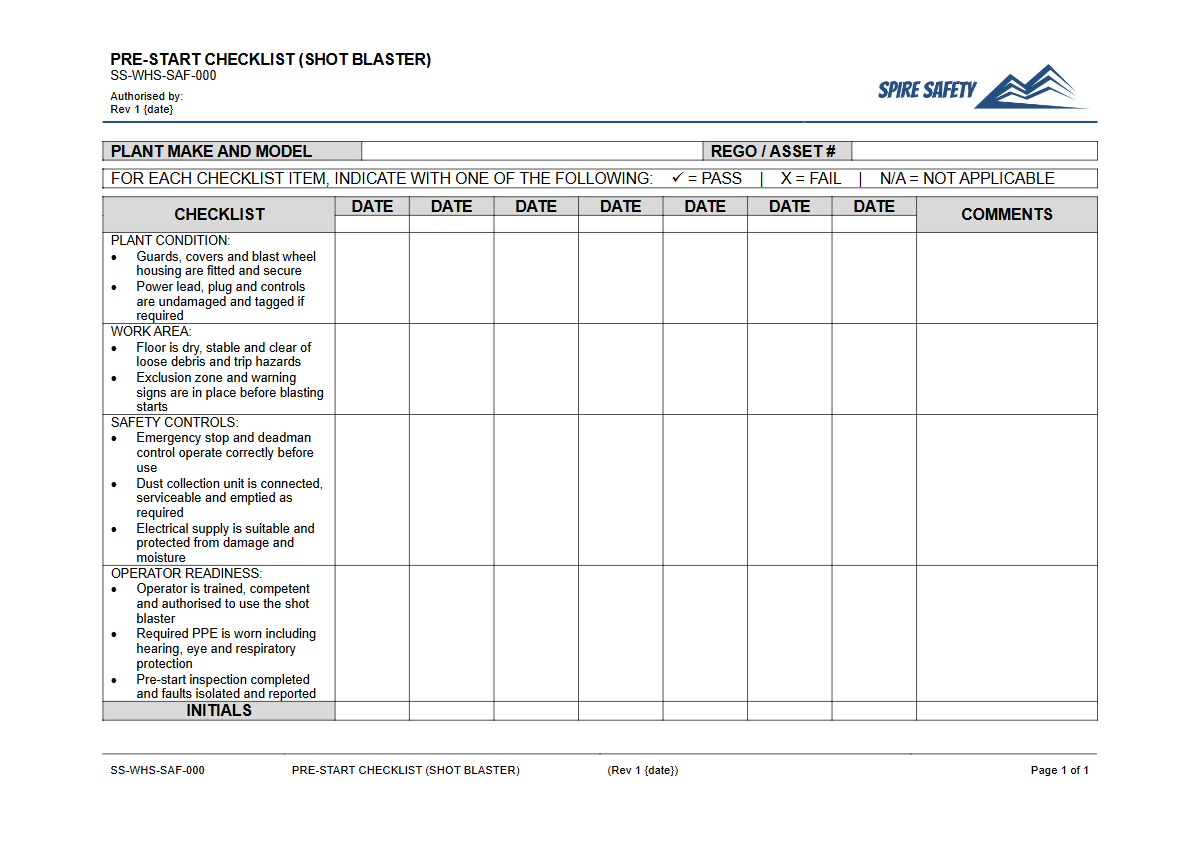
Download our free Pre-Start Checklist (Shot Blaster) Template to formalise daily equipment inspections and improve workplace safety. Available in DOCX and PDF.
Free Pre-Start Checklist (Shot Blaster) Template
DOCX • 125 KB + PDF
Updated Oct 2026
No signup required
Purpose of the Free Pre-Start Checklist (Shot Blaster) Template
A shot blaster is a powerful piece of equipment used for surface preparation, and its safe operation is critical. This free Pre-Start Checklist (Shot Blaster) Template provides a structured framework for operators to conduct thorough inspections before each use.
Implementing consistent pre-start checks helps identify potential faults, damage, or wear and tear that could lead to equipment failure, injury, or exposure to hazardous dust. Formalising this process helps demonstrate due diligence and reinforces a proactive safety culture.
Regular equipment checks are a fundamental component of proactive plant safety. They allow for the early detection of issues before they escalate into costly repairs or, more importantly, safety incidents.
This checklist serves as a practical tool to integrate into your daily operations, ensuring that key safety components like guards, hoses, nozzles, and dust extraction systems are functioning correctly. To further embed these practices, consider discussing them in a Pre-Start Checks and Plant Maintenance Toolbox Talk with your team.
Using this template helps standardise the inspection process across all operators and shifts, creating a reliable record of equipment condition over time. These records are invaluable for maintenance planning, incident investigations, and demonstrating procedural conformity.
This process should be a key part of your broader WHS management systems, linking daily operational tasks directly to your organisation's safety objectives.
Video walkthrough
How to Use the Free Pre-Start Checklist (Shot Blaster) Template
Using this template effectively involves more than just ticking boxes. Operators should be trained to understand what they are looking for with each item.
The process should be a physical and visual inspection, not a paperwork exercise. After downloading the DOCX or PDF file, integrate it into your Safe Operating Procedures (SOPs) for shot blasting activities.
The operator should complete the checklist at the start of their shift or before using the shot blaster for the first time that day. Any identified faults or 'No' answers must trigger a corrective action, such as reporting the issue to a supervisor and taking the equipment out of service until it is repaired by a competent person.
Ensure that completed checklists are filed and retained according to your organisation's record-keeping policies. This documentation provides a clear history of the equipment's safety status.
For a more comprehensive approach to operator safety, you may also use a Verification of Competency (Sand Blaster) template to confirm that workers have the necessary skills to operate abrasive blasting equipment safely, which shares many principles with shot blasting.
Customisation is Essential
This document is a general template and must be customised to suit the specific make and model of the shot blaster in your workplace, as well as your operational context and site-specific hazards. We recommend you consult the manufacturer's operating manual and conduct a risk assessment to identify all relevant inspection points.
Add, remove, or modify checklist items to ensure it is a perfect fit for your equipment and work environment.
When to Use This Pre-Start Checklist
The shot blaster pre-start checklist should be used at the beginning of every shift or before the equipment is operated for the first time each day. It should also be completed if a new operator takes over the equipment mid-shift.
This frequency ensures that any damage or faults that may have occurred during previous use, transport, or overnight are identified before work commences. Regular use of these checklists can be a key point of evidence during internal or external WHS compliance audits.
Who Should Use This Checklist
This checklist is designed to be completed by the trained and authorised operator of the shot blasting equipment. The responsibility for performing the check lies with the person who will be using the machine.
Supervisors or managers should also be familiar with the checklist to ensure they can verify its proper completion and address any reported defects promptly. The clear, simple format makes it accessible for operators, ensuring that the process is efficient and easy to follow, similar to the approach taken in our Pre-Start Checklist for Air Arc equipment.
By providing a standardised format, you ensure that every operator, regardless of experience level, is checking the same critical safety functions. For more templates and tools to support your safety processes, you can browse our complete free WHS resources library.
Common mistakes
Common mistakes to avoid
- Failing to check the condition of the dust collection system, leading to hazardous dust exposure.
- Ignoring wear and tear on hoses, couplings, and nozzles, which can lead to catastrophic failure under pressure.
- Using the incorrect type or size of abrasive media for the machine or job, causing poor performance and potential equipment damage.
- Treating the checklist as a 'tick and flick' exercise without physically inspecting the components.
Legal references
Legal considerations
The following legal requirements may be relevant to this type of work.
- Work Health and Safety Act (Harmonised) — Provides the primary duties for protecting workers and other people from work health and safety risks.
- Work Health and Safety Regulations (Harmonised) — Sets out requirements supporting the management of workplace hazards and risks.
The following codes may be relevant to this type of work.
- Managing WHS Risks Code of Practice — Provides practical guidance on identifying hazards, assessing risks and applying effective controls.
- Work Health and Safety Consultation, Cooperation and Coordination Code of Practice — Provides practical guidance on consulting workers and coordinating with other duty holders.
- Managing the Work Environment and Facilities Code of Practice — Provides practical guidance on safe work environments, workplace facilities and related controls.
Did you know
Abrasive Material Speed
Shot blasters can propel abrasive media at speeds exceeding 750 km/h. This extreme velocity is what allows it to effectively strip surfaces but also makes it incredibly dangerous if not properly controlled.
Dust Dangers
The dust generated from shot blasting can contain respirable crystalline silica, a hazardous substance that can cause silicosis, a serious and incurable lung disease. Effective dust control and respiratory protection are non-negotiable.
FAQ
Frequently asked questions
01What are the main hazards associated with shot blasting?
02Is a pre-start checklist a legal requirement in Australia?
03What should happen if a fault is found during a pre-start check?
04How long should we keep completed shot blaster pre-start checklists?
Share this resource
Free Pre-Start Checklist (Shot Blaster) Template
Browse Categories
How To Use It
- 1Download and open in Word or PDF.
- 2Replace the placeholders with your business details.
- 3Get it reviewed by a WHS specialist before rollout.
Need it customised?
Our WHS consultants can adapt this template to your site, run a gap analysis, or audit what you already have in place.
Book a Free Consultation WHS consulting servicesor call 1300 156 382