
Safe Work Method Statement (Multi-Tyre Roller Operation) Template
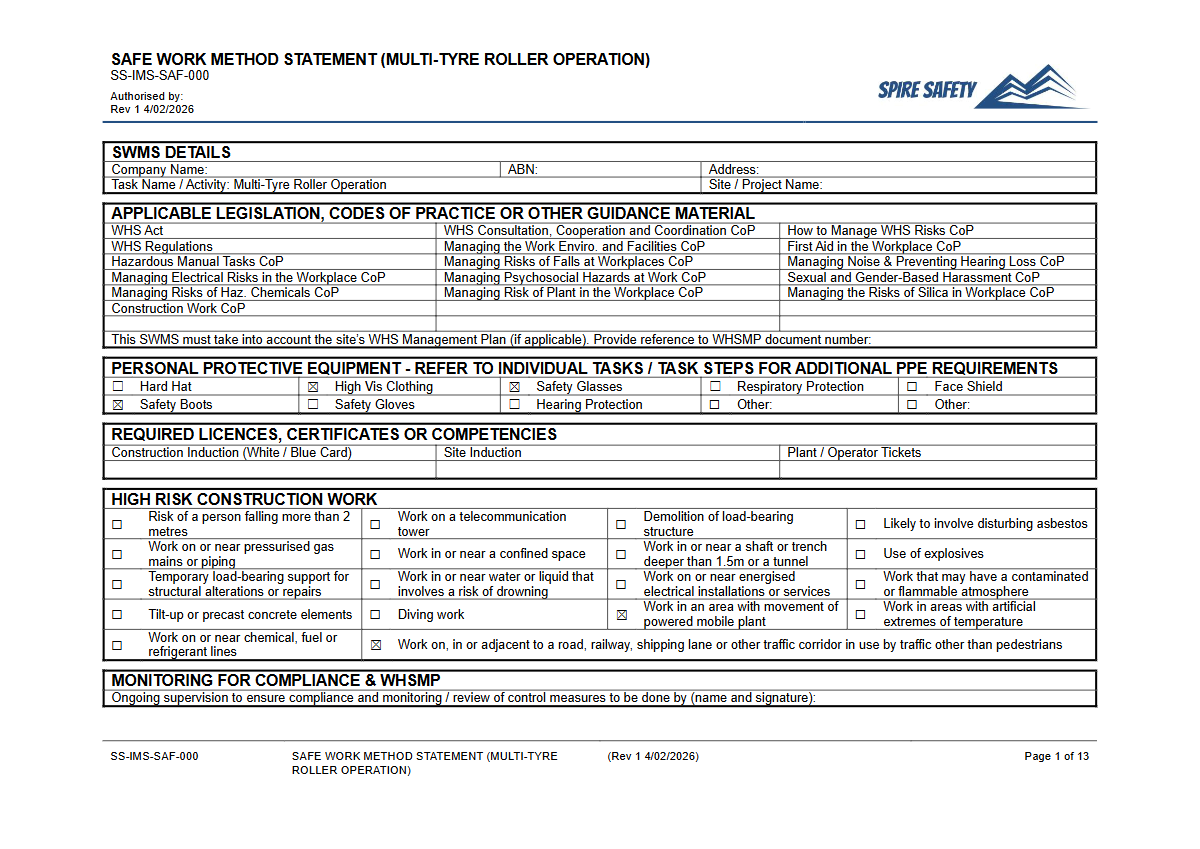
Download this free multi-tyre roller operation Safe Work Method Statement (SWMS) template to help manage WHS risks in your workplace.
Safe Work Method Statement (Multi-Tyre Roller Operation) Template
DOCX • 161 KB + PDF
Updated Oct 2026
No signup required
Purpose of the Safe Work Method Statement (Multi-Tyre Roller Operation) Template
Operating a multi-tyre roller involves significant risks that must be carefully managed to ensure worker safety and prevent workplace incidents. This free Safe Work Method Statement (Multi-Tyre Roller Operation) Template provides a structured framework to identify potential hazards associated with multi-tyre roller operation and outlines the control measures necessary to mitigate these risks.
It's an essential tool for any organisation involved in road construction, civil works, or similar operations, promoting a proactive approach to work health and safety.
A well-prepared Safe Work Method Statement (SWMS) helps to ensure that all tasks are performed safely, contributing to a safer work environment for everyone. This template is designed to align with Australian WHS practice, offering a practical resource for developing your organisation's safety documentation.
Video walkthrough
How to use the Safe Work Method Statement (Multi-Tyre Roller Operation) Template
Our free Safe Work Method Statement (Multi-Tyre Roller Operation) Template is provided in an editable DOCX format, making it easy for you to customise. To use this template effectively, follow these steps:
- Download: Access the DOCX file for immediate editing.
- Customise: Tailor the document to reflect the specific hazards, risks, and control measures relevant to your unique workplace, equipment, and operational procedures. This includes detailing site-specific conditions, the exact model of multi-tyre roller used, and any unique environmental factors. Please note: This template is a starting point and must be customised to your workplace's specific operations and conditions. I cannot supports your compliance efforts without your specific input.
- Consult: Engage with workers who will be operating the multi-tyre roller, as well as supervisors and safety personnel. Their practical experience is invaluable for identifying all potential hazards and developing effective control measures. Worker consultation is a key element of effective WHS management systems.
- Implement: Once customised and approved, ensure all workers involved in multi-tyre roller operation are trained and understand the SWMS. Make it readily available at the worksite.
- Review and Update: Regularly review the SWMS to ensure it remains current and effective, especially after incidents, changes in equipment, or alterations to work processes. This ongoing review is critical for maintaining robust safety standards. For assistance with reviewing your WHS documentation, consider our WHS compliance auditing services.
When to use it
This Safe Work Method Statement template is crucial in several scenarios:
- Before commencing any work involving the operation of a multi-tyre roller.
- When new multi-tyre roller equipment is introduced to the workplace.
- If there are changes to existing work processes or site conditions that could affect the risks associated with multi-tyre roller operation.
- Following any incident or near-miss involving a multi-tyre roller, to review and improve safety procedures.
- As part of regular safety audits and reviews to ensure ongoing compliance and best practice.
Who should use it
This template is designed for a range of individuals and organisations, including:
- Employers and PCBU's: To meet their primary duty of care in providing a safe working environment.
- WHS Managers and Officers: For developing and implementing comprehensive safety documentation.
- Site Supervisors and Forepersons: To guide safe work practices on site and induction processes for workers.
- Multi-tyre Roller Operators: To understand the specific safety procedures and control measures they must follow.
- Contractors: Who are working on projects involving multi-tyre roller use, ensuring their operations align with the principal contractor's WHS requirements.
Explore our full range of free WHS resources library for additional templates and guidance.
Common mistakes
Common mistakes to avoid
- Not adequately customising the template to site-specific conditions and equipment.
- Failing to consult with workers who will be performing the multi-tyre roller operation.
- Not regularly reviewing and updating the SWMS, especially after incidents or changes.
- Treating the SWMS as a tick-box exercise rather than a living document guiding safe work.
Legal references
Legal considerations
The following legal requirements may be relevant to this type of work.
- Work Health and Safety Act (Harmonised) — Provides the primary duties for protecting workers and other people from work health and safety risks.
- Work Health and Safety Regulations (Harmonised) — Sets out requirements supporting the management of workplace hazards and risks.
The following codes may be relevant to this type of work.
- Managing WHS Risks Code of Practice — Provides practical guidance on identifying hazards, assessing risks and applying effective controls.
- Work Health and Safety Consultation, Cooperation and Coordination Code of Practice — Provides practical guidance on consulting workers and coordinating with other duty holders.
- Managing the Work Environment and Facilities Code of Practice — Provides practical guidance on safe work environments, workplace facilities and related controls.
Did you know
Compaction Importance
Multi-tyre rollers are critical in construction for compacting asphalt and granular bases, significantly impacting the durability and longevity of roads and surfaces.
Machine Weight
Some multi-tyre rollers can weigh over 20 tonnes, highlighting the importance of proper operation and ground stability assessments to prevent accidents.
FAQ
Frequently asked questions
01What is the primary purpose of a Safe Work Method Statement for multi-tyre roller operations?
02Is this multi-tyre roller SWMS template legally binding in Australia?
03How often should a Safe Work Method Statement for multi-tyre roller operation be reviewed?
04Can this template be used for other types of compaction equipment?
Share this resource
Safe Work Method Statement (Multi-Tyre Roller Operation) Template
Browse Categories
How To Use It
- 1Download and open in Word or PDF.
- 2Replace the placeholders with your business details.
- 3Get it reviewed by a WHS specialist before rollout.
Need it customised?
Our WHS consultants can adapt this template to your site, run a gap analysis, or audit what you already have in place.
Book a Free Consultation WHS consulting servicesor call 1300 156 382
Related templates
- Safe Work Method Statement (Padfoot Roller Operation) Template
- Safe Work Method Statement (Prime Mover Operation) Template
- Safe Work Method Statement (Scissor Lift Operation) Template
- Safe Work Method Statement (Scraper Operation) Template
- Safe Work Method Statement (Skid Steer Loader Operation) Template
- Safe Work Method Statement (Smooth Drum Roller Operation) Template