
Free Pre-Start Checklist (Sprinkler Pump) Template
Download our Free Pre-Start Checklist for Sprinkler Pumps. This DOCX & PDF template helps formalise inspections of critical fire safety equipment.
Free Pre-Start Checklist (Sprinkler Pump) Template
DOCX • 125 KB + PDF
Updated Oct 2026
No signup required
Purpose of the Free Pre-Start Checklist (Sprinkler Pump) Template
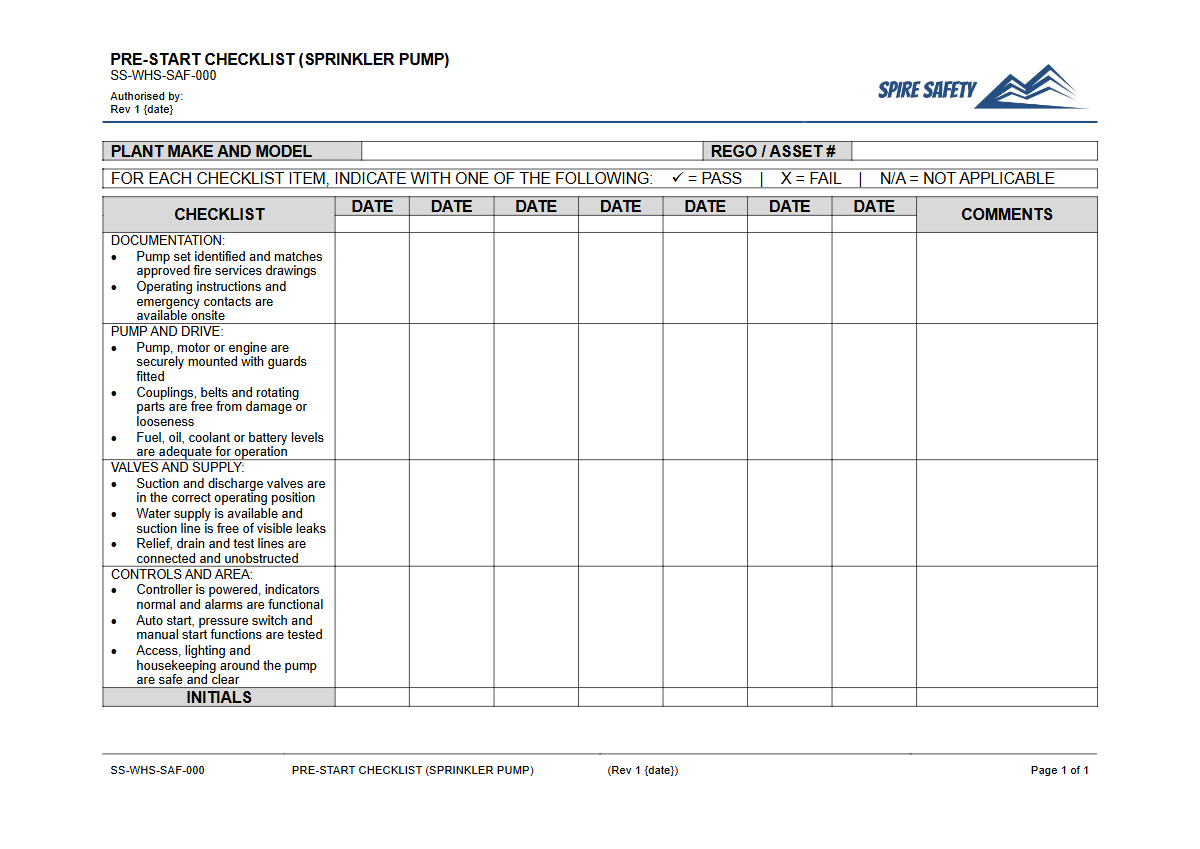
The primary purpose of this checklist is to guide a competent person through a systematic inspection of a fire sprinkler pump system before it is tested or relied upon. It formalises the process of checking key components like the engine or motor, fuel or power supply, control panels, pipework, and water levels.
By documenting these checks, organisations can create a clear record of equipment condition, demonstrate due diligence in maintaining critical safety systems, and identify maintenance needs proactively. This process is a key part of a comprehensive risk management approach.
An effective pre-start inspection builds upon the findings of a detailed Water Pump Risk Assessment, which identifies the specific hazards associated with the equipment in its operating environment.
Video walkthrough
How to use the Free Pre-Start Checklist (Sprinkler Pump) Template
This template is available for download in both DOCX and PDF formats. The DOCX version is fully editable, allowing you to tailor the checklist to the specific make, model, and configuration of your sprinkler pump system.
It is crucial that you customise this document to reflect your workplace's unique requirements, equipment, and operating context. We have provided a comprehensive starting point, but it must be adapted by a competent person.
Integrate the finalised checklist into your broader safe systems of work, such as a corresponding Pump SOP (Safe Operating Procedure) Template, to ensure checks are completed correctly and consistently.
When to use it
The frequency of sprinkler pump pre-start checks should be determined by relevant Australian Standards (such as AS 1851), manufacturer recommendations, and your own internal risk assessment. Typically, checks are performed weekly for systems on standby.
More frequent inspections may be necessary depending on the environment, equipment age, and operational demands. This checklist should be completed before any planned test run or routine servicing activity.
Integrating these routine safety activities is a fundamental component of effective WHS management systems, helping to create a proactive safety culture.
Who should use it
This Pre-Start Checklist should be used by personnel who are trained, competent, and authorised to inspect and operate the fire sprinkler pump system. This may include facility maintenance staff, specialist fire technicians, or designated building operators.
The user must have sufficient knowledge to understand each checkpoint and recognise what constitutes a safe and acceptable condition versus a defect that requires reporting or immediate action. To further embed this knowledge, consider running targeted training sessions using a Pre-Start Checks and Plant Maintenance Toolbox Talk to reinforce the importance and correct execution of these inspections.
To ensure ongoing effectiveness, safety documents like pre-start checklists should be reviewed periodically. This ensures they remain current with any changes to equipment, procedures, or regulations.
Conducting periodic WHS compliance auditing can help verify that procedures are not only documented but also consistently followed in practice, providing valuable feedback for continuous improvement of your safety framework. You can find more templates to support your safety program in our free WHS resources library.
Common mistakes
Common mistakes to avoid
- Using the template 'as-is' without customising it for the specific pump make and model.
- Failing to train operators on how to perform the checks and what to look for.
- "Pencil-whipping" the checklist without physically verifying each item.
- Ignoring or failing to report minor faults, which can escalate into major failures.
Legal references
Legal considerations
The following legal requirements may be relevant to this type of work.
- Work Health and Safety Act (Harmonised) — Provides the primary duties for protecting workers and other people from work health and safety risks.
- Work Health and Safety Regulations (Harmonised) — Sets out requirements supporting the management of workplace hazards and risks.
The following codes may be relevant to this type of work.
- Managing WHS Risks Code of Practice — Provides practical guidance on identifying hazards, assessing risks and applying effective controls.
- Work Health and Safety Consultation, Cooperation and Coordination Code of Practice — Provides practical guidance on consulting workers and coordinating with other duty holders.
- Managing the Work Environment and Facilities Code of Practice — Provides practical guidance on safe work environments, workplace facilities and related controls.
Did you know
Independent Power
Fire sprinkler pumps are often powered by diesel engines or connected to a backup generator. This ensures they can operate during a power failure, which is a common occurrence during a fire event.
The Standard for Service
In Australia, AS 1851 'Routine service of fire protection systems and equipment' is the key standard that outlines the requirements for inspecting, testing, and maintaining systems like sprinkler pumps.
FAQ
Frequently asked questions
01What should be included in a sprinkler pump pre-start checklist?
02How often should a fire sprinkler pump be tested in Australia?
03Who is responsible for inspecting fire sprinkler pumps?
04Why is a documented pre-start check important for sprinkler pumps?
Share this resource
Free Pre-Start Checklist (Sprinkler Pump) Template
Browse Categories
How To Use It
- 1Download and open in Word or PDF.
- 2Replace the placeholders with your business details.
- 3Get it reviewed by a WHS specialist before rollout.
Need it customised?
Our WHS consultants can adapt this template to your site, run a gap analysis, or audit what you already have in place.
Book a Free Consultation WHS consulting servicesor call 1300 156 382