
Free Pre-Start Checklist (Stabiliser) Template
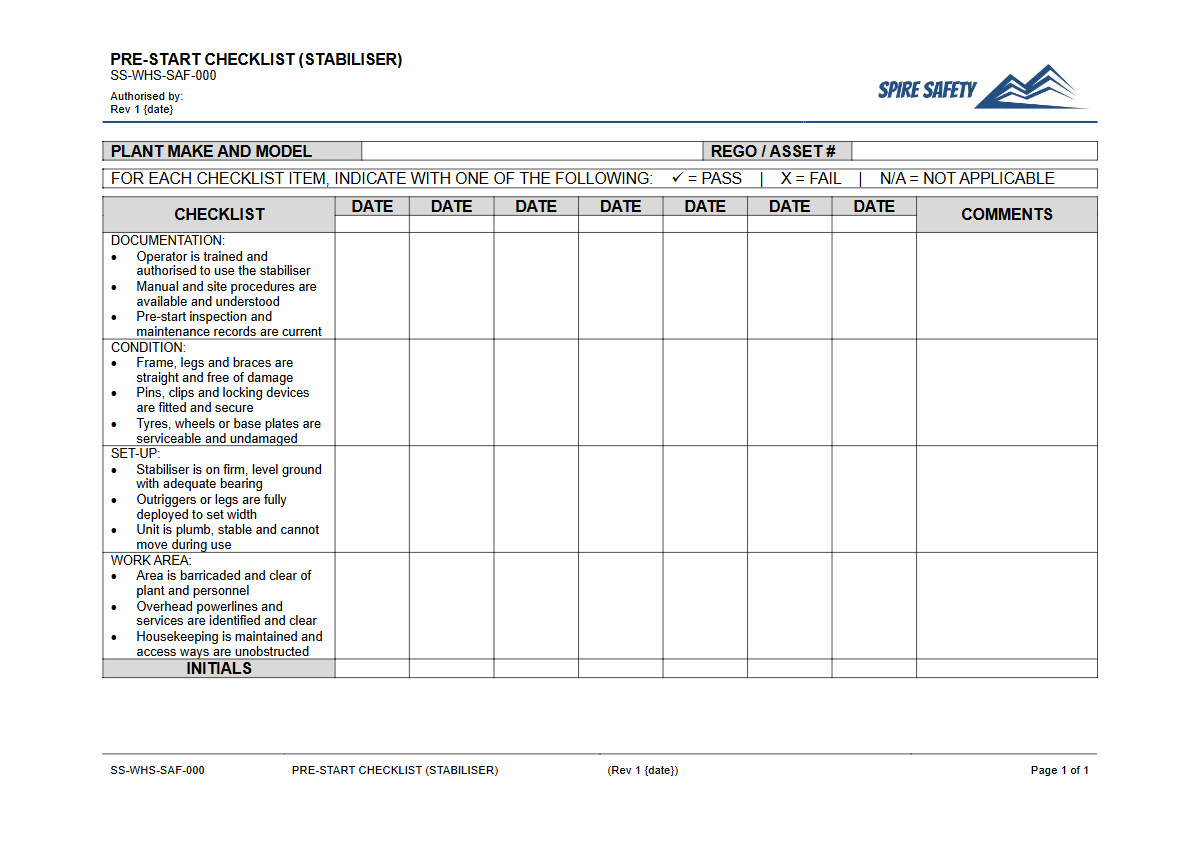
Download our free Pre-Start Checklist (Stabiliser) Template. This structured DOCX & PDF resource helps formalise safety checks for stabiliser equipment.
Free Pre-Start Checklist (Stabiliser) Template
DOCX • 125 KB + PDF
Updated Oct 2026
No signup required
Purpose of the Free Pre-Start Checklist (Stabiliser) Template
Ensuring the stability of plant and equipment like mobile cranes, concrete pumps, and elevating work platforms (EWPs) is a non-negotiable safety requirement. Our Free Pre-Start Checklist (Stabiliser) Template provides a structured framework for operators to conduct thorough inspections of outriggers and stabilisers before each use.
Using this checklist helps formalise a critical safety process, moving beyond ad-hoc checks to a documented, consistent routine.
The primary purpose of this document is to help identify mechanical, hydraulic, or structural faults before the equipment is put under load. By methodically checking key components, operators can detect issues such as fluid leaks, cracks, and excessive wear that could lead to failure and catastrophic tip-over incidents.
This process is a fundamental part of a proactive approach to risk management, demonstrating due diligence and contributing to a safer work environment for everyone on site. A consistent inspection record also assists with maintenance planning and can be used as a valuable training aid; our pre-start checks and plant maintenance toolbox talk can help reinforce these principles with your team.
Video walkthrough
How to Use the Free Pre-Start Checklist (Stabiliser) Template
This template, available in both DOCX and PDF formats, is designed to be a practical tool for your daily operations. To implement it effectively, follow these steps:
- Download and Customise: Download the template and modify it to suit the specific make and model of your equipment. Different machines have unique stabiliser systems, and your checklist must reflect these variations.
- Train Your Workers: Ensure all operators are trained not just on how to operate the equipment, but also on how to conduct a thorough pre-start inspection using the customised checklist. Competency is key to an effective check.
- Integrate into Daily Routines: Make the completion of the checklist a mandatory step before any operation begins. The form should be easily accessible to operators at the start of their shift.
- Establish a Reporting Process: Create a clear procedure for what an operator must do if a fault is identified. This must include immediately reporting the defect, removing the equipment from service, and ensuring it is not used until certified as safe.
IMPORTANT: This template provides a solid foundation, but it is not a complete, out-of-the-box solution. We strongly recommend you customise it to reflect the specific make and model of your stabiliser systems, your operational environment, and your organisation's unique risk profile.
Integrating these procedures into your broader WHS management systems ensures a holistic approach to workplace safety.
When to Use It
A stabiliser pre-start check should be conducted at several key intervals to ensure ongoing safety:
- Before every shift: The most crucial check, performed before the equipment is used for the first time each day or shift.
- After a long period of inactivity: If equipment has been idle, a thorough check is needed to ensure no issues have developed.
- Following transport: After being moved between sites, vibrations and shocks can potentially cause damage that needs to be identified.
- After maintenance or repairs: A check must be completed to verify that the equipment is safe to return to service.
Discussions about the day's tasks and any specific environmental conditions affecting stability (e.g., soft ground, slopes) are perfect topics for your daily site meeting, which can be documented using a pre-start meeting template.
Who Should Use It
This checklist is designed for use by competent and authorised personnel. This typically includes:
- Equipment Operators: As the person in direct control of the plant, the operator holds the primary responsibility for conducting the pre-start check. They must be deemed competent not only in the operation of the machine but also in identifying potential hazards and defects.
- Supervisors and Site Managers: Management personnel are responsible for ensuring that the pre-start check system is being implemented correctly. This includes verifying that operators are completing the checks and that action is taken on reported defects.
- Maintenance Personnel: Fitters and mechanics can use the checklist to guide inspections and document repairs, ensuring all critical stabiliser components are assessed.
For high-risk work involving stabilised plant, such as that detailed in a SWMS for Concrete Truck Operations, the pre-start check is an essential control measure. The effectiveness of these controls can be verified through periodic WHS compliance auditing to ensure the process is working as intended.
Common mistakes
Common mistakes to avoid
- Failing to check the ground condition and sub-surface stability beneath the stabiliser pads.
- Ignoring minor hydraulic leaks or 'weeping' seals, which can lead to sudden failure under load.
- Using the checklist as a 'tick and flick' exercise without physically and visually inspecting each item.
- Not immediately removing faulty equipment from service after a defect is found.
Legal references
Legal considerations
The following legal requirements may be relevant to this type of work.
- Work Health and Safety Act (Harmonised) — Provides the primary duties for protecting workers and other people from work health and safety risks.
- Work Health and Safety Regulations (Harmonised) — Sets out requirements supporting the management of workplace hazards and risks.
The following codes may be relevant to this type of work.
- Managing WHS Risks Code of Practice — Provides practical guidance on identifying hazards, assessing risks and applying effective controls.
- Work Health and Safety Consultation, Cooperation and Coordination Code of Practice — Provides practical guidance on consulting workers and coordinating with other duty holders.
- Managing the Work Environment and Facilities Code of Practice — Provides practical guidance on safe work environments, workplace facilities and related controls.
Did you know
Ground Condition is Key
The majority of incidents involving stabilisers are not due to mechanical failure, but unstable ground conditions. A pre-start check must always include assessing the surface the stabiliser feet will rest on.
FAQ
Frequently asked questions
01What should be checked on a stabiliser system before use?
02Is this stabiliser pre-start checklist a legal document?
03How often should stabiliser pre-start checks be done?
04Who is responsible for completing the stabiliser checklist?
Share this resource
Free Pre-Start Checklist (Stabiliser) Template
Browse Categories
How To Use It
- 1Download and open in Word or PDF.
- 2Replace the placeholders with your business details.
- 3Get it reviewed by a WHS specialist before rollout.
Need it customised?
Our WHS consultants can adapt this template to your site, run a gap analysis, or audit what you already have in place.
Book a Free Consultation WHS consulting servicesor call 1300 156 382