
Free Pre-Start Checklist (Square Baler) Template
Download our free Pre-Start Checklist (Square Baler) Template. This structured Word and PDF document helps formalise equipment safety inspections. Download now.
Free Pre-Start Checklist (Square Baler) Template
DOCX • 125 KB + PDF
Updated Oct 2026
No signup required
Purpose of the Free Pre-Start Checklist (Square Baler) Template
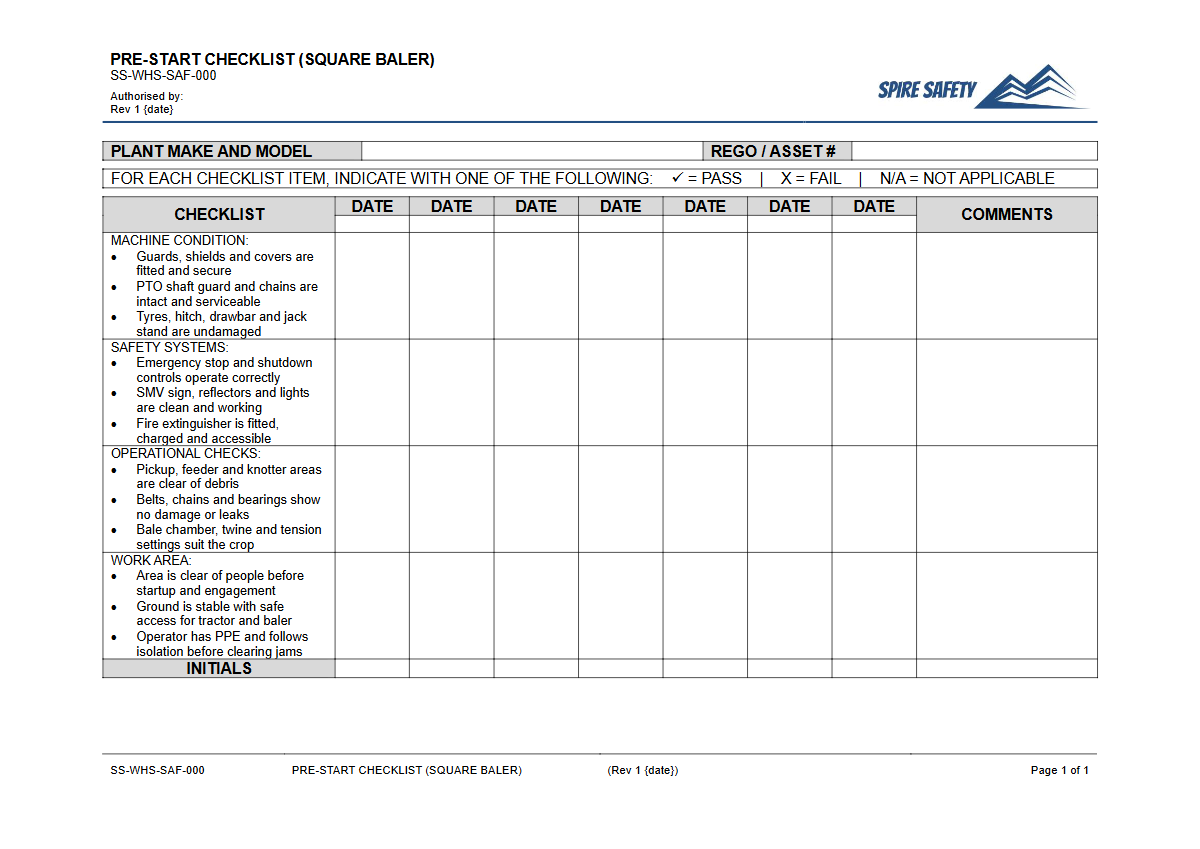
Operating a square baler involves significant mechanical, hydraulic, and entanglement risks. This Free Pre-Start Checklist (Square Baler) Template provides a structured format for operators to conduct thorough safety and maintenance inspections before each use.
Its primary purpose is to systematically identify potential hazards, defects, or malfunctions that could lead to injury or equipment failure. Formalising this process helps create a safer working environment, reduces unplanned downtime, and provides a documented record of due diligence.
By using a comprehensive checklist, organisations can ensure critical safety components like PTO guards, hydraulic lines, and emergency stops are functional. This proactive approach to safety is a fundamental part of managing risks associated with agricultural plant and machinery, aligning with Australian WHS principles.
Documenting these checks is a vital component of any broader WHS management system, demonstrating a commitment to proactive risk management.
Video walkthrough
How to use the Free Pre-Start Checklist (Square Baler) Template
This resource is available for immediate download in both DOCX (Microsoft Word) and PDF formats. The DOCX file is fully editable, allowing you to tailor it to your specific operational needs.
The checklist is designed as a user-friendly tool for operators to complete at the start of their shift or before operating the equipment.
Important: This template provides a solid foundation based on common safety checks for square balers. However, to be effective, we strongly recommend you customise it to reflect the specific make and model of your equipment, your site's unique risks, and any state-specific regulations.
You should add, remove, or modify checklist items to ensure they are relevant to your machinery and work environment. Add your company logo and details to formalise the document for your organisation.
When to use it
A pre-start check should be completed before every use of the square baler. This ensures the equipment's condition is verified before it is subjected to operational stresses.
Integrating this check into your standard operating procedures (SOPs) makes it a non-negotiable part of the daily routine. Regular safety discussions, supported by resources like a Pre-Start Checks and Plant Maintenance Toolbox Talk, can help reinforce the importance of these daily inspections.
Completed checklists should be filed and stored as part of the plant's maintenance and safety records. These documents can be invaluable during safety investigations or when undergoing a WHS compliance auditing process, as they provide evidence of a consistent safety inspection program.
Who should use it
This checklist should be used by any person deemed competent to operate a square baler. This typically includes:
- Equipment Operators: As the primary users, they are responsible for conducting the check and confirming the baler is safe to operate.
- Supervisors and Farm Managers: They are responsible for ensuring operators are trained and competent to perform the checks, reviewing completed forms, and taking action on reported defects.
- Maintenance Personnel: They may use the completed checklists to identify recurring faults and schedule preventative maintenance before a major failure occurs.
For high-risk activities involving mobile plant, a pre-start check is often a prerequisite control measure listed in a higher-level risk assessment, similar to how a Safe Work Method Statement for Concrete Truck Operation details controls for that specific task. To ensure clear communication of daily hazards, many teams begin the day with a structured meeting, which can be documented using our free Pre-Start Meeting Template.
Key Inspection Areas on the Checklist
While you must customise the template, it prompts the user to inspect several critical areas, including:
- Guarding: Checking all guards, especially for the PTO shaft, drivelines, and flywheel, are in place and undamaged.
- Hydraulics: Looking for leaks in hoses, rams, and fittings.
- Mechanical Components: Inspecting the pickup, plunger, knotters, and bale chamber for wear, damage, or blockages.
- Safety Features: Verifying the functionality of emergency stops, warning decals, and lights.
- General Condition: Checking tyre pressure, structural integrity, and cleanliness.
If you need assistance integrating this document or developing more comprehensive safety procedures for your agricultural operations, our WHS consulting services can provide tailored support. You can also explore hundreds of other resources in our free WHS resources library.
Common mistakes
Common mistakes to avoid
- Using a generic checklist that isn't specific to the baler's make and model.
- "Pencil-whipping" the checklist without physically or visually verifying each item.
- Failing to immediately isolate and tag out faulty equipment, allowing it to be used by others.
- Not retaining completed checklists as part of the equipment's official maintenance and safety records.
Legal references
Legal considerations
The following legal requirements may be relevant to this type of work.
- Work Health and Safety Act (Harmonised) — Provides the primary duties for protecting workers and other people from work health and safety risks.
- Work Health and Safety Regulations (Harmonised) — Sets out requirements supporting the management of workplace hazards and risks.
The following codes may be relevant to this type of work.
- Managing WHS Risks Code of Practice — Provides practical guidance on identifying hazards, assessing risks and applying effective controls.
- Work Health and Safety Consultation, Cooperation and Coordination Code of Practice — Provides practical guidance on consulting workers and coordinating with other duty holders.
- Managing the Work Environment and Facilities Code of Practice — Provides practical guidance on safe work environments, workplace facilities and related controls.
Did you know
Entanglement Hazard
A significant number of agricultural machinery incidents involve Power Take-Off (PTO) shafts. A missing or damaged guard is a critical defect that must be identified in a pre-start check to prevent catastrophic injury.
Hydraulic Pressure
Hydraulic systems on large balers can operate at pressures exceeding 2000 PSI. A pinhole leak can inject fluid directly into the skin, causing severe and complex injuries that require immediate medical attention.
FAQ
Frequently asked questions
01What should happen if a fault is found during a square baler pre-start check?
02Is this pre-start checklist legally required in Australia?
03How often should a square baler be inspected?
04Can I use this template for a round baler?
Share this resource
Free Pre-Start Checklist (Square Baler) Template
Browse Categories
How To Use It
- 1Download and open in Word or PDF.
- 2Replace the placeholders with your business details.
- 3Get it reviewed by a WHS specialist before rollout.
Need it customised?
Our WHS consultants can adapt this template to your site, run a gap analysis, or audit what you already have in place.
Book a Free Consultation WHS consulting servicesor call 1300 156 382