
Free Pre-Start Checklist (Toaster) Template
Download our Free Pre-Start Checklist (Toaster) Template to formalise safety checks on this common workplace appliance.
Free Pre-Start Checklist (Toaster) Template
DOCX • 125 KB + PDF
Updated Oct 2026
No signup required
Purpose of the Free Pre-Start Checklist (Toaster) Template
Even simple workplace appliances like toasters can pose significant electrical and fire hazards if not properly maintained. Our Free Pre-Start Checklist (Toaster) Template provides a structured starting point for organisations to formalise daily safety inspections.
Implementing this checklist helps workers systematically identify potential issues like frayed cords, faulty switches, or unsafe placement before they lead to an incident. Regular, documented checks are a fundamental part of demonstrating a commitment to workplace health and safety.
This document encourages a proactive safety culture by empowering workers to take responsibility for the equipment they use. By integrating this check into daily routines, you can reduce the risk of electrical shock, burns, and fires in kitchens, break rooms, and other staff areas.
Consistent use of pre-start checklists is a key component of effective WHS management systems, helping to ensure equipment remains in a safe, operational condition.
Video walkthrough
How to use the Free Pre-Start Checklist (Toaster) Template
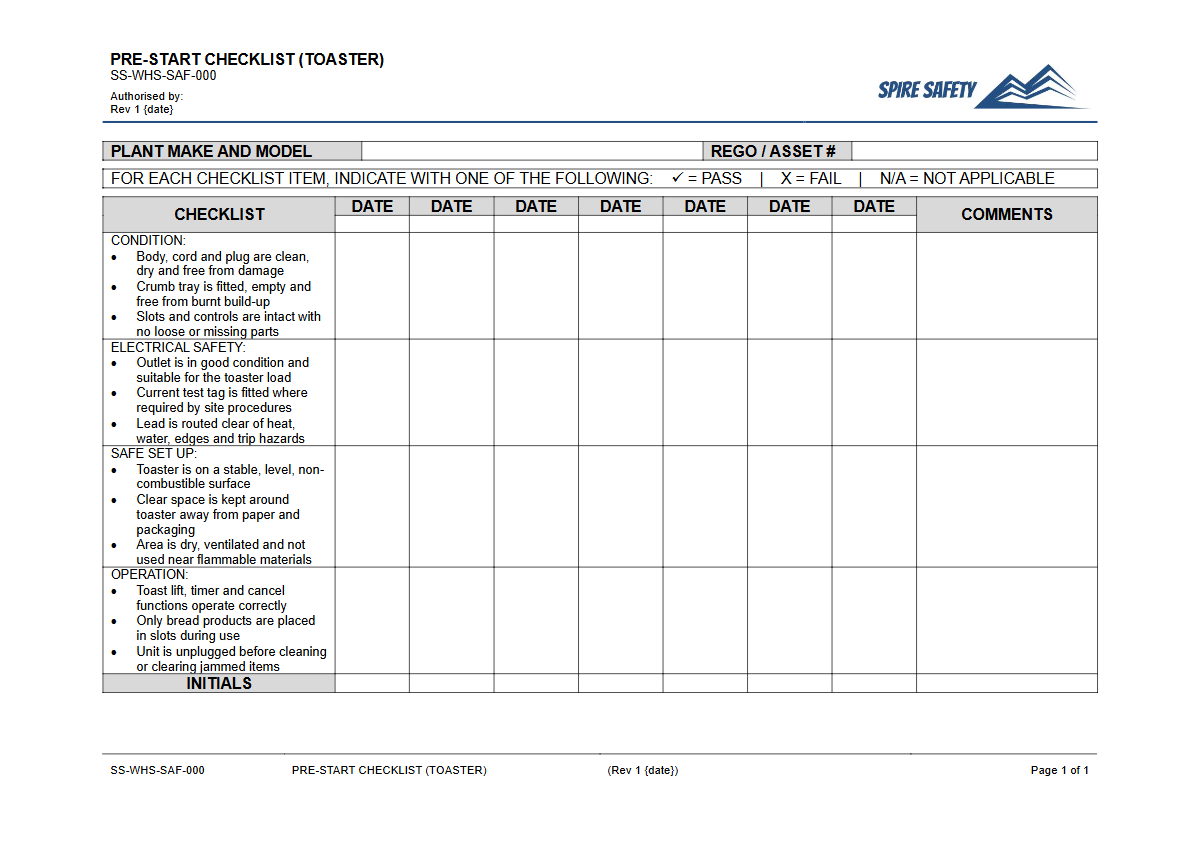
This template is designed for immediate use after downloading the DOCX or PDF file. The checklist prompts operators to inspect key safety components of a commercial or domestic toaster before it is used for the day.
Key inspection points include checking the power cord and plug for damage, ensuring the appliance is clean and free from food debris, verifying the function of levers and dials, and confirming it is placed on a stable, non-flammable surface away from water.
Important: This is a template, not a finished document. To be effective, you must customise it for your specific workplace, equipment models, and operational context.
We recommend a Person Conducting a Business or Undertaking (PCBU) consults with workers and other relevant stakeholders to adapt the checklist. Adding site-specific details or branding is straightforward in the Word (DOCX) version.
When to use it
A toaster pre-start check should be completed before the first use of the appliance each day or at the beginning of each shift in a commercial setting. It is a quick but vital process that takes only a minute to complete.
If a fault is detected during the check, the toaster must be immediately removed from service, tagged out, and reported for repair or replacement according to your organisation's procedures. The principles of equipment inspection can be reinforced through regular safety meetings, such as those guided by a Pre-Start Checks and Plant Maintenance Toolbox Talk Template.
Who should use it
This checklist should be used by any worker who operates or works near the toaster. This includes kitchen staff, office workers using a break room appliance, or maintenance personnel.
It is the PCBU's responsibility to provide the necessary information, training, and instruction to ensure workers understand the importance of these checks and how to complete them correctly. Regular safety discussions, documented using a Free Pre-Start Meeting Template, can help embed this practice across the workforce.
Ensuring that all operators are trained and competent is a critical part of a safe system of work. While a toaster may seem simple, overlooking basic checks can have serious consequences.
This process is similar in principle to checks for more complex equipment, like those detailed in our Free Pre-Start Checklist (3D Printer) Template, where electrical and fire safety are also paramount concerns.
A thorough safety system also involves periodic reviews to ensure procedures remain effective and reflect current workplace conditions. Engaging external experts for a WHS compliance auditing process can provide valuable, independent insight into the effectiveness of your equipment safety programs.
By implementing this checklist, organisations can better manage the risks associated with common electrical appliances. For more templates and safety documents, browse our complete free WHS resources library, which offers a wide range of tools to support your safety management system.
Common mistakes
Common mistakes to avoid
- Forgetting to clean out the crumb tray regularly, allowing a fire hazard to build up.
- Using a toaster with a visibly frayed or damaged power cord or plug.
- Placing the toaster under cabinets or near curtains, paper towels, and other flammable materials.
- Attempting to retrieve stuck food from the toaster with a metal utensil while it is still plugged in.
Legal references
Legal considerations
The following legal requirements may be relevant to this type of work.
- Work Health and Safety Act (Harmonised) — Provides the primary duties for protecting workers and other people from work health and safety risks.
- Work Health and Safety Regulations (Harmonised) — Sets out requirements supporting the management of workplace hazards and risks.
The following codes may be relevant to this type of work.
- Managing WHS Risks Code of Practice — Provides practical guidance on identifying hazards, assessing risks and applying effective controls.
- Work Health and Safety Consultation, Cooperation and Coordination Code of Practice — Provides practical guidance on consulting workers and coordinating with other duty holders.
- Managing the Work Environment and Facilities Code of Practice — Provides practical guidance on safe work environments, workplace facilities and related controls.
Did you know
A Common Culprit
According to Fire and Rescue NSW, small appliances like toasters, microwaves, and kettles are a leading cause of house fires, with approximately 15% of all home fires starting in the kitchen.
The Crumb Tray Risk
A build-up of crumbs in a toaster's crumb tray is a significant fire hazard. These crumbs can easily ignite when the heating elements are active, which is why regular cleaning is a critical point on any pre-start checklist.
FAQ
Frequently asked questions
01What are the main hazards associated with workplace toasters?
02How often should a toaster pre-start check be conducted?
03Can this checklist be used for any brand of toaster or toaster oven?
04Why is documenting pre-start checks for a simple appliance important?
Share this resource
Free Pre-Start Checklist (Toaster) Template
Browse Categories
How To Use It
- 1Download and open in Word or PDF.
- 2Replace the placeholders with your business details.
- 3Get it reviewed by a WHS specialist before rollout.
Need it customised?
Our WHS consultants can adapt this template to your site, run a gap analysis, or audit what you already have in place.
Book a Free Consultation WHS consulting servicesor call 1300 156 382