
Free Pre-Start Checklist (Torque Wrench) Template
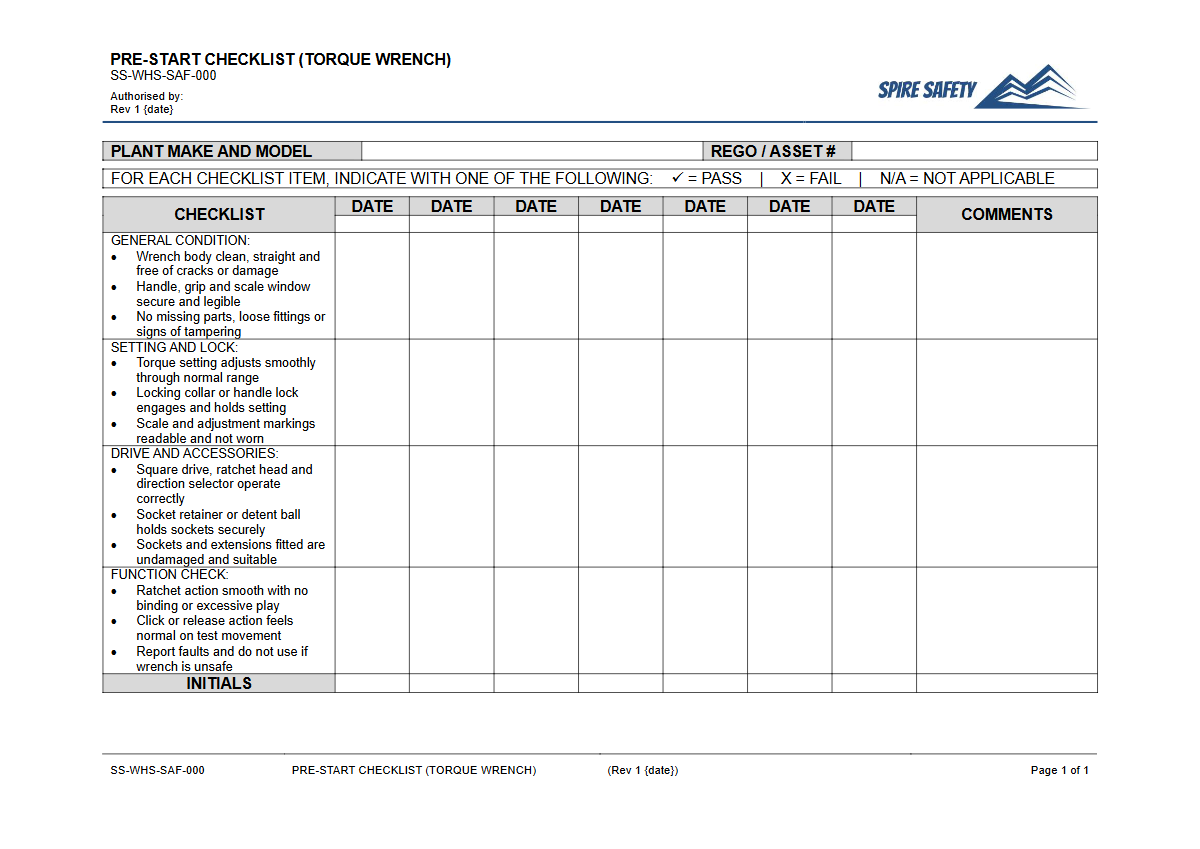
Download our free Pre-Start Checklist (Torque Wrench) Template. This structured DOCX & PDF document helps formalise daily equipment safety inspections.
Free Pre-Start Checklist (Torque Wrench) Template
DOCX • 125 KB + PDF
Updated Oct 2026
No signup required
Purpose of the Free Pre-Start Checklist (Torque Wrench) Template
Using a faulty or incorrectly set torque wrench can lead to catastrophic failures in machinery, structures, and vehicles. This Free Pre-Start Checklist (Torque Wrench) Template provides a structured way for operators to conduct and record essential safety and functionality checks before each use.
It helps manage the significant risks associated with incorrect bolt tensioning, such as under-tightening that leads to vibration and loosening, or over-tightening that causes material fatigue and bolt failure.
The primary purpose of this Pre-Start Checklist is to formalise the inspection process. It prompts users to systematically check the tool's physical condition, setting mechanism, and cleanliness.
This routine serves as documented evidence that safety checks are being performed, which is a key component of robust WHS management systems. By identifying potential defects or calibration issues early, organisations can prevent incidents, reduce costly rework, and demonstrate their commitment to fulfilling their duty of care under Australian WHS laws.
Video walkthrough
How to use the Free Pre-Start Checklist (Torque Wrench) Template
Implementing this template effectively involves a few simple steps. First, download the document in your preferred format (DOCX or PDF).
The next step is crucial for ensuring the checklist is relevant and effective for your specific operational context.
This document is a comprehensive starting point aligned with Australian WHS practice. However, we recommend you customise it to reflect the specific makes and models of torque wrenches used in your workplace (e.g., click-type, digital, beam), the tasks they are used for, and any unique environmental or operational risks.
Once customised, train all relevant personnel on how and when to use the checklist. Ensure they understand the importance of each check and the correct procedure for reporting faults, which typically involves tagging the tool out of service immediately.
A pre-start check is a fundamental safety habit for any workshop or maintenance environment. For other common equipment, you might also find our Free Pre-Start Checklist (Bench Grinder) Template useful for establishing consistent inspection routines.
When to use a Torque Wrench Pre-Start Checklist
A pre-start check should be conducted before the first use of a torque wrench on any given shift or project. It is not a replacement for regular, professional calibration, but rather a frontline defence against using a compromised tool.
It is also critical to perform an inspection if the tool has been dropped, subjected to an impact, or if there is any reason to suspect its accuracy has been compromised. Integrating this check into daily routines helps foster a proactive safety culture where potential issues are identified before they escalate into hazardous situations.
This routine is a practical element of risk management that can be verified during a WHS compliance auditing process.
Who should use this checklist
This checklist is designed for use by any person operating a torque wrench, including mechanics, technicians, boilermakers, fitters, and assembly line workers. Competency is key; users should be trained not only on how to use the torque wrench correctly but also on how to perform the pre-start inspection detailed in the checklist.
Supervisors and team leaders also play a vital role. They should use the completed checklists to verify that inspections are being performed correctly, monitor for recurring faults that may indicate a larger problem, and oversee the fault reporting and equipment isolation process to ensure defective tools are removed from service promptly.
Similar inspection principles apply to a wide range of tools and equipment in the workplace. Maintaining a consistent approach to pre-operational checks for all plant helps simplify training and improve compliance. For instance, workers using other specialised equipment can follow a similar process using resources like our Pre-Start Checklist for Floor Saws.
Establishing these procedures across an organisation requires careful planning and review. If your business needs support in developing or refining your equipment inspection programs to align with best practice, our WHS consulting services can offer expert guidance tailored to your specific industry and operational needs.
Proper documentation and consistent application are critical for demonstrating due diligence.
The scope of pre-start inspections extends beyond just hand tools. For larger pieces of equipment where failure poses a significant risk, the same logic applies.
Our Pre-Start Checklist (Bin Lifter) Template demonstrates how this structured approach can be adapted for different types of plant. This template is one of many resources designed to support your safety management efforts.
Explore our complete free WHS resources library for more checklists, templates, and guides.
Common mistakes
Common mistakes to avoid
- Using the torque wrench as a breaker bar or ratchet to loosen tight bolts, which can damage the delicate calibration mechanism.
- Failing to wind the tool back to its lowest setting after use, causing the internal spring to lose its accuracy.
- Continuing to use a wrench after it has been dropped without having its calibration professionally verified.
- Applying extra force or jerking the handle after the 'click' or signal, which results in over-tightening.
Legal references
Legal considerations
The following legal requirements may be relevant to this type of work.
- Work Health and Safety Act (Harmonised) — Provides the primary duties for protecting workers and other people from work health and safety risks.
- Work Health and Safety Regulations (Harmonised) — Sets out requirements supporting the management of workplace hazards and risks.
The following codes may be relevant to this type of work.
- Managing WHS Risks Code of Practice — Provides practical guidance on identifying hazards, assessing risks and applying effective controls.
- Work Health and Safety Consultation, Cooperation and Coordination Code of Practice — Provides practical guidance on consulting workers and coordinating with other duty holders.
- Managing the Work Environment and Facilities Code of Practice — Provides practical guidance on safe work environments, workplace facilities and related controls.
Did you know
Spring Stress
Leaving a click-type torque wrench set to a high torque value for extended periods can cause the internal spring to fatigue. This leads to a loss of accuracy over time, which is why they should always be wound back to their lowest setting after use.
Check vs. Calibrate
A pre-start check confirms the tool is in good working order, but it does not verify its accuracy. Only a formal calibration process using specialised equipment can certify that the wrench is applying the precise amount of torque indicated on its scale.
FAQ
Frequently asked questions
01Why is a pre-start check important for a torque wrench?
02How often does a torque wrench need to be calibrated?
03What should an operator do if a fault is found during a torque wrench pre-start?
04Can I use this template for digital and click-type torque wrenches?
Share this resource
Free Pre-Start Checklist (Torque Wrench) Template
Browse Categories
How To Use It
- 1Download and open in Word or PDF.
- 2Replace the placeholders with your business details.
- 3Get it reviewed by a WHS specialist before rollout.
Need it customised?
Our WHS consultants can adapt this template to your site, run a gap analysis, or audit what you already have in place.
Book a Free Consultation WHS consulting servicesor call 1300 156 382