
Free Pre-Start Checklist (Turf Cutter) Template
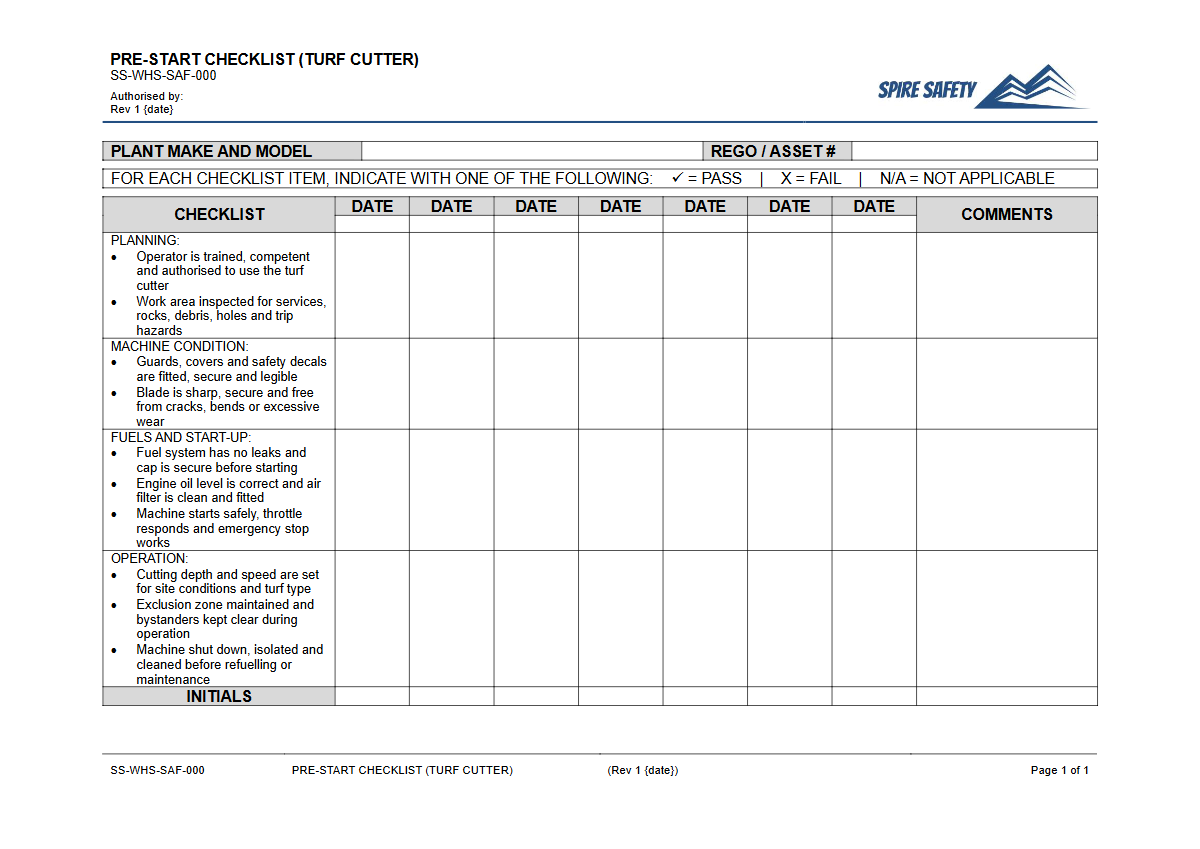
Download our free Pre-Start Checklist (Turf Cutter) Template to formalise daily equipment inspections. This structured DOCX & PDF helps identify hazards.
Free Pre-Start Checklist (Turf Cutter) Template
DOCX • 125 KB + PDF
Updated Oct 2026
No signup required
Purpose of the Free Pre-Start Checklist (Turf Cutter) Template
Operating a turf cutter, like any piece of mobile plant, introduces significant workplace hazards if the equipment is not properly maintained and inspected. This Free Pre-Start Checklist (Turf Cutter) Template provides a structured framework for operators to conduct consistent and thorough safety inspections before each use.
Implementing regular pre-start checks is a fundamental practice for identifying potential faults, mechanical issues, or damage that could lead to incidents, injuries, or costly downtime. Using this template helps create a formal record of inspections, demonstrating your organisation's commitment to proactive risk management.
This checklist is designed to guide operators through critical inspection points, including the cutting blade, guards, controls, engine, and general structural integrity. By formalising this process, you can systematically address hazards before they escalate.
Integrating these checks into your daily routine is a key component of a robust safety management system, ensuring machinery is fit for purpose and operators are actively engaged in maintaining a safe work environment. For a broader perspective on equipment inspections, our Pre-Start Checks and Plant Maintenance Toolbox Talk can help reinforce these principles with your team.
Video walkthrough
How to use the Free Pre-Start Checklist (Turf Cutter) Template
This checklist template is a practical tool designed for easy adoption into your operational procedures. It is provided in both DOCX and PDF formats, allowing for either digital use or printing for physical records.
To effectively implement it, download the file and integrate it into your existing safety documentation. The key is to ensure the checklist becomes a non-negotiable step before any turf cutter is operated.
It is essential to adapt this document to your specific circumstances. We recommend you customise it to reflect the particular make and model of your equipment, your unique site conditions, and any specific state or territory WHS regulations that apply.
You might also add sections relevant to your business, such as project numbers or site names. A well-tailored checklist is far more effective than a generic one.
For similar landscaping equipment, you might also find our Free Pre-Start Checklist (Aerator) Template useful.
Implementation Steps:
- Download and Customise: Save the template and add your company branding. Modify the checklist items to match the specifications of your turf cutter(s).
- Train Your Team: Ensure all operators are trained not only on how to use the turf cutter safely but also on the importance of completing the pre-start checklist accurately. Explain what each check involves and the procedure for reporting faults.
- Integrate and Enforce: Make the pre-start check a mandatory part of the daily workflow. Supervisors should periodically verify that checks are being completed correctly and that any identified issues are addressed promptly.
- Review and Action: Establish a clear process for handling a failed checklist item. This should include tagging the equipment as 'out of service' and notifying a supervisor or maintenance personnel immediately.
- Document and Store: Retain completed checklists as part of your WHS management systems documentation. These records are valuable for maintenance planning, incident investigations, and demonstrating compliance during audits.
When to use it
The turf cutter pre-start checklist should be completed before the first use of the equipment on every shift. This ensures a consistent baseline of safety is established daily.
If multiple operators use the same machine throughout the day, it is good practice for each new operator to conduct their own quick visual inspection before starting their work, even if a full check was done at the start of the shift. Additionally, a full pre-start check should be performed after the equipment has undergone any maintenance or repairs to verify it has been returned to a safe operational state.
Who should use it
This checklist is primarily for the equipment operator, as they are the person most directly exposed to the risks associated with its use. Competent operators have the hands-on knowledge to identify abnormalities in the machinery's condition or performance. Supervisors and managers also have a responsibility to ensure these checks are being carried out and that any reported defects are actioned appropriately. Maintenance personnel may also use the checklist as a reference when diagnosing faults or completing scheduled servicing. Ensuring operators are competent is crucial, and a document like our Verification of Competency (Pipe Cutter) Template can be adapted to formalise competency assessments for various types of plant. This process forms part of a comprehensive safety framework, which our WHS consulting services can help you develop and refine. For more templates and guides, browse our complete free WHS resources library.
Common mistakes
Common mistakes to avoid
- Using a generic 'plant' checklist that misses turf cutter-specific hazards.
- Pencil-whipping the checklist without physically performing the inspections.
- Failing to immediately tag out and report faulty equipment, allowing it to remain in service.
- Not providing adequate training to operators on what to look for during each check.
Legal references
Legal considerations
The following legal requirements may be relevant to this type of work.
- Work Health and Safety Act (Harmonised) — Provides the primary duties for protecting workers and other people from work health and safety risks.
- Work Health and Safety Regulations (Harmonised) — Sets out requirements supporting the management of workplace hazards and risks.
The following codes may be relevant to this type of work.
- Managing WHS Risks Code of Practice — Provides practical guidance on identifying hazards, assessing risks and applying effective controls.
- Work Health and Safety Consultation, Cooperation and Coordination Code of Practice — Provides practical guidance on consulting workers and coordinating with other duty holders.
- Managing the Work Environment and Facilities Code of Practice — Provides practical guidance on safe work environments, workplace facilities and related controls.
Did you know
Vibration Hazards
Prolonged use of equipment like turf cutters can expose operators to Hand-Arm Vibration (HAV), which can lead to permanent and debilitating health conditions. Regular maintenance, as prompted by a pre-start check, helps ensure anti-vibration components are working correctly.
FAQ
Frequently asked questions
01Why is a specific pre-start checklist for a turf cutter necessary?
02What are the most critical checks on a turf cutter pre-start?
03How often should our customised turf cutter checklist be reviewed?
04Can this checklist be used digitally on a tablet or phone?
Share this resource
Free Pre-Start Checklist (Turf Cutter) Template
Browse Categories
How To Use It
- 1Download and open in Word or PDF.
- 2Replace the placeholders with your business details.
- 3Get it reviewed by a WHS specialist before rollout.
Need it customised?
Our WHS consultants can adapt this template to your site, run a gap analysis, or audit what you already have in place.
Book a Free Consultation WHS consulting servicesor call 1300 156 382