
Free Pre-Start Checklist (Vac Excavator) Template
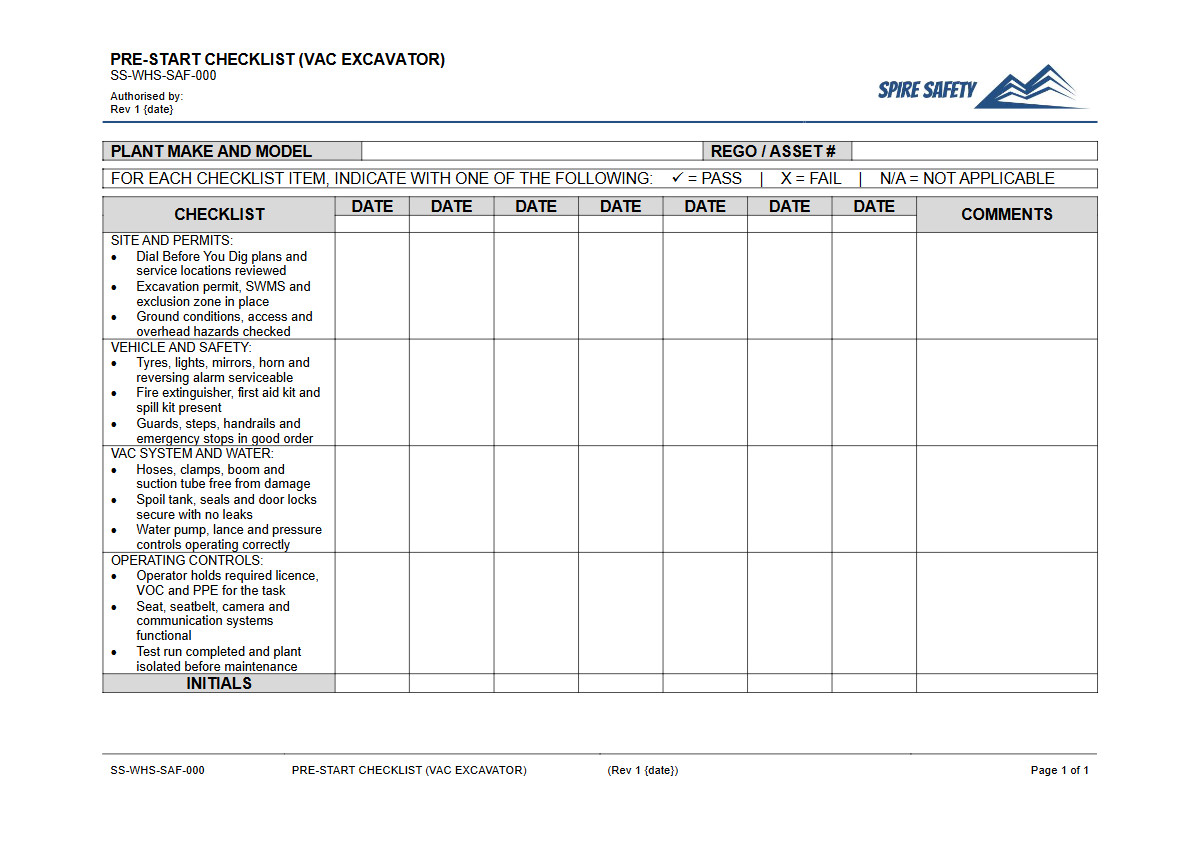
Get our free Pre-Start Checklist (Vac Excavator) Template to formalise daily inspections. This structured DOCX & PDF helps identify hazards before use.
Free Pre-Start Checklist (Vac Excavator) Template
DOCX • 125 KB + PDF
Updated Oct 2026
No signup required
Purpose of the Free Pre-Start Checklist (Vac Excavator) Template
A vacuum excavator, also known as a hydrovac, is powerful machinery requiring rigorous safety checks before each use. Implementing a consistent inspection process is crucial for preventing incidents, protecting operators, and maintaining the equipment.
This Free Pre-Start Checklist (Vac Excavator) Template provides a structured starting point for your organisation to formalise these essential daily checks. By identifying potential faults, leaks, or damage early, you can mitigate risks associated with high-pressure water systems, vacuum components, and vehicle operation.
The primary purpose of this template is to create a systematic and recordable process for verifying that the equipment is safe to operate. Regular checks help your business meet its primary duty of care under WHS law by proactively identifying and controlling hazards before they cause harm.
A documented trail of pre-start checks demonstrates due diligence and can be a vital component of incident investigations and WHS compliance audits. Using this checklist helps prevent catastrophic failures, such as those highlighted in tragic incidents like one where an $800kg excavator bucket fell and killed a worker, underscoring the importance of mechanical integrity.
Video walkthrough
How to use the Free Pre-Start Checklist (Vac Excavator) Template
This Pre-Start Checklist is available as a DOCX file for easy customisation and a PDF for immediate printing. It is structured to guide an operator through a logical inspection sequence, covering the vehicle, vacuum system, water system, and emergency equipment.
Important: You Must Customise This Template
This document is a template, not a finished procedure. We have designed it as a comprehensive starting point, but you must review and adapt it to reflect the specific make, model, and configuration of your vacuum excavator(s).
It is also essential to incorporate any unique site-specific hazards or organisational safety rules. Add your company branding and ensure the final version is approved as part of your safety management system. It is also vital to ensure that operators are not only trained but also deemed competent, which can be formalised using our Verification of Competency (Hydrovac or Vacuum Excavator) template.
When to use it
A pre-start check must be completed before the vacuum excavator is used for the first time on any given shift. It should also be conducted whenever there is a change of operator.
This routine establishes a clear baseline for the equipment's condition at the start of work. Integrating this practice into daily operations can be reinforced with regular safety meetings, such as a Pre-Start Checks and Plant Maintenance Toolbox Talk, to ensure all team members understand its importance.
Who should use it
The checklist should be completed by the person operating the vacuum excavator for that shift. Operators must be trained, licensed (where required), and deemed competent not only in the machine's operation but also in how to conduct a thorough inspection and recognise potential defects.
Supervisors or maintenance personnel should review completed checklists to identify recurring faults that may indicate a need for scheduled maintenance or operator retraining. Integrating such procedures into your overarching safety framework is a key function of robust WHS management systems.
Key Areas Covered in the Checklist
While you must customise the specifics, this template prompts inspections across several critical areas to ensure a holistic check. These categories provide a solid foundation for developing a site-specific document.
General Vehicle & Chassis
- Tyres, wheels, and suspension
- Lights, indicators, and mirrors
- Fluid levels (engine oil, coolant, hydraulic fluid)
- Cab cleanliness and visibility
Vacuum System
- Vacuum tank integrity and seals
- Hoses, clamps, and connections for wear or damage
- Debris filters and screens
- Vacuum pump operation and gauges
High-Pressure Water System
- Water tank, pump, and filter condition
- Hoses, reels, and fittings for leaks or abrasion
- Spray wands, nozzles, and trigger lock operation
- Pressure gauges and relief valves
Safety & Emergency Equipment
- Emergency stop (E-stop) functionality
- Fire extinguisher presence and charge
- First aid kit availability
- Audible alarms and reversing beepers
For businesses seeking to improve their overall safety processes beyond single documents, engaging with specialist WHS consulting can provide a strategic path to better risk management.
Common mistakes
Common mistakes to avoid
- Assuming the previous operator completed the check thoroughly.
- Ignoring small leaks from hydraulic or water lines, which can lead to catastrophic failure.
- Failing to customise the generic template for the specific make and model of the vacuum excavator.
- Treating the checklist as a tick-and-flick exercise without physically inspecting each item.
Legal references
Legal considerations
The following legal requirements may be relevant to this type of work.
- Work Health and Safety Act (Harmonised) — Provides the primary duties for protecting workers and other people from work health and safety risks.
- Work Health and Safety Regulations (Harmonised) — Sets out requirements supporting the management of workplace hazards and risks.
The following codes may be relevant to this type of work.
- Managing WHS Risks Code of Practice — Provides practical guidance on identifying hazards, assessing risks and applying effective controls.
- Work Health and Safety Consultation, Cooperation and Coordination Code of Practice — Provides practical guidance on consulting workers and coordinating with other duty holders.
- Managing the Work Environment and Facilities Code of Practice — Provides practical guidance on safe work environments, workplace facilities and related controls.
Did you know
Underground Asset Strikes
Vacuum excavation is considered the safest method for exposing underground utilities. However, incidents still occur, with a leading cause being the failure to identify all services before digging begins, reinforcing the need for thorough planning beyond just equipment checks.
High-Pressure Dangers
The water jets on a hydrovac can operate at pressures exceeding 3,000 PSI. A high-pressure water injection injury can be severe, causing deep tissue damage that may not be visible externally, making checks on hoses, fittings, and nozzles a critical safety step.
FAQ
Frequently asked questions
01What should happen if a fault is found during a vacuum excavator pre-start check?
02How often should a vac truck pre-start checklist be reviewed?
03Is this digital checklist template suitable for electronic record-keeping?
04Does this checklist cover non-destructive digging (NDD) specific hazards?
Share this resource
Free Pre-Start Checklist (Vac Excavator) Template
Browse Categories
How To Use It
- 1Download and open in Word or PDF.
- 2Replace the placeholders with your business details.
- 3Get it reviewed by a WHS specialist before rollout.
Need it customised?
Our WHS consultants can adapt this template to your site, run a gap analysis, or audit what you already have in place.
Book a Free Consultation WHS consulting servicesor call 1300 156 382