
Free Pre-Start Checklist (Vac Pump) Template
Download our free Pre-Start Checklist (Vac Pump) Template to formalise daily equipment inspections.
Free Pre-Start Checklist (Vac Pump) Template
DOCX • 125 KB + PDF
Updated Oct 2026
No signup required
Purpose of the Free Pre-Start Checklist (Vac Pump) Template
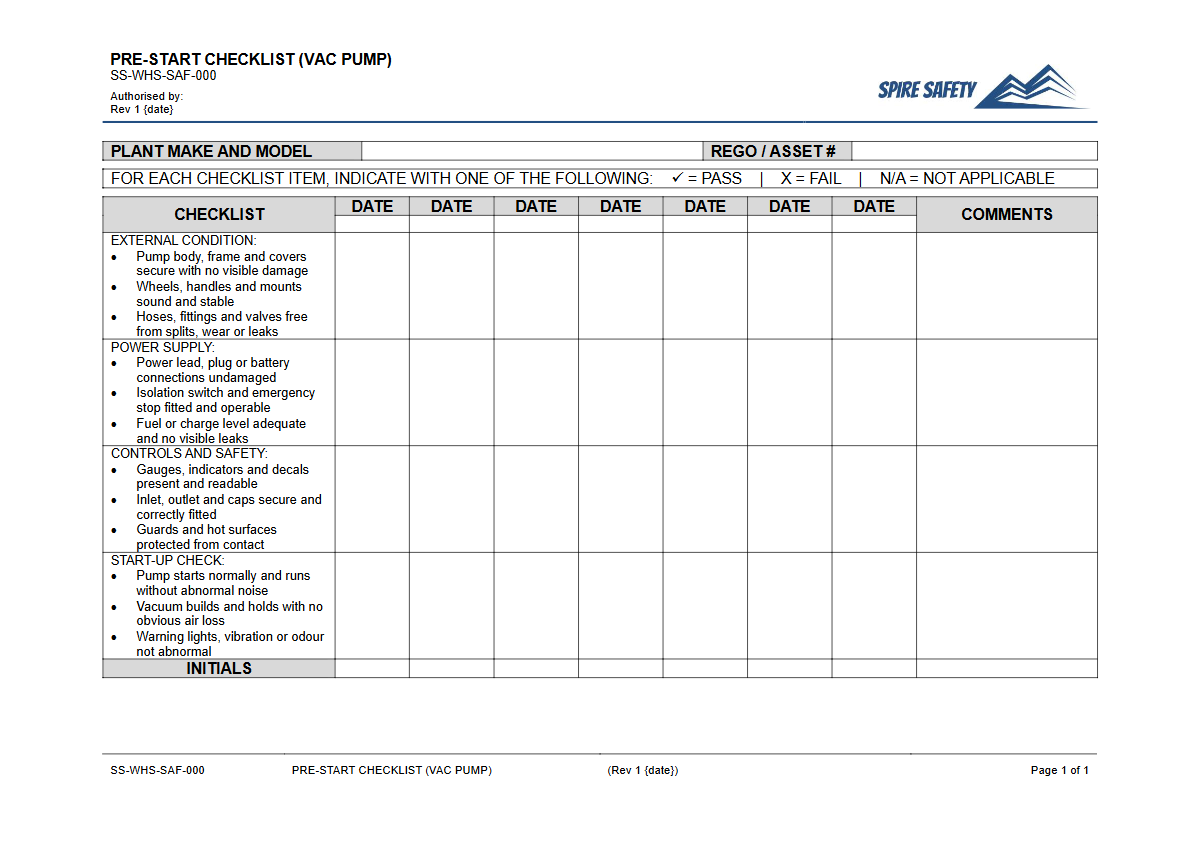
Using a vacuum pump, whether in a laboratory, workshop, or industrial setting, involves specific risks that must be managed. This Free Pre-Start Checklist (Vac Pump) Template provides a structured framework for operators to conduct consistent, thorough inspections before each use.
The primary purpose of this checklist is to identify potential faults, damage, or operational issues that could lead to equipment failure, injury, or exposure to hazardous substances. By formalising this process, organisations can systematically verify that the equipment is safe to operate, reducing the likelihood of incidents and costly downtime.
Integrating regular, documented checks is a fundamental component of proactive safety management. It supports compliance with Australian WHS regulations concerning the safe operation and maintenance of plant.
A completed checklist serves as a record that due diligence was performed, which is a critical part of building robust and effective WHS management systems. It also helps in tracking the condition of the equipment over time, allowing for better-planned maintenance schedules and identifying recurring issues before they escalate.
Video walkthrough
How to use the Free Pre-Start Checklist (Vac Pump) Template
This template is designed for immediate use and straightforward customisation. After downloading the DOCX or PDF file, you should adapt it to reflect the specific make, model, and application of the vacuum pumps in your workplace. The process is simple:
- Customise: Add your company branding and review the checklist items. Add or remove checks to match your specific equipment and operational risks. For instance, a rotary vane pump will have different inspection points than a diaphragm pump.
- Train: Ensure all operators are trained not only on how to use the vacuum pump safely but also on the importance and procedure of completing the pre-start check. Competency is key to an effective inspection.
- Implement: Integrate the checklist into your daily operational procedures. Make it a non-negotiable step before any vacuum pump is powered on for a shift or task.
Note: This document is a template only. It must be customised to suit the specific plant, tasks, and environment of your workplace.
We recommend consulting the manufacturer's instructions and conducting a risk assessment to ensure all relevant hazards are addressed.
Key Inspection Points for Vacuum Pumps
While your customised checklist will be specific to your equipment, a comprehensive pre-start inspection for a typical vacuum pump should cover several key areas:
- Physical Integrity: Check the pump housing, base, and mounts for cracks, corrosion, or damage. Ensure all safety guards, especially over belts and pulleys, are securely in place and in good condition.
- Hoses and Connections: Inspect all vacuum hoses and fittings for cracks, brittleness, or loose connections that could cause leaks and reduce performance. Similar principles apply to other pressurised or sealed systems, as seen in our Pre-Start Checklist for Cooling Pumps.
- Fluid Levels: For oil-sealed pumps, check the oil level through the sight glass. The oil should be clear and at the correct level; cloudy or low oil indicates a need for maintenance.
- Electrical Safety: Examine the power cord and plug for any signs of fraying, cracking, or damage. Ensure the power source is correctly rated and the unit is properly earthed. This focus on electrical integrity is vital for all powered equipment, including emergency systems detailed in a Pre-Start Checklist for Fire Pumps.
- Gauges and Controls: Verify that the vacuum gauge is functional and reads zero (or atmospheric pressure) when the pump is off. Check that all switches and controls operate smoothly. For pumps in controlled environments, checks might overlap with those for other specialised equipment like what's found in a fume cabinet pre-start checklist.
- Operational Checks: Once started, listen for unusual noises or vibrations. Check for any leaks and ensure the pump is drawing a vacuum as expected.
When to use it
A pre-start checklist for a vacuum pump should be completed before the first use on any given day or shift. For equipment that is used intermittently throughout the day for different tasks, a check before each new task is best practice.
The goal is to ensure the equipment's condition has not changed or deteriorated since its last use. If your operations involve complex or high-risk pump applications, seeking specialist WHS consulting can help define the appropriate frequency and depth of inspections.
Who should use it
The checklist should be completed by the person operating the vacuum pump. This individual must be deemed competent, meaning they have received the necessary training and instruction to operate the equipment safely and conduct the required checks.
Supervisors or managers are responsible for ensuring these checks are consistently performed and that any reported faults are addressed promptly. Completed checklists should be reviewed periodically as part of regular safety oversight and can be valuable inputs for WHS compliance audits to verify that safety procedures are being followed correctly.
Common mistakes
Common mistakes to avoid
- Ignoring small oil leaks, which can indicate a failing seal and lead to pump failure.
- Operating the pump with a known faulty power cord or plug.
- Failing to check that safety guards over belts and other moving parts are secure.
- Skipping the check because the pump was working fine during its last use.
Legal references
Legal considerations
The following legal requirements may be relevant to this type of work.
- Work Health and Safety Act (Harmonised) — Provides the primary duties for protecting workers and other people from work health and safety risks.
- Work Health and Safety Regulations (Harmonised) — Sets out requirements supporting the management of workplace hazards and risks.
The following codes may be relevant to this type of work.
- Managing WHS Risks Code of Practice — Provides practical guidance on identifying hazards, assessing risks and applying effective controls.
- Work Health and Safety Consultation, Cooperation and Coordination Code of Practice — Provides practical guidance on consulting workers and coordinating with other duty holders.
- Managing the Work Environment and Facilities Code of Practice — Provides practical guidance on safe work environments, workplace facilities and related controls.
Did you know
Vacuum Measurement
The quality of a vacuum is often measured in units of Torr or Pascals. A perfect vacuum is 0 Torr, while standard atmospheric pressure at sea level is approximately 760 Torr.
The Role of Oil
In many oil-sealed rotary vane pumps, the oil serves three critical functions: it lubricates moving parts, creates a seal for high vacuum levels, and helps cool the pump by transferring heat.
FAQ
Frequently asked questions
01What is the main purpose of a vacuum pump pre-start check?
02How often should a vacuum pump be inspected?
03Who is responsible for completing the pre-start checklist?
04Can this template be used for any type of vacuum pump?
Share this resource
Free Pre-Start Checklist (Vac Pump) Template
Browse Categories
How To Use It
- 1Download and open in Word or PDF.
- 2Replace the placeholders with your business details.
- 3Get it reviewed by a WHS specialist before rollout.
Need it customised?
Our WHS consultants can adapt this template to your site, run a gap analysis, or audit what you already have in place.
Book a Free Consultation WHS consulting servicesor call 1300 156 382