
Free Pre-Start Checklist (Van) Template
Download our free Pre-Start Checklist (Van) Template to formalise daily vehicle inspections. This DOCX & PDF resource helps manage WHS risks. Get started today.
Free Pre-Start Checklist (Van) Template
DOCX • 125 KB + PDF
Updated Oct 2026
No signup required
Purpose of the Free Pre-Start Checklist (Van) Template
A daily pre-start inspection is a simple yet critical task for ensuring the safety and roadworthiness of any commercial vehicle. By identifying potential faults before a van is used, organisations can prevent accidents, minimise downtime, and meet their WHS obligations.
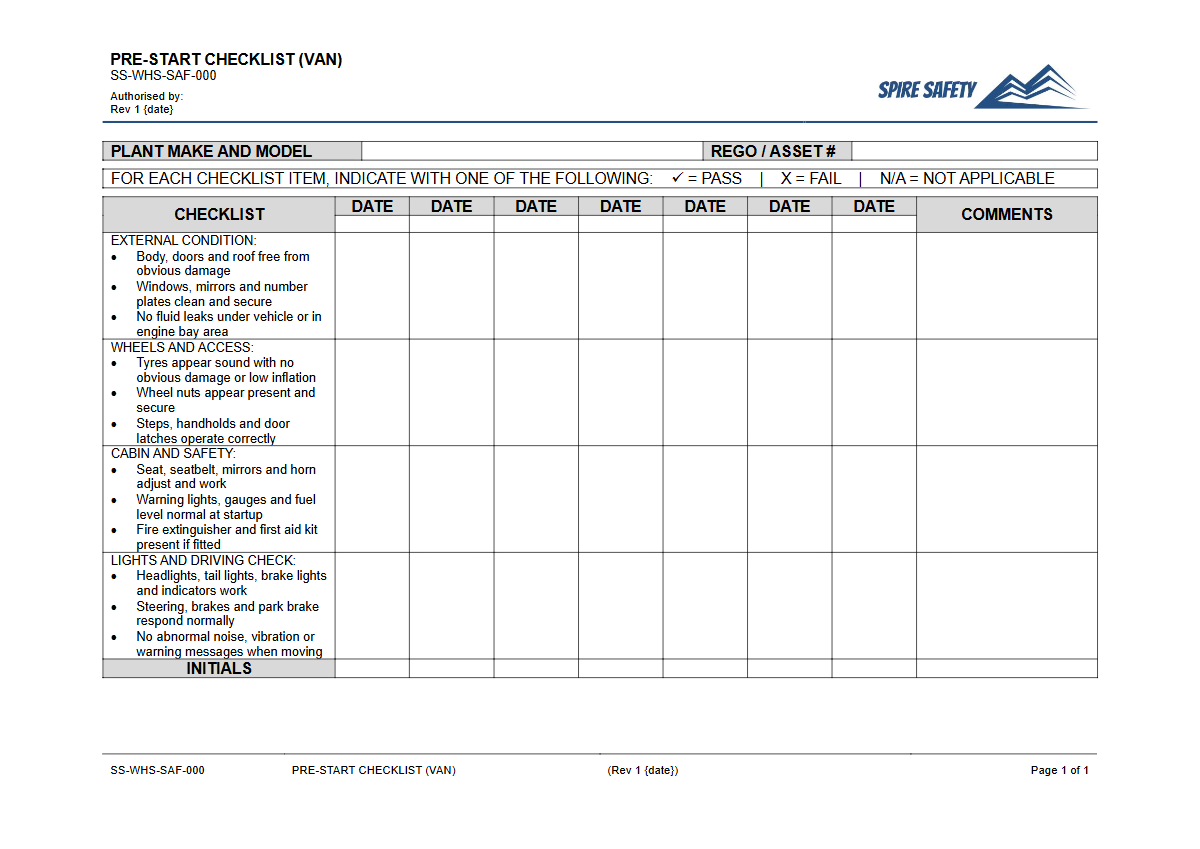
Our Free Pre-Start Checklist (Van) Template provides a structured starting point for formalising these essential daily checks for your fleet.
This Pre-Start Checklist helps operators methodically inspect a van's key components, including brakes, steering, tyres, lights, and emergency equipment. Using it consistently helps to create a documented record of due diligence, demonstrating a proactive approach to safety and vehicle maintenance. This formal process is a fundamental part of a comprehensive safety framework, often documented within your organisation's WHS management systems.
Video walkthrough
How to use the Free Pre-Start Checklist (Van) Template
To implement this resource effectively, download the DOCX or PDF file and integrate it into your daily operational procedures. The DOCX version is fully editable, allowing you to tailor it to your specific needs.
Please note: This document is a template and must be customised to suit your specific workplace, van models, types of cargo, and operational risks. We recommend consulting with drivers and mechanics during this process to ensure the checklist is practical and relevant for your business.
Once customised, ensure all drivers are trained on how to conduct the checks thoroughly and what the procedure is for reporting any identified faults. If your van is fitted with specialised equipment, such as a tail lift or a bin lifter, this checklist must be expanded to include specific checks for that machinery.
What the Checklist Should Cover
A comprehensive van pre-start should cover several key areas to ensure the vehicle is safe for operation. While our template provides a detailed list, typical inspection points include:
- Exterior: Bodywork damage, tyre pressure and condition, wheel nuts, mirrors, and window cleanliness.
- Under the Bonnet: Engine oil, coolant, brake fluid, and windscreen washer fluid levels.
- Lights and Electrics: Headlights, tail lights, brake lights, indicators, horn, and dashboard warning lights.
- Cabin Interior: Seatbelt function, brake and steering responsiveness, windscreen wipers, and cleanliness.
- Safety Equipment: Presence and condition of first aid kits, fire extinguishers, and any required personal protective equipment (PPE).
- Cargo Area: Security of shelving, load restraints, and general condition.
The principles of pre-start checks are universal across different types of plant and equipment, though the specifics vary greatly, as seen in our bench grinder pre-start checklist for workshop tools.
When to Use a Van Pre-Start Checklist
The pre-start inspection should be completed by the driver at the beginning of each workday or shift, before the vehicle is used for the first time. If a different driver takes over the van mid-shift, they should also perform their own check to ensure they are satisfied with the vehicle's condition.
Completed checklists should be collected and filed according to your organisation's record-keeping policy. These records are invaluable during incident investigations or a formal WHS compliance auditing process, providing clear evidence of your safety procedures in action.
Who Should Use It
The primary user of this Pre-Start Checklist is the vehicle operator or driver. They have the hands-on responsibility to conduct the inspection and report any issues immediately.
Supervisors and fleet managers are also key users, as they are responsible for ensuring the checks are being completed correctly and for arranging timely repairs for any reported defects. Finally, WHS personnel and management may review the completed records to identify trends, track vehicle maintenance, and verify procedural compliance.
Implementing a robust pre-start inspection process demonstrates a commitment to workplace safety and operational excellence. For expert assistance in tailoring and integrating this process into your organisation's safety culture, explore our WHS consulting services.
You can find this and many other templates by browsing our extensive free WHS resources library.
Common mistakes
Common mistakes to avoid
- Using a generic checklist that doesn't cover vehicle-specific or task-specific risks.
- Drivers performing a 'tick and flick' without actually inspecting the items.
- Failing to establish a clear, non-punitive process for reporting and rectifying defects.
- Poor record-keeping, such as losing completed forms or not reviewing them for recurring issues.
Legal references
Legal considerations
The following legal requirements may be relevant to this type of work.
- Work Health and Safety Act (Harmonised) — Provides the primary duties for protecting workers and other people from work health and safety risks.
- Work Health and Safety Regulations (Harmonised) — Sets out requirements supporting the management of workplace hazards and risks.
The following codes may be relevant to this type of work.
- Managing WHS Risks Code of Practice — Provides practical guidance on identifying hazards, assessing risks and applying effective controls.
- Work Health and Safety Consultation, Cooperation and Coordination Code of Practice — Provides practical guidance on consulting workers and coordinating with other duty holders.
- Managing the Work Environment and Facilities Code of Practice — Provides practical guidance on safe work environments, workplace facilities and related controls.
Did you know
Vehicle Incidents
Vehicle collisions are a leading cause of workplace fatalities in Australia. Consistent pre-start checks are a critical control measure to reduce the risk of mechanical failure contributing to an accident.
Chain of Responsibility
Under the Heavy Vehicle National Law (HVNL), everyone in the supply chain, not just the driver, has a responsibility to ensure vehicle safety. This includes managers who schedule work and mechanics who service vehicles.
FAQ
Frequently asked questions
01What's the difference between a pre-start check and a vehicle service?
02What happens if a driver finds a fault during a pre-start check?
03How long should we keep completed pre-start checklists?
04Can we use a digital app for our van pre-start checklists?
Share this resource
Free Pre-Start Checklist (Van) Template
Browse Categories
How To Use It
- 1Download and open in Word or PDF.
- 2Replace the placeholders with your business details.
- 3Get it reviewed by a WHS specialist before rollout.
Need it customised?
Our WHS consultants can adapt this template to your site, run a gap analysis, or audit what you already have in place.
Book a Free Consultation WHS consulting servicesor call 1300 156 382