
Free Pre-Start Checklist (Vib Feeder) Template
Download our Free Pre-Start Checklist for Vibrating Feeders to formalise equipment inspections.
Free Pre-Start Checklist (Vib Feeder) Template
DOCX • 125 KB + PDF
Updated Oct 2026
No signup required
Purpose of the Free Pre-Start Checklist (Vib Feeder) Template
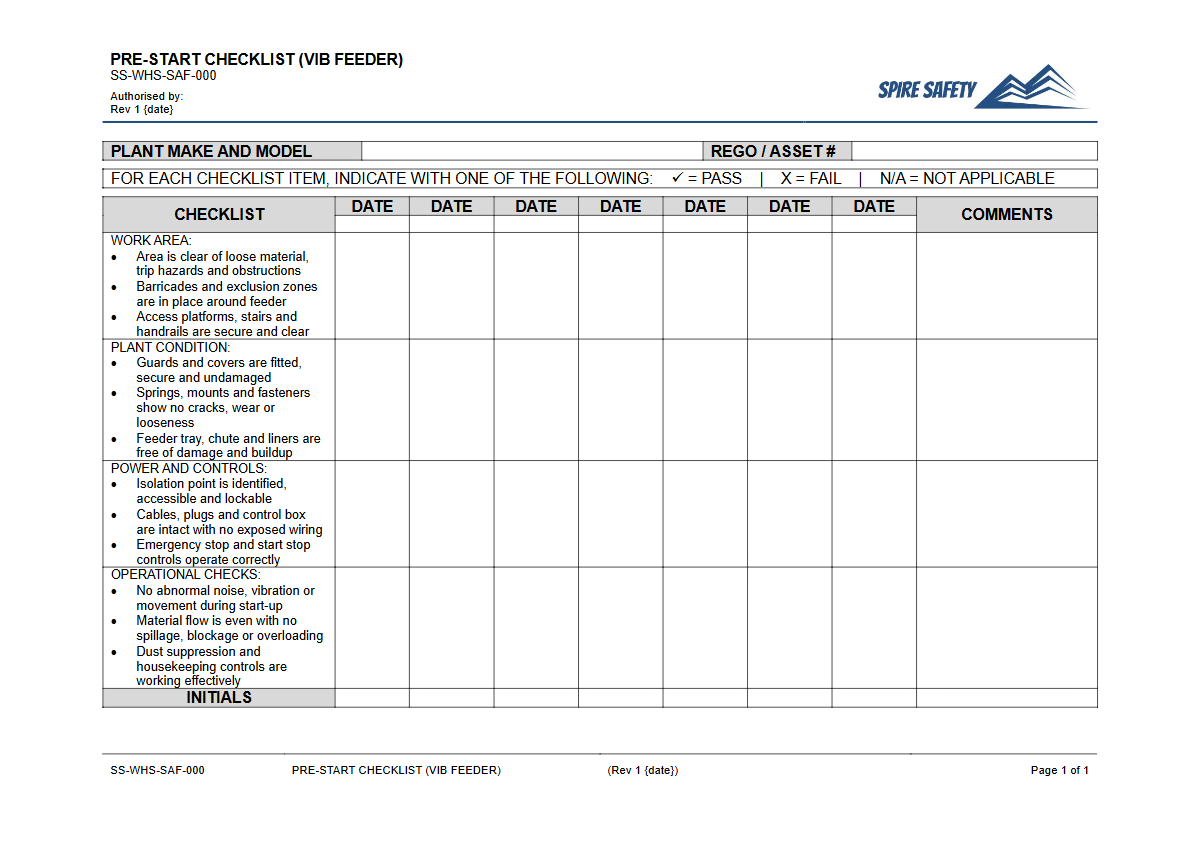
This Free Pre-Start Checklist (Vib Feeder) Template provides a structured starting point for inspecting vibrating feeders before operation. Regularly conducting pre-start checks is a critical safety practice in industries like mining, quarrying, and manufacturing, where this type of plant is common.
The primary goal is to systematically identify potential hazards, such as mechanical faults, loose components, or damaged guards, that could lead to incidents, injuries, or costly downtime. Using a formal checklist helps ensure no steps are missed and creates a documented record of inspections.
Formalising this process demonstrates due diligence and assists Persons Conducting a Business or Undertaking (PCBUs) in meeting their primary duty of care under Australian WHS legislation. Integrating such checks into daily routines is a fundamental component of a comprehensive WHS management system, promoting a proactive safety culture where equipment condition is consistently monitored.
Video walkthrough
How to use the Free Pre-Start Checklist (Vib Feeder) Template
The Free Pre-Start Checklist (Vib Feeder) Template is designed for ease of use and customisation. After downloading the resource in your preferred format (DOCX for easy editing or PDF for straightforward printing), you must adapt it to the specific make, model, and configuration of the vibrating feeders at your workplace.
It includes sections for checking key components like the drive unit, springs, trough, frame, and safety guards.
Operators should complete the checklist at the start of each shift, physically verifying each item. The process should involve a visual inspection, checking for unusual noises or vibrations once running, and confirming that all safety features, including emergency stops, are functional.
Use a relevant pre-start checks and plant maintenance toolbox talk to train your team on how to conduct these inspections effectively.
Important: This is a template only. It provides a solid foundation, but it is not a complete, out-of-the-box solution.
We have not assessed your specific vibrating feeder, operational context, or workplace risks. You must customise this document by adding, removing, or modifying checklist items to ensure it is fully relevant to your equipment and site-specific hazards.
When to use it
A pre-start checklist for a vibrating feeder should be completed before the equipment is used for the first time on any given day or shift. This ensures that its condition is verified before it is placed into service, preventing the operation of faulty or unsafe machinery.
It is also good practice to use the checklist after any significant maintenance event or if the equipment has been idle for an extended period. This proactive check is a core part of daily operational safety procedures, often discussed during morning briefings or documented using a pre-start meeting template.
Who should use it
This checklist should be used by competent personnel who have been trained and authorised to operate the specific vibrating feeder. This typically includes machine operators or plant operators.
Supervisors should also be familiar with the checklist to verify its completion and address any reported issues. Maintenance personnel may also use the checklist as part of their diagnostic or post-repair verification processes.
The competency of operators to identify hazards is crucial, and their role is often defined within broader safety documents like a SWMS for concrete truck operation where feeders are part of a larger process.
Key Inspection Areas on a Vibrating Feeder
While your custom checklist will be specific to your model, key areas that generally require inspection include:
- Guarding: Ensure all guards for belts, drives, and moving parts are secure and undamaged.
- Structure: Check for cracks, stress fractures, or corrosion on the feeder body, support frame, and mounting points.
- Drive System: Inspect the motor, belts, and exciters for signs of wear, damage, or improper tension.
- Isolation Mounts: Verify that springs or rubber mounts are in good condition and not cracked, broken, or excessively worn.
- Emergency Stop: Test the functionality of all emergency stop buttons and pull-cords.
- General Area: Ensure the surrounding area is clear of obstructions, debris, and spills.
The inspection principles remain consistent across various types of vibrating and rotating plant, whether you are using this checklist or a pre-start checklist for an agitator.
Consistently completing and reviewing these checklists provides valuable data for your maintenance program, helping to identify recurring faults and plan preventative work. This documentation is also a key piece of evidence during safety reviews or WHS compliance auditing to demonstrate that safety procedures are being followed.
Common mistakes
Common mistakes to avoid
- Ticking boxes without physically inspecting the corresponding item ('pencil-whipping').
- Failing to isolate the equipment from energy sources before checking or touching moving parts.
- Neglecting to report minor defects, which can escalate into major failures.
- Using a generic, non-customised checklist that doesn't cover the specific features and risks of the feeder model.
Legal references
Legal considerations
The following legal requirements may be relevant to this type of work.
- Work Health and Safety Act (Harmonised) — Provides the primary duties for protecting workers and other people from work health and safety risks.
- Work Health and Safety Regulations (Harmonised) — Sets out requirements supporting the management of workplace hazards and risks.
The following codes may be relevant to this type of work.
- Managing WHS Risks Code of Practice — Provides practical guidance on identifying hazards, assessing risks and applying effective controls.
- Work Health and Safety Consultation, Cooperation and Coordination Code of Practice — Provides practical guidance on consulting workers and coordinating with other duty holders.
- Managing the Work Environment and Facilities Code of Practice — Provides practical guidance on safe work environments, workplace facilities and related controls.
Did you know
Vibration Hazards
Prolonged exposure to vibration from equipment like feeders can lead to Hand-Arm Vibration Syndrome (HAVS). Proper maintenance, identified through pre-starts, helps minimise excessive vibration and protect operators.
Leading Cause of Failure
Studies often show that inadequate maintenance is a leading contributor to industrial equipment failure. Routine pre-start inspections are the first line of defence in a robust preventative maintenance program.
FAQ
Frequently asked questions
01What is the main purpose of a vibrating feeder pre-start checklist?
02How often should a pre-start check be performed on a vib feeder?
03Who is responsible for completing the vib feeder pre-start checklist?
04What should happen if a fault is found during a pre-start inspection?
Share this resource
Free Pre-Start Checklist (Vib Feeder) Template
Browse Categories
How To Use It
- 1Download and open in Word or PDF.
- 2Replace the placeholders with your business details.
- 3Get it reviewed by a WHS specialist before rollout.
Need it customised?
Our WHS consultants can adapt this template to your site, run a gap analysis, or audit what you already have in place.
Book a Free Consultation WHS consulting servicesor call 1300 156 382