
Free Pre-Start Checklist (Walkie Stacker) Template
Download our free Pre-Start Checklist (Walkie Stacker) Template. This structured DOCX & PDF resource helps formalise daily equipment safety inspections.
Free Pre-Start Checklist (Walkie Stacker) Template
DOCX • 125 KB + PDF
Updated Oct 2026
No signup required
Purpose of the Free Pre-Start Checklist (Walkie Stacker) Template
A walkie stacker, or pedestrian forklift, is a vital piece of equipment in many warehouses, workshops, and retail environments. Ensuring it is safe to operate before every shift is a critical control measure.
This Free Pre-Start Checklist (Walkie Stacker) Template provides a structured format for operators to conduct thorough, consistent visual and operational inspections. Systematically identifying potential hazards—such as hydraulic leaks, faulty controls, or worn wheels—before operation helps prevent incidents, protect workers from injury, and avoid unexpected equipment downtime.
Formalising this process demonstrates a commitment to proactive safety management and helps maintain the asset's condition.
Using a standardised checklist ensures that no critical safety components are overlooked. It creates a documented record of the machine's condition over time, which is invaluable for maintenance planning and demonstrating due diligence.
To further reinforce the importance of these inspections, you can facilitate a pre-start checks and plant maintenance toolbox talk with your team, ensuring everyone understands their responsibilities.
Video walkthrough
How to use the Free Pre-Start Checklist (Walkie Stacker) Template
This resource is available in both DOCX and PDF formats. Download the DOCX file to edit and tailor the checklist to your specific needs, adding your company logo and site-specific details.
The PDF version is ready for immediate printing and use.
Important: Before implementing this template, you must customise it to suit the specific make and model of your walkie stacker, your site conditions, and your organisation’s procedures. We have provided a solid foundation based on Australian WHS practice, but you need to ensure it aligns perfectly with your operational context and the manufacturer's recommendations.
Operators should be trained not only on how to operate the machine safely but also on how to properly complete the checklist. This includes understanding what each checkpoint means and the procedure to follow if a fault is found.
The checklist can also be used as a supporting document when completing a Verification of Competency (Walkie Stacker) template, demonstrating an operator's knowledge of essential safety procedures.
Key Areas Covered in the Checklist
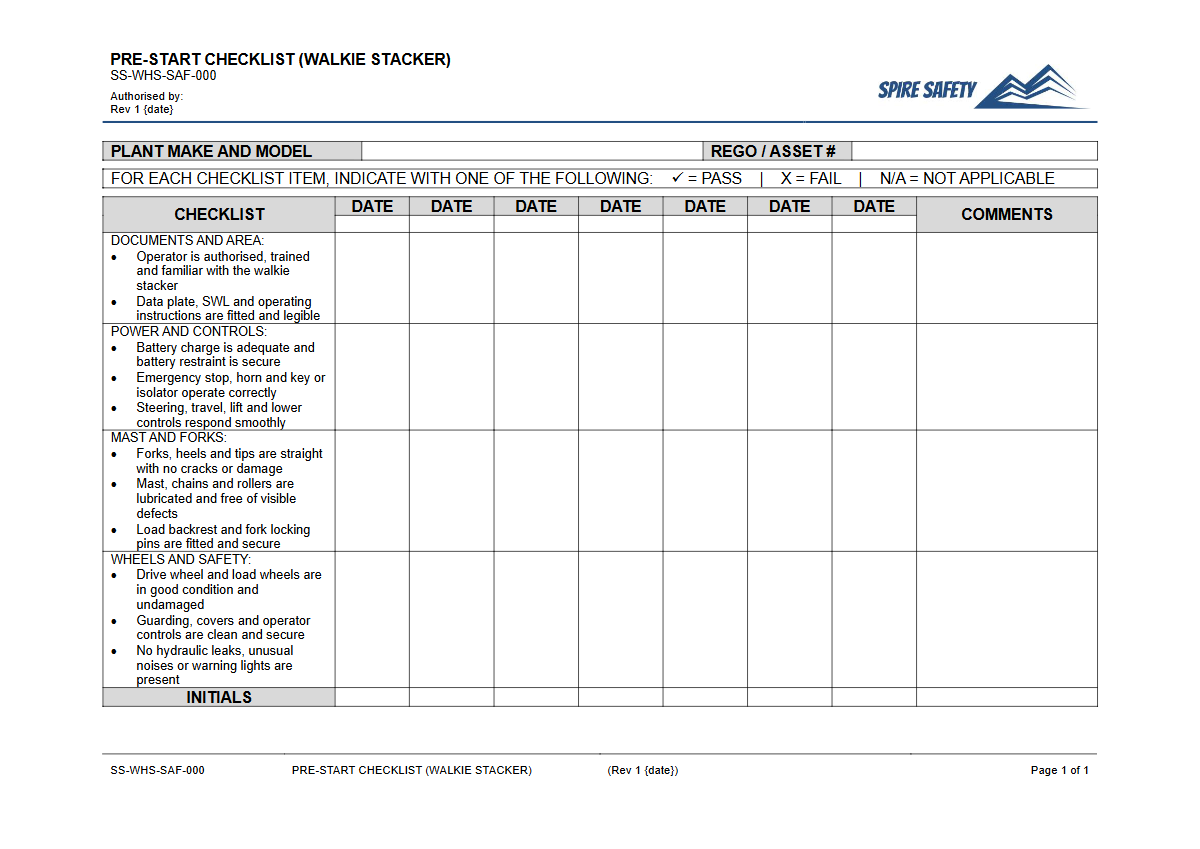
The template provides a structured starting point covering the essential components of a walkie stacker. It prompts the operator to inspect:
- Controls: Forward/reverse functionality, lift/lower mechanisms, and the 'belly button' emergency reverse switch.
- Warning Devices: Horn and any flashing lights are operational.
- Steering and Braking: Smooth operation of the tiller arm and effective braking.
- Mast and Forks: Visual inspection for cracks, bends, or excessive wear on forks, chains, and mast rollers.
- Wheels and Tyres: Check for damage, significant wear, or embedded debris that could affect stability.
- Hydraulic System: Look for any visible leaks from hoses, cylinders, or fittings.
- Battery: Check charge level, security of connectors, and appropriate water levels for lead-acid batteries.
- Safety Features: Ensure all guards and protective covers are in place and secure.
- General Condition: A final walk-around to check for any other visible damage, loose parts, or abnormalities.
When to use it
A pre-start inspection should be completed by the operator before the start of every work shift. If the walkie stacker is used by multiple operators across different shifts on the same day, each operator should conduct their own check before commencing work.
This routine establishes a clear line of responsibility and ensures any damage that occurred during a previous shift is identified immediately. Integrating this daily task is a fundamental component of effective WHS management systems, reinforcing that safety is a continuous process, not a one-time event.
Who should use it
The checklist is designed to be completed by trained and authorised operators of the walkie stacker. These are the individuals with hands-on control of the equipment and are best placed to notice subtle changes in its performance or condition.
Supervisors and managers also have a role in reviewing the completed checklists, ensuring they are being filled out correctly, and taking prompt action to address any reported faults. Defining these roles clearly is essential for an effective safety program; if you need assistance establishing these procedures, consider seeking expert WHS consulting.
Documenting and Retaining Records
Completed pre-start checklists are important workplace records. They should be filed and retained according to your organisation's record-keeping policy.
These documents provide a historical log of the equipment's safety status and serve as evidence of your inspection regime. During WHS compliance audits or in the event of an incident investigation, these records can demonstrate that the business has been proactive in identifying and managing plant-related risks.
They are also a practical tool for the maintenance team to spot recurring issues and plan preventative maintenance more effectively.
By integrating this simple check into your daily routine, you contribute significantly to a safer working environment. For more templates and tools to support your safety management system, explore our complete free WHS resources library.
Common mistakes
Common mistakes to avoid
- Pencil-whipping the form without physically performing the inspection.
- Ignoring seemingly 'minor' issues like small hydraulic drips or worn wheels, which can lead to major failures.
- Failing to immediately tag out and report a faulty machine, leaving it available for others to use.
- Using a generic checklist that doesn't cover the specific safety features or components of the machine in use.
Legal references
Legal considerations
The following legal requirements may be relevant to this type of work.
- Work Health and Safety Act (Harmonised) — Provides the primary duties for protecting workers and other people from work health and safety risks.
- Work Health and Safety Regulations (Harmonised) — Sets out requirements supporting the management of workplace hazards and risks.
The following codes may be relevant to this type of work.
- Managing WHS Risks Code of Practice — Provides practical guidance on identifying hazards, assessing risks and applying effective controls.
- Work Health and Safety Consultation, Cooperation and Coordination Code of Practice — Provides practical guidance on consulting workers and coordinating with other duty holders.
- Managing the Work Environment and Facilities Code of Practice — Provides practical guidance on safe work environments, workplace facilities and related controls.
Did you know
A Common Hazard
Despite their relatively low speed, incidents involving walkie stackers are a leading cause of foot and leg crush injuries in warehouses and logistics centres across Australia.
Battery Safety
Charging lead-acid batteries for walkie stackers can produce flammable hydrogen gas. This is why dedicated charging areas must be well-ventilated and kept free of ignition sources.
FAQ
Frequently asked questions
01Is a walkie stacker pre-start checklist legally required in Australia?
02What should happen if a fault is found during a walkie stacker pre-start check?
03How long should a walkie stacker pre-start inspection take?
04Can this template be used for all types of pedestrian-operated forklifts?
Share this resource
Free Pre-Start Checklist (Walkie Stacker) Template
Browse Categories
How To Use It
- 1Download and open in Word or PDF.
- 2Replace the placeholders with your business details.
- 3Get it reviewed by a WHS specialist before rollout.
Need it customised?
Our WHS consultants can adapt this template to your site, run a gap analysis, or audit what you already have in place.
Book a Free Consultation WHS consulting servicesor call 1300 156 382