
Free Pre-Start Checklist (Waste Disposer) Template
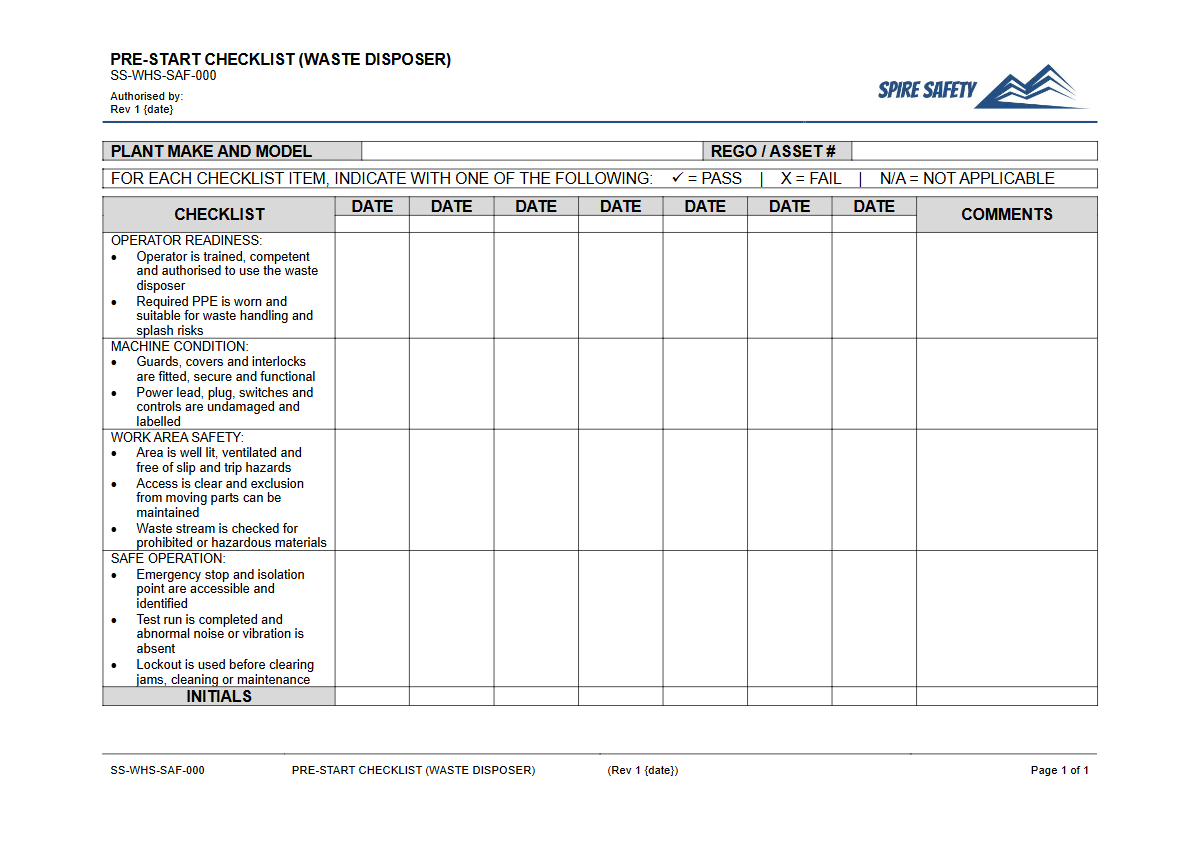
Download our Free Pre-Start Checklist (Waste Disposer) Template. This DOCX & PDF resource helps formalise daily equipment checks.
Free Pre-Start Checklist (Waste Disposer) Template
DOCX • 125 KB + PDF
Updated Oct 2026
No signup required
Purpose of the Free Pre-Start Checklist (Waste Disposer) Template
Industrial and commercial waste disposers are powerful pieces of plant that pose significant risks if not inspected and maintained correctly. This Free Pre-Start Checklist (Waste Disposer) Template provides a structured framework for operators to conduct consistent, documented safety inspections before using the equipment.
Regular pre-start checks are a critical control measure to identify potential faults, damage, or operational issues before they can lead to an incident. Using a checklist helps prevent injuries such as lacerations from moving parts, electric shock from faulty wiring, or musculoskeletal injuries from clearing blockages incorrectly.
Integrating these checks into your daily routine helps build a proactive safety culture and demonstrates due diligence in managing workplace hazards. A documented trail of pre-start inspections is a key component of any effective plant safety program.
To further embed these practices, our Pre-Start Checks and Plant Maintenance Toolbox Talk can help reinforce this culture with your team.
Video walkthrough
How to Use the Free Pre-Start Checklist (Waste Disposer) Template
This template is designed as a starting point to formalise your equipment safety procedures. It is provided in both DOCX and PDF formats for your convenience.
Follow these steps to implement it effectively:
- Download: Select the DOCX format for easy editing or the PDF for immediate use.
- Customise: Adapt the checklist to the specific make, model, and configuration of the waste disposer(s) in your workplace. Add or remove checks based on the manufacturer’s instructions and a site-specific risk assessment.
- Train: Ensure all operators are trained on how to conduct the checks properly, what each item means, and the procedure to follow if a fault is found (e.g., tag out the equipment and report to a supervisor).
- Implement: Make the checklist readily available near the equipment and integrate its completion into your standard operating procedures.
Important Note: It is essential that you customise this template for the specific make and model of waste disposer used in your workplace, as well as the unique operational risks present. We have provided a structured starting point, but you must add, remove, or modify checklist items to ensure they are relevant and comprehensive for your situation.
This process is part of how you develop a robust WHS management system for your organisation.
Key Inspection Points
Your customised checklist should cover critical safety components, including:
- Guarding: Ensure all guards, splash guards, and covers are in place, secure, and undamaged.
- Emergency Stop: Verify the E-stop button or isolation switch is accessible, clearly marked, and functions correctly.
- Structural Integrity: Check for any cracks, loose bolts, or signs of wear on the unit, hopper, and mounting.
- Electrical Safety: Visually inspect power cords, plugs, and conduits for damage, ensuring they are not a trip hazard.
- Operating Zone: Confirm the area around the disposer is clean, dry, and free from obstructions.
- Water Supply: If applicable, check that the water flow is adequate for operation.
- Signage: Ensure safety warnings and operational instructions are legible and visible.
When to Use This Pre-Start Checklist
A waste disposer pre-start check should be completed before its first use on any shift. For equipment used intermittently throughout the day, one check at the start of the day may be sufficient, provided no issues arise.
However, for high-volume operations, a check before each distinct operational period is recommended. The frequency should be determined by your risk assessment, considering the age of the equipment, the intensity of use, and the operating environment.
This process mirrors the checks you might perform with a Free Pre-Start Checklist for a CNC Router or other workshop machinery.
Who Should Use This Checklist
This checklist should be completed by the person operating the waste disposer. All operators must be trained and deemed competent in the safe use of the specific machine, including understanding the hazards and the steps outlined in the pre-start inspection.
Supervisors should periodically review completed checklists to supports your compliance efforts and identify any recurring maintenance issues. In environments like commercial kitchens or aged care facilities, these checks are crucial, just as it's important to have specific training like our Aged Care Manual Handling Toolbox Talk Template.
The entire system of checks, reports, and follow-up actions should be supported by regular WHS compliance audits to verify that safety procedures are being followed correctly. For broader team engagement on safety topics, using a structured guide like our Waste Management and Recycling Toolbox Talk Template provides an excellent framework for these discussions.
Feel free to browse our library of free WHS resources for more templates and tools to support your safety management system.
Common mistakes
Common mistakes to avoid
- Failing to isolate power (Lockout/Tagout) before attempting to clear a jam or blockage.
- Using the checklist as a 'tick and flick' exercise without conducting a genuine physical and visual inspection.
- Not customising the generic template to match the specific make, model, and risks of the equipment in use.
- Neglecting to train operators on what each checklist item means and the correct procedure for reporting faults.
Legal references
Legal considerations
The following legal requirements may be relevant to this type of work.
- Work Health and Safety Act (Harmonised) — Provides the primary duties for protecting workers and other people from work health and safety risks.
- Work Health and Safety Regulations (Harmonised) — Sets out requirements supporting the management of workplace hazards and risks.
The following codes may be relevant to this type of work.
- Managing WHS Risks Code of Practice — Provides practical guidance on identifying hazards, assessing risks and applying effective controls.
- Work Health and Safety Consultation, Cooperation and Coordination Code of Practice — Provides practical guidance on consulting workers and coordinating with other duty holders.
- Managing the Work Environment and Facilities Code of Practice — Provides practical guidance on safe work environments, workplace facilities and related controls.
Did you know
Laceration Risk
The most common injuries from industrial waste disposers involve severe lacerations to hands and arms. These often happen when operators try to clear jams from a machine that has not been properly isolated from its power source.
Lockout/Tagout is Critical
A formal Lockout/Tagout (LOTO) procedure is non-negotiable when clearing blockages or performing maintenance on a waste disposer. It is the only reliable way to prevent the machine from unexpectedly starting up during these tasks.
FAQ
Frequently asked questions
01Is a pre-start checklist for a waste disposer legally required in Australia?
02What is the difference between a pre-start check and scheduled maintenance?
03How often should our Waste Disposer Pre-Start Checklist be reviewed?
04Can this template be used for a domestic kitchen garbage disposal unit?
Share this resource
Free Pre-Start Checklist (Waste Disposer) Template
Browse Categories
How To Use It
- 1Download and open in Word or PDF.
- 2Replace the placeholders with your business details.
- 3Get it reviewed by a WHS specialist before rollout.
Need it customised?
Our WHS consultants can adapt this template to your site, run a gap analysis, or audit what you already have in place.
Book a Free Consultation WHS consulting servicesor call 1300 156 382