
Free Pre-Start Checklist (Waterjet) Template
Download our Free Pre-Start Checklist (Waterjet) Template in DOCX & PDF.
Free Pre-Start Checklist (Waterjet) Template
DOCX • 125 KB + PDF
Updated Oct 2026
No signup required
Purpose of the Free Pre-Start Checklist (Waterjet) Template
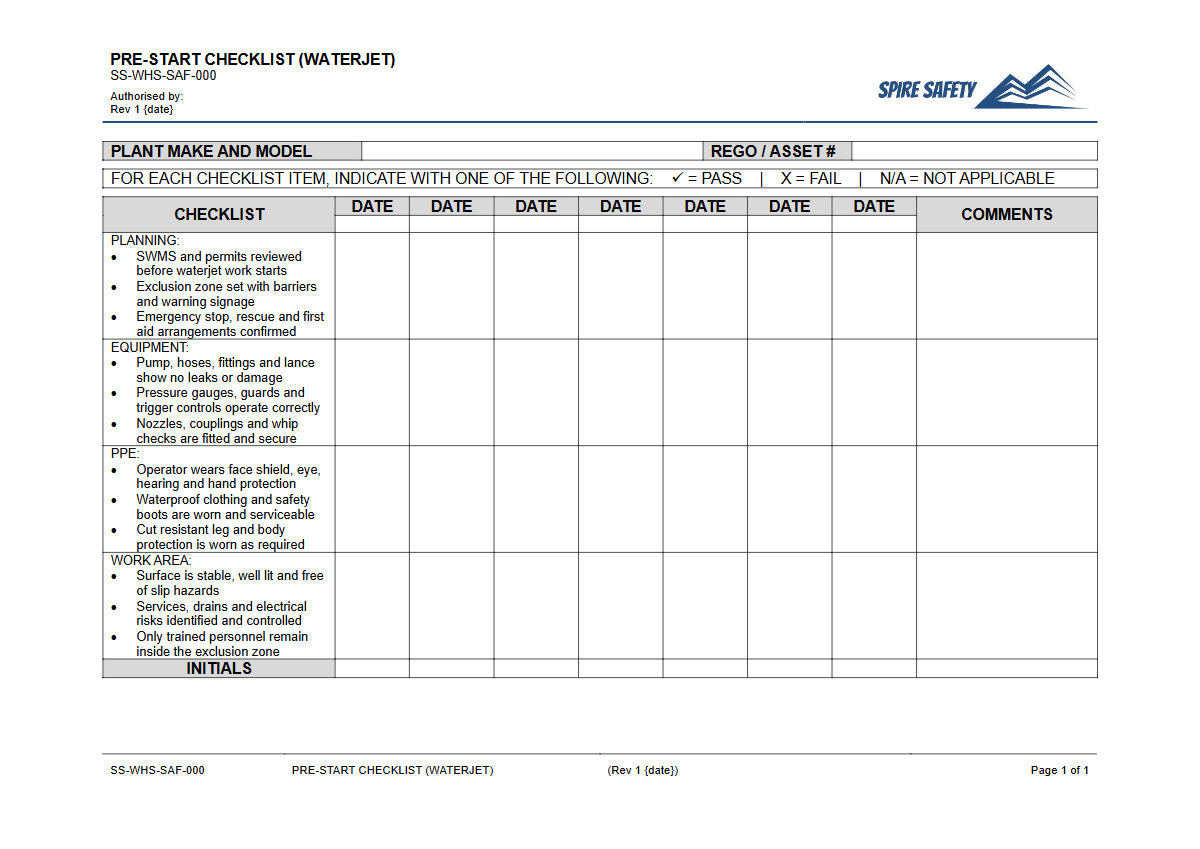
Using this Free Pre-Start Checklist (Waterjet) Template helps formalise the safety inspection process for high-pressure waterjet cutting systems. This template, available as a DOCX and PDF download, provides a structured starting point for identifying potential hazards before operation.
Implementing a consistent pre-start check process is a fundamental part of managing WHS risks associated with plant and equipment. It assists in preventing equipment failure, reducing the risk of injury, and creating a verifiable record of inspections.
A systematic check ensures that critical components like high-pressure pumps, lines, nozzles, and safety interlocks are in safe working order. Formalising this process helps embed safety into daily operations and is a key component of a robust WHS management system. It demonstrates a commitment to proactive risk management and can be a valuable record during safety consultations or audits.
Video walkthrough
How to use the Free Pre-Start Checklist (Waterjet) Template
This checklist is designed to be a comprehensive starting point, not a finished document. To use it effectively, follow these steps:
- Download the template in your preferred format (DOCX for easy editing or PDF).
- Customise the checklist to reflect the specific make, model, and configuration of the waterjet cutter(s) in your workplace. Add or remove items to align with the manufacturer’s instructions and your operational context.
- Integrate the checklist into your daily operational procedures, ensuring all operators are trained on how and when to use it.
- Establish a clear process for reporting and rectifying any faults or hazards identified during the check.
Important: This is a template that we have created as a starting point. You must customise it to suit the specific equipment, hazards, and operational needs of your workplace. A pre-start check is just one part of ensuring safe operation; it should be used alongside other key safety documents, such as our free Waterjet Cutter SOP.
When to use a Waterjet Pre-Start Checklist
A pre-start checklist should be completed before the first use of the waterjet cutter on any shift. It should also be used if the machine has been idle for an extended period or after any maintenance or repair work has been performed.
This regular, systematic inspection helps catch developing issues before they escalate into equipment failures or safety incidents. Consistent use also helps reinforce safe work practices among operators.
Who should use this checklist
This Pre-Start Checklist should be used by any person who operates the waterjet cutting equipment. Operators must be trained and competent not only in the machine's use but also in conducting these safety inspections.
Supervisors or maintenance personnel may also use the checklist to verify equipment condition, conduct periodic audits, or investigate reported issues. Reinforcing the importance of these checks is an ideal subject for a regular team safety meeting, which can be structured using our free Pre-Start Meeting Template.
Key Inspection Points for a Waterjet Cutter
While your customised checklist will be more detailed, it should cover these critical areas:
General Area & Machine Frame
Inspect the area around the waterjet for slip, trip, and fall hazards. Ensure the machine is stable, the tank is free of foreign objects, and there are no visible signs of damage or fluid leaks.
Proper housekeeping is the first step in any safety procedure.
High-Pressure System
This is the most critical area. Check the high-pressure pump, tubing, swivels, and fittings for any signs of wear, corrosion, or leakage.
A pinhole leak in a high-pressure water line can cause severe injection injuries. The nozzle and mixing chamber should be inspected for blockages or damage.
Regular WHS compliance auditing can help verify that your inspection and maintenance programs for such high-risk components are effective.
Abrasive System
Ensure there is a sufficient supply of the correct abrasive (e.g., garnet) in the hopper. Check the abrasive feed lines for any blockages, kinks, or moisture that could disrupt the flow.
An inconsistent abrasive supply can affect cut quality and may indicate other system issues.
Control System & Safety Features
Verify that all safety features are functioning correctly. Test all emergency stop buttons.
Check that physical guards, light curtains, and pressure-relief devices are in place and operational. Confirm that the control panel is working and there are no error messages on the display. Reinforcing these steps is a great topic for your ongoing safety conversations, which can be guided by a Pre-Start Checks and Plant Maintenance Toolbox Talk.
Customising Your Pre-Start Checklists
Every piece of plant is different. While this template is specifically for waterjet cutters, the principles apply to all workplace equipment.
You may need to develop multiple checklists for various machines. For example, if your workshop also uses computer-controlled cutting tools, you could adapt this document or refer to our specific Pre-Start Checklist (CNC Router) template as another example of a tailored approach.
Common mistakes
Common mistakes to avoid
- Ignoring minor drips or leaks in the high-pressure system, which can indicate imminent failure.
- Failing to check the abrasive feed system for blockages, leading to poor cut quality or nozzle damage.
- Becoming complacent and skipping checks on safety guards, interlocks, or emergency stops.
- Completing the checklist as a 'tick and flick' exercise without physically verifying each item.
Legal references
Legal considerations
The following legal requirements may be relevant to this type of work.
- Work Health and Safety Act (Harmonised) — Provides the primary duties for protecting workers and other people from work health and safety risks.
- Work Health and Safety Regulations (Harmonised) — Sets out requirements supporting the management of workplace hazards and risks.
The following codes may be relevant to this type of work.
- Managing WHS Risks Code of Practice — Provides practical guidance on identifying hazards, assessing risks and applying effective controls.
- Work Health and Safety Consultation, Cooperation and Coordination Code of Practice — Provides practical guidance on consulting workers and coordinating with other duty holders.
- Managing the Work Environment and Facilities Code of Practice — Provides practical guidance on safe work environments, workplace facilities and related controls.
Did you know
Extreme Pressure
The water in an abrasive waterjet system is often pressurised to between 30,000 and 90,000 pounds per square inch (PSI). This extreme pressure allows the water stream to travel at nearly three times the speed of sound.
No Heat-Affected Zone
Unlike plasma or laser cutting, waterjet cutting is a cold-cutting process. This means it does not create a heat-affected zone on the material, preventing warping, hardening, or material stress.
FAQ
Frequently asked questions
01What are the most critical safety checks for a waterjet cutter before use?
02How often should a waterjet pre-start checklist be completed?
03Who is responsible for completing a pre-start checklist for a waterjet?
04Can a digital pre-start checklist be used instead of a paper one?
Share this resource
Free Pre-Start Checklist (Waterjet) Template
Browse Categories
How To Use It
- 1Download and open in Word or PDF.
- 2Replace the placeholders with your business details.
- 3Get it reviewed by a WHS specialist before rollout.
Need it customised?
Our WHS consultants can adapt this template to your site, run a gap analysis, or audit what you already have in place.
Book a Free Consultation WHS consulting servicesor call 1300 156 382