
Free Pre-Start Checklist (Vinyl Cutter) Template
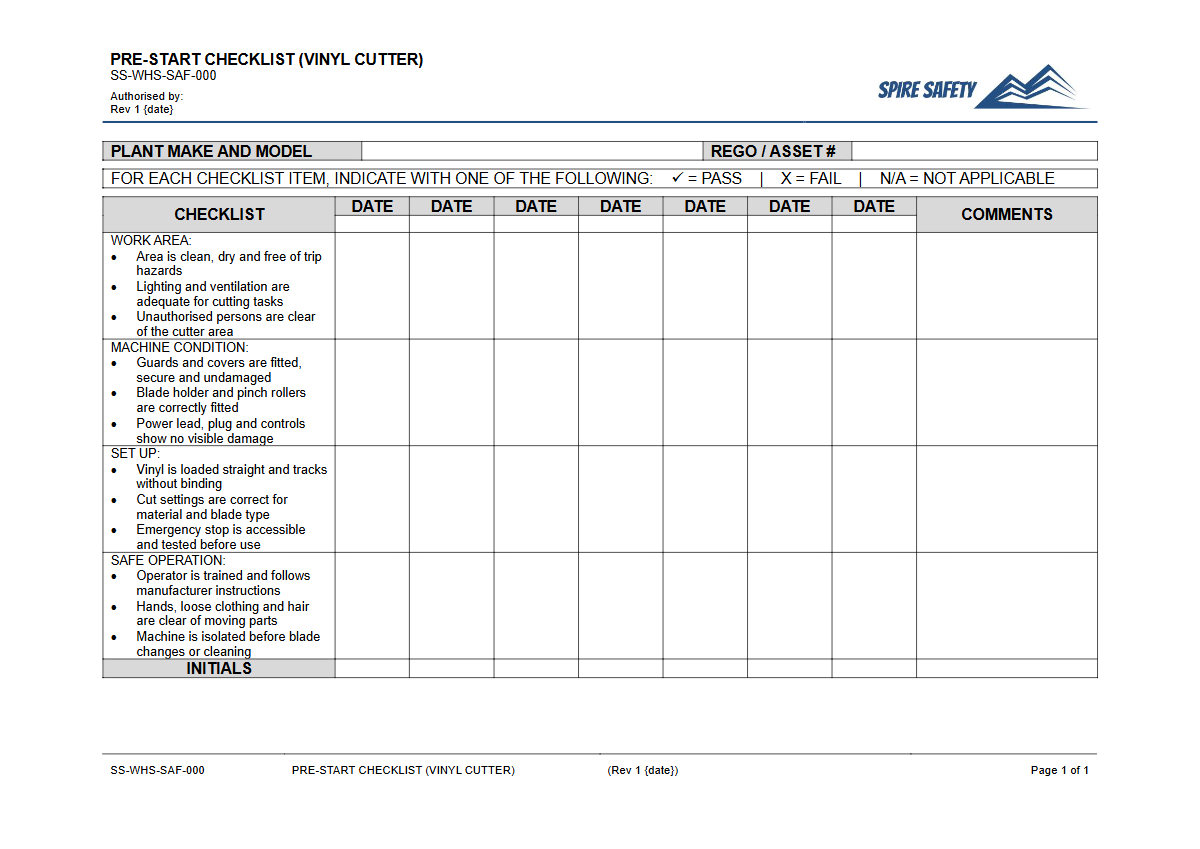
Download our free Pre-Start Checklist for Vinyl Cutters. This DOCX & PDF template helps formalise safety checks before use. Customise it to your workplace.
Free Pre-Start Checklist (Vinyl Cutter) Template
DOCX • 125 KB + PDF
Updated Oct 2026
No signup required
Purpose of the Free Pre-Start Checklist (Vinyl Cutter) Template
A vinyl cutter, while a common tool in sign-making, fabrication, and design workshops, presents several workplace hazards. These include sharp blades, pinch points from moving parts, and electrical risks.
This Free Pre-Start Checklist (Vinyl Cutter) Template provides a structured framework to help workers identify and control these risks before they begin work. By formalising daily equipment inspections, you create a consistent, proactive approach to safety, preventing incidents and minimising equipment downtime.
Integrating pre-start checks is a fundamental aspect of managing plant safety. Similar to how you would inspect other computer-controlled equipment, using a dedicated checklist ensures no steps are missed.
For other machinery in your workshop, you might find our Free Pre-Start Checklist (CNC Router) Template equally useful. Documenting these checks also provides a clear record of due diligence, demonstrating a commitment to safety to both your team and regulatory bodies.
Ultimately, this checklist is a tool to support your broader safety framework. A consistent pre-start inspection process forms a critical component of effective WHS management systems, helping to embed a culture of safety and risk awareness throughout the organisation.
Video walkthrough
How to use the Free Pre-Start Checklist (Vinyl Cutter) Template
This resource is available for download as a DOCX file for easy editing and a PDF for straightforward printing and use. The checklist is structured to cover common inspection points for a standard vinyl cutter, including guards, power cords, blades, the cutting strip, and the general work area.
Operators can quickly run through the list, ticking off each item to confirm it is in safe working order before commencing a job.
IMPORTANT: This document is a template, not a finished procedure. To be effective, you must customise it to suit the specific make and model of your vinyl cutter, your workplace environment, and the types of materials you process.
We are not liable for any incidents arising from the use of this template. For example, you may need to add checks specific to your machine's software interlocks, unique pinch points, or fume extraction requirements if cutting certain materials.
The principles of pre-start checks apply to a wide range of modern workshop equipment. If your facility also uses additive manufacturing, our free Pre-Start Checklist for 3D Printers provides another example of a machine-specific inspection guide.
When to use it
A pre-start checklist for a vinyl cutter should be completed before every use, or at the minimum, at the beginning of each shift where the machine will be operated. The condition of equipment can change unexpectedly, even overnight.
A previous operator may have identified a fault, or minor damage could have occurred that was not reported. Completing a check takes only a minute but is the most reliable way to catch potential issues before they lead to an incident or costly repairs.
Making pre-start checks a non-negotiable part of the daily routine is crucial for building safe work habits. This can be reinforced through regular workplace discussions.
Using a resource like our Pre-Start Checks and Plant Maintenance Toolbox Talk can help communicate the importance of these inspections to all workers.
Who should use it
The checklist is designed primarily for the machine operator—the person directly interacting with the vinyl cutter. They are best placed to notice subtle changes in the equipment's condition or performance.
Supervisors should also use the completed checklists to verify that inspections are being performed correctly and to follow up on any faults or hazards identified by operators.
For a Person Conducting a Business or Undertaking (PCBU), providing such a tool is a practical way to fulfil the primary duty of care under WHS law. It helps establish and maintain a safe system of work.
This checklist should be used alongside other key safety documents, such as a comprehensive safe operating procedure. As an example of a related document for cutting equipment, see our Laser Cutter SOP (Safe Operating Procedure) Template.
Implementing Effective Safety Systems
A checklist alone does not create a safe workplace. It must be supported by adequate training, operator competency verification, and a clear process for reporting and rectifying faults.
If you require assistance in developing or refining your safety procedures for plant and equipment, engaging professional WHS consulting can provide expert guidance and ensure your systems are robust and practical.
To ensure your safety management system remains effective over time, it's wise to conduct periodic reviews and checks. An independent assessment can identify gaps and opportunities for improvement in your processes, including how pre-start checks are managed.
Specialist WHS compliance auditing can provide this valuable third-party perspective, helping you maintain a high standard of workplace safety.
Common mistakes
Common mistakes to avoid
- Using a generic checklist without customising it for the specific cutter model and its features.
- Failing to inspect the sacrificial cutting strip for deep grooves, which can affect cut quality and damage blades.
- Ignoring unusual noises or error messages during the machine's initialisation sequence.
- Not ensuring the work area is clear of clutter and that media rolls can feed without obstruction.
Legal references
Legal considerations
The following legal requirements may be relevant to this type of work.
- Work Health and Safety Act (Harmonised) — Provides the primary duties for protecting workers and other people from work health and safety risks.
- Work Health and Safety Regulations (Harmonised) — Sets out requirements supporting the management of workplace hazards and risks.
The following codes may be relevant to this type of work.
- Managing WHS Risks Code of Practice — Provides practical guidance on identifying hazards, assessing risks and applying effective controls.
- Work Health and Safety Consultation, Cooperation and Coordination Code of Practice — Provides practical guidance on consulting workers and coordinating with other duty holders.
- Managing the Work Environment and Facilities Code of Practice — Provides practical guidance on safe work environments, workplace facilities and related controls.
Did you know
Plotter Origins
Vinyl cutters evolved directly from pen plotters, which were early computer output devices used to draw complex line art, architectural plans, and technical drawings with automated pens.
The Swivel Blade
The cutting blade in a vinyl cutter is a tiny, sharp piece of carbide that swivels freely in its holder. This design allows it to turn and follow intricate curves smoothly, much like a caster wheel on a shopping trolley.
FAQ
Frequently asked questions
01What are the main hazards associated with a vinyl cutter?
02How often should a vinyl cutter pre-start check be performed?
03Is a digital pre-start checklist acceptable for a vinyl cutter?
04Who is responsible for ensuring pre-start checks are completed?
Share this resource
Free Pre-Start Checklist (Vinyl Cutter) Template
Browse Categories
How To Use It
- 1Download and open in Word or PDF.
- 2Replace the placeholders with your business details.
- 3Get it reviewed by a WHS specialist before rollout.
Need it customised?
Our WHS consultants can adapt this template to your site, run a gap analysis, or audit what you already have in place.
Book a Free Consultation WHS consulting servicesor call 1300 156 382