
Free Pre-Start Checklist (Walk In Fridge) Template
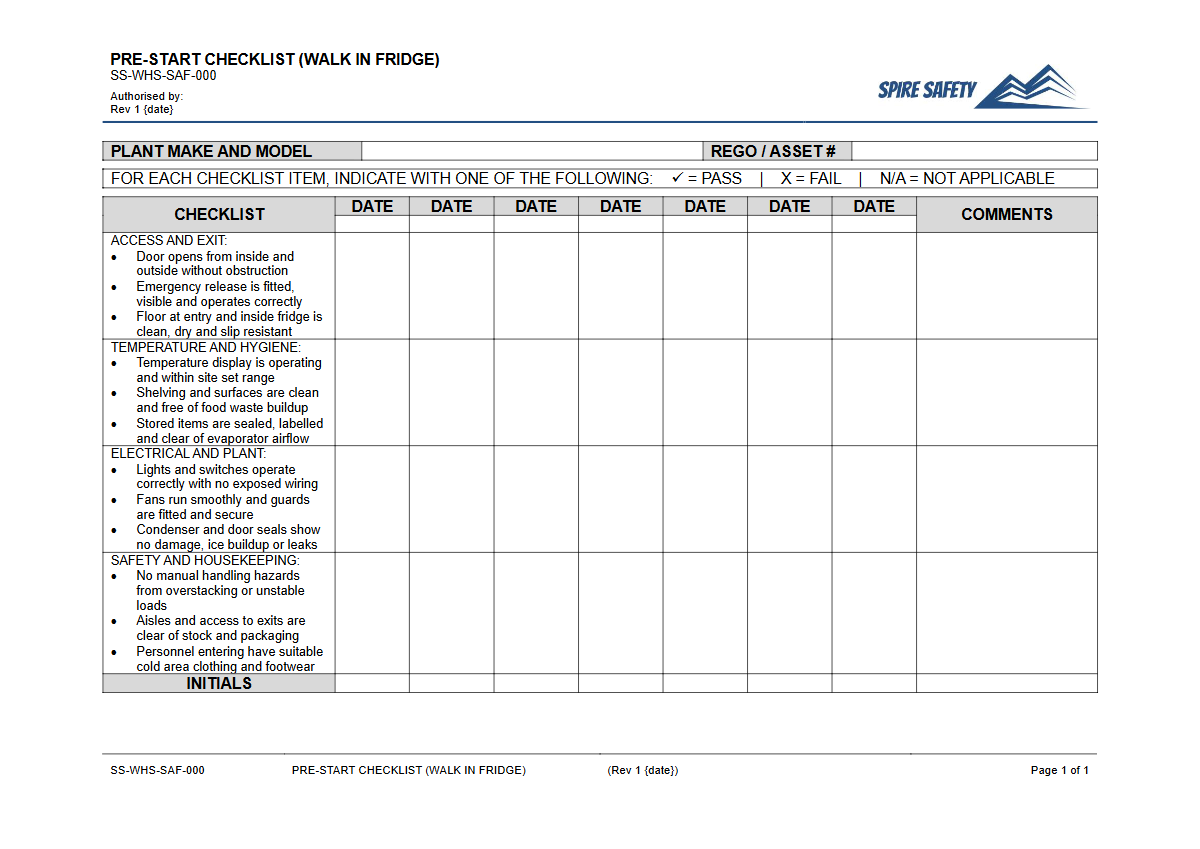
Download our free Pre-Start Checklist for Walk-In Fridges. This template helps formalise safety checks, identify hazards, and ensure operational readiness.
Free Pre-Start Checklist (Walk In Fridge) Template
DOCX • 125 KB + PDF
Updated Oct 2026
No signup required
Purpose of the Free Pre-Start Checklist (Walk In Fridge) Template
Walk-in refrigerators and freezers are essential in many industries, including hospitality, food processing, and healthcare. However, they also present unique workplace hazards.
This Free Pre-Start Checklist (Walk In Fridge) Template provides a structured starting point for organisations to formalise their daily safety inspections. Using this checklist helps systematically identify and control risks before they cause injury or illness, ensuring the unit is safe for entry and use throughout the day.
The primary purpose is to guide workers through a consistent inspection process. This includes checking for physical hazards like slippery floors from ice or condensation, trip hazards from stored goods, and ensuring safety features like internal door releases and alarms are functional.
It also covers operational checks, such as verifying temperature settings, which is crucial for both food safety and equipment longevity. Documenting these checks creates a valuable record, demonstrating due diligence and forming a key part of effective WHS management systems.
Video walkthrough
How to use the Free Pre-Start Checklist (Walk In Fridge) Template
This checklist is provided in both DOCX and PDF formats for your convenience. The Word document is fully editable, allowing for comprehensive customisation to suit your specific workplace and equipment. The process for implementation is straightforward:
- Download and Customise: Download the template and add your company branding. Most importantly, adapt the checklist items to match the specific make, model, and configuration of your walk-in unit and its surrounding environment.
- Train Workers: Ensure all relevant staff are trained on why the checks are important and how to complete them accurately. This training can be supported with a dedicated pre-start checks and plant maintenance toolbox talk.
- Implement: Integrate the checklist into your daily opening procedures. Store the completed records in an accessible location for review by supervisors and for auditing purposes.
- Review and Act: Establish a clear process for reporting and rectifying any faults identified during the check. Issues should be escalated to a supervisor or maintenance team immediately.
Note: This document is a template and not a complete safety solution. We have designed it as a starting point, and you must customise it to address the specific hazards in your work environment.
Your organisation is responsible for ensuring the final document is fit for purpose.
When to use this Pre-Start Checklist
A pre-start check for a walk-in fridge should be completed at the beginning of each workday or shift before the unit is accessed for the first time. This proactive approach ensures any issues that may have developed overnight, such as ice build-up or a temperature fault, are identified before they can pose a risk to workers or compromise product safety.
Additional checks may also be warranted after cleaning, maintenance, or repair work has been performed on the unit. Integrating these checks can also be a topic of discussion during routine team safety briefings or pre-start meetings to reinforce their importance among staff.
Who should use it
This checklist is designed for use by any person who is required to enter or work in or around a walk-in refrigeration unit. This typically includes kitchen staff, chefs, warehouse personnel, and maintenance workers.
The responsibility for ensuring the checks are completed usually falls to a shift supervisor or manager, who must also verify that any identified issues are addressed.
It is crucial that the individuals performing the check are deemed competent to do so. This means they have received adequate information, instruction, and training to understand the potential hazards and the function of the equipment's safety features.
The process should be periodically reviewed through methods like WHS compliance auditing to ensure it remains effective and is being followed correctly by all relevant personnel.
Just as you would use a specific checklist for different types of plant, such as a pre-start checklist for an air handler, this dedicated tool ensures the unique risks of walk-in fridges are not overlooked. For more templates and safety tools, browse our complete free WHS resources library.
Common mistakes
Common mistakes to avoid
- Failing to customise the template to the specific make and model of the unit.
- 'Pencil-whipping' the form without physically conducting the inspection.
- Not immediately reporting or acting upon faults identified during the check.
- Inadequate training for staff on how to perform the checks correctly and why they are important.
Legal references
Legal considerations
The following legal requirements may be relevant to this type of work.
- Work Health and Safety Act (Harmonised) — Provides the primary duties for protecting workers and other people from work health and safety risks.
- Work Health and Safety Regulations (Harmonised) — Sets out requirements supporting the management of workplace hazards and risks.
The following codes may be relevant to this type of work.
- Managing WHS Risks Code of Practice — Provides practical guidance on identifying hazards, assessing risks and applying effective controls.
- Work Health and Safety Consultation, Cooperation and Coordination Code of Practice — Provides practical guidance on consulting workers and coordinating with other duty holders.
- Managing the Work Environment and Facilities Code of Practice — Provides practical guidance on safe work environments, workplace facilities and related controls.
Did you know
Entrapment Safety
Modern walk-in refrigerators and freezers are required by law in many jurisdictions to have an internal release mechanism that allows the door to be opened from the inside, even if it has been locked externally. This is a critical control to prevent accidental entrapment.
The Temperature Danger Zone
According to Food Standards Australia New Zealand (FSANZ), the 'temperature danger zone' for food is between 5°C and 60°C. Regular pre-start checks help ensure refrigeration units stay below 5°C, preventing the rapid growth of harmful bacteria.
FAQ
Frequently asked questions
01Why is a pre-start check for a walk-in fridge necessary?
02What are the main hazards associated with walk-in fridges?
03How often should walk-in fridge pre-start checklists be reviewed?
04Can this template be used for a walk-in freezer as well?
Share this resource
Free Pre-Start Checklist (Walk In Fridge) Template
Browse Categories
How To Use It
- 1Download and open in Word or PDF.
- 2Replace the placeholders with your business details.
- 3Get it reviewed by a WHS specialist before rollout.
Need it customised?
Our WHS consultants can adapt this template to your site, run a gap analysis, or audit what you already have in place.
Book a Free Consultation WHS consulting servicesor call 1300 156 382