
Free Pre-Start Checklist (Vac Unit) Template
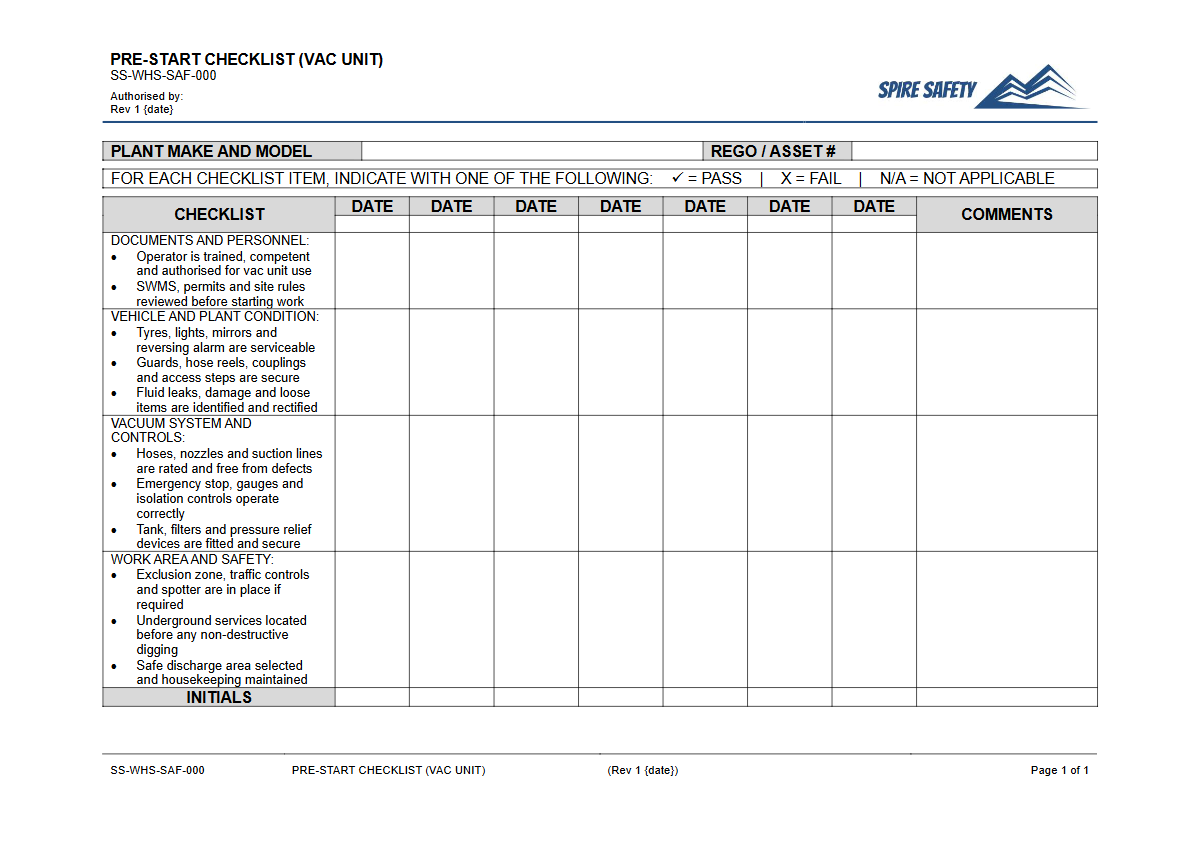
Download our Free Pre-Start Checklist (Vac Unit) Template. This user-friendly DOCX & PDF helps formalise safety inspections for vacuum excavation units.
Free Pre-Start Checklist (Vac Unit) Template
DOCX • 125 KB + PDF
Updated Oct 2026
No signup required
Purpose of the Free Pre-Start Checklist (Vac Unit) Template
A vacuum unit, commonly used for hydro-excavation and non-destructive digging, is powerful and complex plant. Implementing routine safety checks is a fundamental part of managing workplace health and safety.
Our Free Pre-Start Checklist (Vac Unit) Template provides a structured starting point for organisations to formalise their inspection process. Regular pre-start checks help operators identify potential defects, damage, or wear and tear before they escalate into serious incidents, equipment failure, or costly downtime.
Systematically documenting these inspections demonstrates a proactive approach to safety and maintenance, forming a crucial part of your WHS records.
Using a standardised checklist ensures all critical components are inspected consistently, regardless of who is operating the equipment. It supports a preventative maintenance culture by catching small issues early.
This process is a key topic covered in resources like the Pre-Start Checks and Plant Maintenance Toolbox Talk, which helps reinforce the importance of these daily routines with your team.
Video walkthrough
How to use the Free Pre-Start Checklist (Vac Unit) Template
This template is designed for ease of use and customisation. After downloading the DOCX or PDF file, you should integrate it into your operational procedures.
The process typically involves training operators on how to complete the checklist thoroughly, establishing a procedure for reporting and rectifying faults, and setting up a system for filing the completed records. The checklist should be filled out by the operator before commencing any work with the vac unit for their shift.
Important: This is a template, not a finished document. Every workplace and piece of equipment is different.
You must customise this checklist to suit the specific make and model of your vac unit, your site conditions, and your organisation's specific safety procedures. We recommend a competent person reviews and adapts the template before you roll it out. Integrating such procedures effectively is a core component of well-designed WHS management systems.
What to Inspect on a Vac Unit
A thorough pre-start inspection for a vacuum unit should cover several key areas to ensure it is safe for operation. While your customised list will be more detailed, typical inspection points include:
- General Condition: Check for any obvious signs of damage, leaks (oil, fuel, water), or structural defects. Ensure all safety decals and operational labels are legible.
- Hoses and Couplings: Inspect all suction and pressure hoses for cracks, bulges, abrasions, or other damage. Check that all couplings are secure and sealing correctly.
- Vacuum and Pressure Systems: Verify the functionality of the vacuum pump and water pressure system. Check gauges to ensure they are providing accurate readings.
- Tank and Debris Body: Inspect the integrity of the debris tank, including door seals, locking mechanisms, and hoisting components.
- Safety Features: Test all emergency stops, audible alarms, flashing lights, and operator presence controls. Confirm that all guards and shields are securely in place.
- Fluid Levels: Check engine oil, hydraulic fluid, coolant, and water tank levels to ensure they are within the manufacturer's specified operating range.
Ensuring the person operating the equipment is competent is just as critical as the machine's condition. You can adapt documents like the Verification of Competency (Pipe Threader) Template to create a framework for assessing operator skills on your vac unit.
When to use this Pre-Start Checklist
The pre-start checklist should be completed at the beginning of every shift or before the vac unit is used for the first time each day. This routine ensures a consistent baseline of safety is established before any work begins.
It should also be used after any significant maintenance or repair work to verify that the equipment has been returned to a safe operating condition. Documenting these checks can be incorporated into your daily pre-start meetings, for which you can use a free Pre-Start Meeting Template to keep records.
Who should use this Pre-Start Checklist
This checklist should be completed by the trained and competent operator assigned to use the vac unit. Operators have hands-on experience with the equipment and are best placed to notice subtle changes in its performance or condition.
Supervisors or team leaders are responsible for ensuring these checks are completed correctly and that any identified faults are reported and addressed in a timely manner. Ultimately, the Person Conducting a Business or Undertaking (PCBU) holds the primary duty of care to ensure plant is safe, which includes implementing and monitoring procedures like pre-start inspections.
If you need assistance understanding these duties, our WHS consulting services can provide expert guidance.
This document is just one of many tools designed to help you manage your safety obligations. For more templates and guides covering a wide range of topics, browse our complete free WHS resources library. Different equipment requires different checks, such as those found in our Pre-Start Checklist (Air Handler) Template for HVAC plant.
Common mistakes
Common mistakes to avoid
- Skipping checks on hoses and couplings for wear, leading to failure under pressure.
- Forgetting to verify emergency stop functionality and audible alarms.
- Failing to check fluid levels (hydraulic oil, engine oil, coolant), causing mechanical damage.
- Using a generic checklist without customising it for the specific make and model of the vac unit.
Legal references
Legal considerations
The following legal requirements may be relevant to this type of work.
- Work Health and Safety Act (Harmonised) — Provides the primary duties for protecting workers and other people from work health and safety risks.
- Work Health and Safety Regulations (Harmonised) — Sets out requirements supporting the management of workplace hazards and risks.
The following codes may be relevant to this type of work.
- Managing WHS Risks Code of Practice — Provides practical guidance on identifying hazards, assessing risks and applying effective controls.
- Work Health and Safety Consultation, Cooperation and Coordination Code of Practice — Provides practical guidance on consulting workers and coordinating with other duty holders.
- Managing the Work Environment and Facilities Code of Practice — Provides practical guidance on safe work environments, workplace facilities and related controls.
Did you know
High-Pressure Hazard
The high-pressure water wands on some vac units can operate at pressures exceeding 2,000 PSI, creating a significant risk of fluid injection injuries if used improperly or directed at skin.
Static Electricity Risk
Vacuuming dry, fine materials can generate a powerful static charge on the unit. If not properly earthed, this can discharge as a spark, creating a serious ignition hazard in potentially flammable atmospheres.
FAQ
Frequently asked questions
01What is a vacuum excavation unit?
02Is this pre-start checklist a legal document?
03How often should a vac unit be inspected?
04Who is responsible for ensuring pre-start checks are done?
Share this resource
Free Pre-Start Checklist (Vac Unit) Template
Browse Categories
How To Use It
- 1Download and open in Word or PDF.
- 2Replace the placeholders with your business details.
- 3Get it reviewed by a WHS specialist before rollout.
Need it customised?
Our WHS consultants can adapt this template to your site, run a gap analysis, or audit what you already have in place.
Book a Free Consultation WHS consulting servicesor call 1300 156 382