
Free Safe Operating Procedure (Cattle Loading Ramp) Template
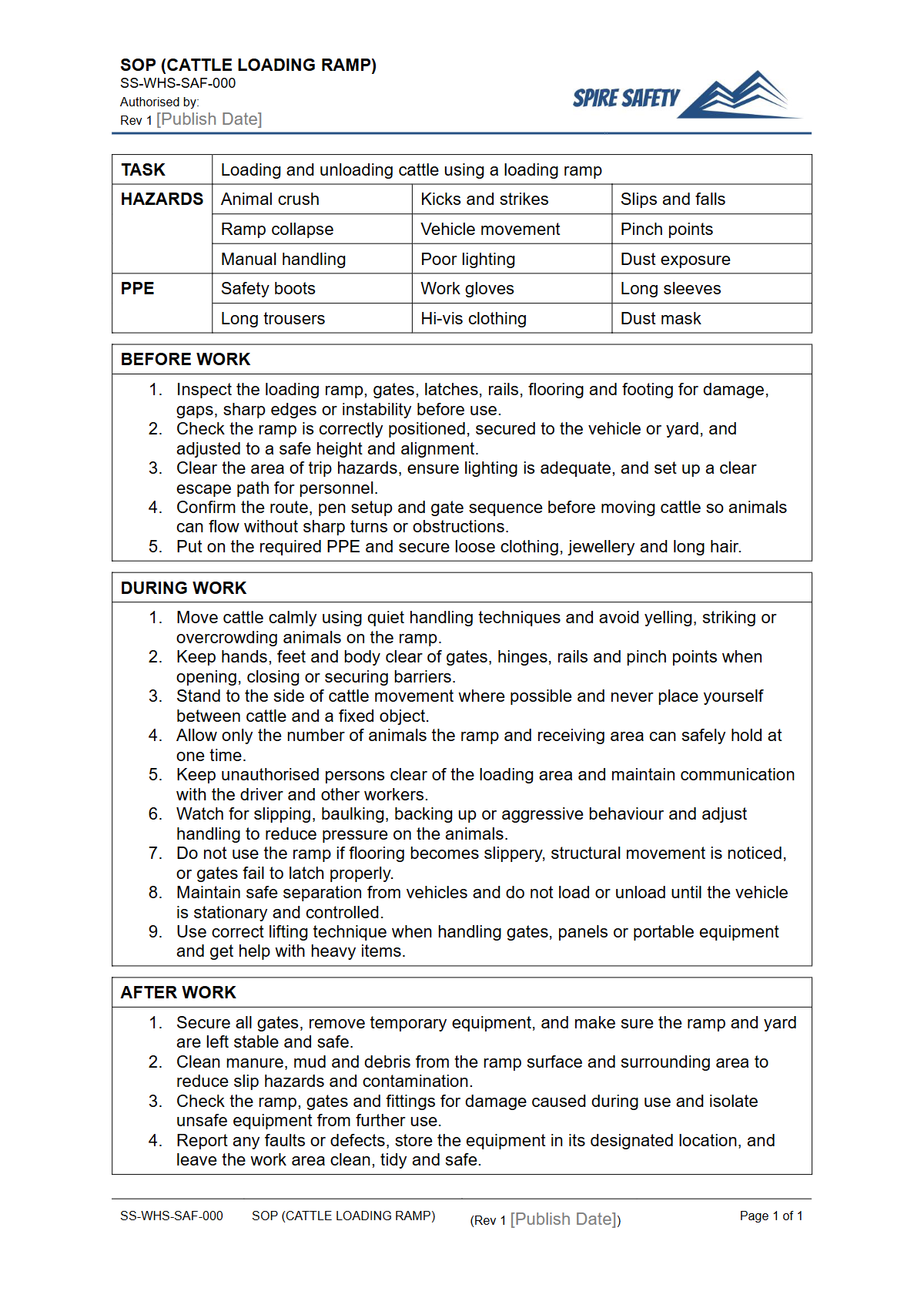
Download our free Safe Operating Procedure (Cattle Loading Ramp) template. This customisable DOCX and PDF resource helps you outline safe work practices.
Free Safe Operating Procedure (Cattle Loading Ramp) Template
DOCX • 126 KB + PDF
Updated Oct 2026
No signup required
Purpose of the Free Safe Operating Procedure (Cattle Loading Ramp) Template
Working with livestock, particularly during loading and unloading, presents significant health and safety risks. This free Safe Operating Procedure (Cattle Loading Ramp) template provides a structured starting point for your business to formally document the risks and control measures associated with this high-risk task.
Using an SOP helps to ensure that all workers follow a consistent, safe method every time they use the ramp, reducing the likelihood of incidents involving people or animals.
A well-developed SOP is a key component of a safe system of work. It demonstrates a commitment to managing workplace hazards and forms an essential part of comprehensive WHS management systems. By clearly outlining pre-operational checks, step-by-step procedures, and emergency responses, you create a safer environment for everyone on site.
Key Hazards in Cattle Loading
The primary function of this SOP is to control risks specific to your operation. Common hazards associated with cattle ramps include:
- Being crushed, pinned, or struck by animals against fixed structures like gates, fences, or the truck.
- Falls from the ramp, walkway, or vehicle.
- Slips, trips, and falls on surfaces contaminated with mud or manure.
- Musculoskeletal injuries from pushing, pulling, or repetitive forceful actions.
- Unpredictable animal behaviour leading to kicks, headbutts, or charging.
Video walkthrough
How to use the Free Safe Operating Procedure (Cattle Loading Ramp) Template
Our template is available for download as a DOCX file for easy editing, as well as a PDF for straightforward printing and distribution. It is designed to be a foundation, not a finished document.
For a procedure to be effective, it must be tailored to the specifics of your workplace.
Important: This is a template that requires customisation. We have based its structure on the model WHS framework, but you must adapt the content to reflect your specific cattle ramp, equipment, herd temperament, and work environment.
A generic SOP that doesn't match your actual site conditions is not sufficient to meet your safety obligations. For help in adapting templates or developing site-specific documentation, consider seeking expert WHS consulting services.
Essential Components of Your Customised SOP
When customising this document, pay close attention to the following sections:
- Personal Protective Equipment (PPE): Specify the exact PPE required, such as steel-topped boots, gloves, and high-visibility clothing.
- Pre-Operational Checks: Detail the daily or pre-use checks required for your ramp, including checking floor condition, gate operation, and structural stability.
- Step-by-Step Procedure: Write clear, unambiguous steps for both loading and unloading cattle, including communication signals between the handler and driver.
- Low-Stress Handling: Incorporate principles of low-stress stock handling to improve safety and animal welfare.
- Emergency Procedures: Outline the response for common emergencies, such as an animal getting stuck, a person being injured, or equipment failure. Similar to processes found in our Grain Drill SOP template, clear emergency steps are critical.
When to use it
A Safe Operating Procedure for a cattle loading ramp should be developed and implemented before any workers undertake the task. It is a fundamental document for new worker induction and should be the basis for practical, hands-on training.
It serves as an ongoing reference for experienced personnel and a tool for supervisors to monitor that correct procedures are being followed.
The SOP should also be reviewed and updated periodically. A formal review is recommended at least annually, or whenever there is a change to the process, equipment, or following an incident or near-miss.
This process of review and improvement can be integrated into your schedule of regular WHS compliance auditing to ensure its continued relevance and effectiveness.
Who should use it
The responsibility for developing, implementing, and reviewing the SOP lies with the Person Conducting a Business or Undertaking (PCBU), which may be the farm owner, site manager, or transport operator. They must ensure the procedure is suitable and that workers are properly trained in its use.
Consultation with workers who actually perform the task is vital for creating a practical and effective SOP.
All workers involved in the task—including farm hands, stockpersons, and transport personnel—must be trained on the SOP and are required to follow it. This ensures a consistent and safe approach across all shifts and teams.
Documenting procedures for mobile equipment, such as in a Body Truck SOP, follows a similar principle of ensuring every operator understands the approved safe method. You can find more templates like this in our free WHS resources library.
Common mistakes
Common mistakes to avoid
- Using a generic template without customising it for the specific ramp, herd, and environmental conditions.
- Failing to conduct and document regular pre-operational checks on the ramp's condition.
- Poor communication between the person loading the cattle and the truck driver.
- Overlooking the importance of low-stress stock handling techniques in preventing incidents.
Legal references
Legal considerations
The following legal requirements may be relevant to this type of work.
- Work Health and Safety Act (Harmonised) — Provides the primary duties for protecting workers and other people from work health and safety risks.
- Work Health and Safety Regulations (Harmonised) — Sets out requirements supporting the management of workplace hazards and risks.
The following codes may be relevant to this type of work.
- Managing WHS Risks Code of Practice — Provides practical guidance on identifying hazards, assessing risks and applying effective controls.
- Work Health and Safety Consultation, Cooperation and Coordination Code of Practice — Provides practical guidance on consulting workers and coordinating with other duty holders.
- Managing the Work Environment and Facilities Code of Practice — Provides practical guidance on safe work environments, workplace facilities and related controls.
Did you know
Animal Behaviour
Cattle have a 'flight zone'—an invisible personal space. Understanding and working from the edge of this zone allows handlers to move animals calmly and predictably, reducing stress and safety risks.
Ramp Design
Australian guidance suggests cattle loading ramp slopes should not exceed 20 degrees (a 1-in-2.7 gradient) to ensure stable footing for the animals and reduce the risk of slips and falls.
FAQ
Frequently asked questions
01What should be included in pre-operational checks for a cattle ramp?
02How often should a Safe Operating Procedure for a cattle ramp be reviewed?
03Is low-stress stock handling important for safety?
04Who is responsible for providing training on the cattle ramp SOP?
Share this resource
Free Safe Operating Procedure (Cattle Loading Ramp) Template
Browse Categories
How To Use It
- 1Download and open in Word or PDF.
- 2Replace the placeholders with your business details.
- 3Get it reviewed by a WHS specialist before rollout.
Need it customised?
Our WHS consultants can adapt this template to your site, run a gap analysis, or audit what you already have in place.
Book a Free Consultation WHS consulting servicesor call 1300 156 382
Related templates
- Free Safe Operating Procedure (Cattle Loading) Template
- Free Safe Operating Procedure (Cattle Race) Template
- Free Safe Operating Procedure (Cattle Weighing) Template
- Free Safe Operating Procedure (Caustic Soda Handling) Template
- Free Safe Operating Procedure (CCTV Drain Camera) Template
- Free Safe Operating Procedure (CCTV Monitoring) Template