
Free Safe Operating Procedure (Cattle Weighing) Template
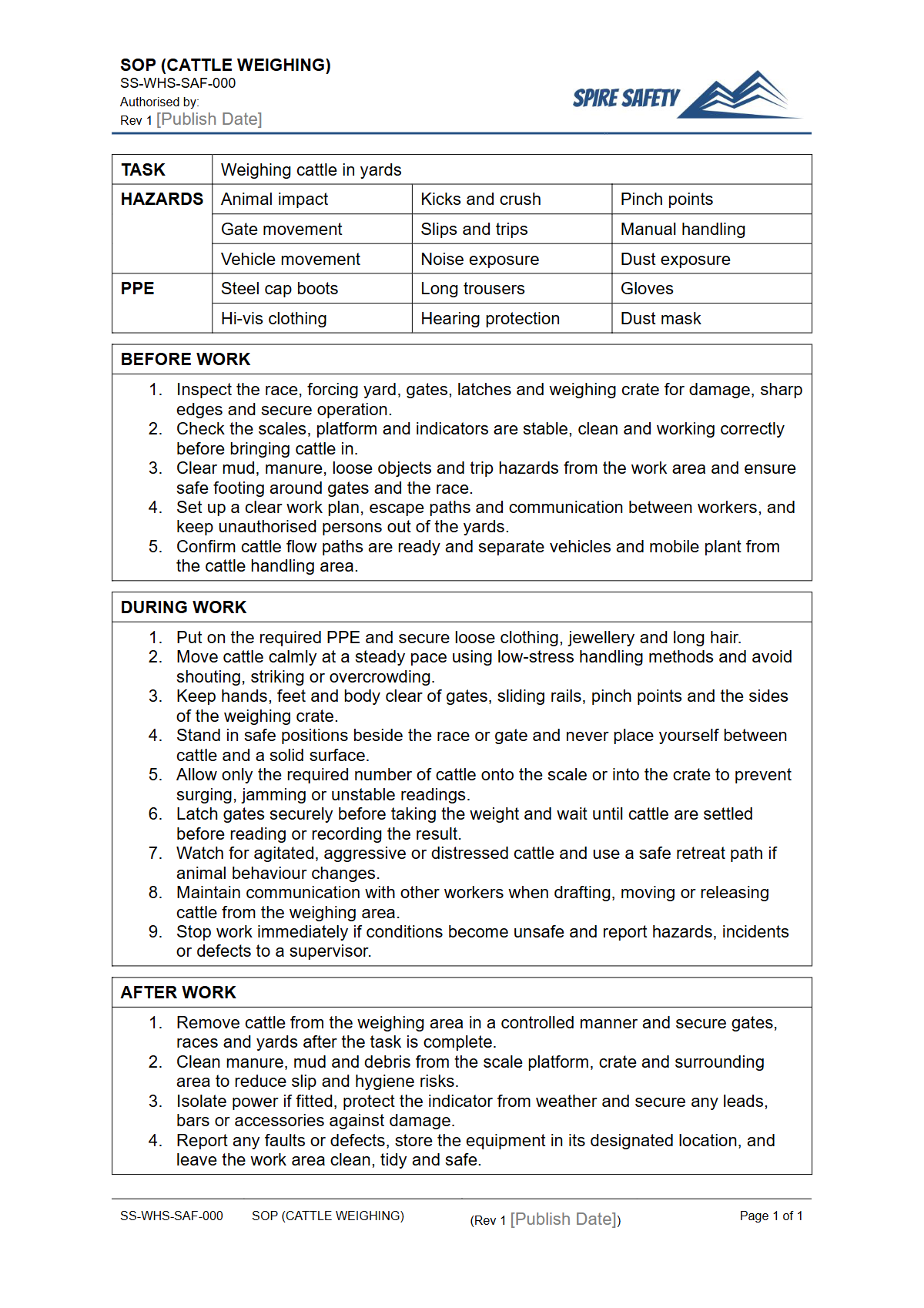
Download our free Safe Operating Procedure (Cattle Weighing) Template. This customisable DOCX & PDF provides a clear framework for safely weighing livestock.
Free Safe Operating Procedure (Cattle Weighing) Template
DOCX • 126 KB + PDF
Updated Oct 2026
No signup required
Purpose of the Free Safe Operating Procedure (Cattle Weighing) Template
Effectively managing livestock requires consistent and safe processes, especially during high-stress activities like weighing. This free Safe Operating Procedure (Cattle Weighing) Template provides a structured starting point for documenting the step-by-step process for safely handling and weighing cattle.
The primary goal is to minimise risks to workers, such as crushing injuries, being kicked or struck by animals, and musculoskeletal injuries from poor manual handling techniques. By standardising the task, an SOP helps ensure every worker understands the identified hazards and the control measures required to perform the job safely, from yard setup to operating the weigh crate and recording data.
This document is designed to be a core component of your agricultural safety framework. It formalises best practices and promotes a proactive approach to risk management.
Proper documentation is not just about procedural guidance; it's a critical element in building robust WHS management systems that protect your people and your business. Using a clear, documented procedure helps reduce incidents, improves operational efficiency, and demonstrates a commitment to workplace health and safety in a high-risk industry.
Video walkthrough
How to use the Free Safe Operating Procedure (Cattle Weighing) Template
This template is provided in both DOCX and PDF formats. The DOCX file is fully editable, allowing you to tailor the content to the specific requirements of your property, equipment, and workforce.
It is essential that you do not use this document as-is. We have provided a comprehensive framework, but for it to be effective, you must customise it to reflect your unique operational context.
Important Customisation Note:
To adapt this template correctly, you must:
- Consult with your workers who perform the task. Their direct experience is invaluable for identifying practical hazards and effective controls.
- Conduct a site-specific risk assessment for your cattle yards, races, and weigh crate.
- Incorporate the make and model of your specific weighing equipment and note any unique operating instructions or safety features.
- Add details about your property's emergency procedures, including contact numbers and the location of first aid kits. Our Free Safe Operating Procedure (Defibrillator Operation) Template can assist with documenting emergency response actions.
- Review the finalised SOP with all relevant personnel to ensure they understand and can follow the procedure correctly.
When to use it
A Safe Operating Procedure for cattle weighing should be used consistently as a primary reference tool. It is essential for inducting and training new employees or contractors, ensuring they learn the correct, safe method from the outset.
It also serves as a valuable resource for refresher training for experienced stock handlers, helping to prevent complacency and reinforce safe work habits. Before starting any weighing task, supervisors can use the SOP as a pre-start checklist to confirm that all safety checks have been completed and control measures are in place.
The SOP should also be a key document for review during incident investigations or near-miss reporting to identify any gaps in the procedure.
Maintaining safety across all farm operations is critical. While this document focuses on livestock, similar procedural discipline should be applied to machinery.
For example, having a clear FREE Grain Drill SOP (Safe Operating Procedure) Template ensures consistent safety when operating planting equipment.
Who should use it
This SOP template is designed for anyone with health and safety responsibilities in an agricultural setting where cattle are handled. This includes farm owners, station managers, and supervisors who are accountable for implementing safe systems of work.
It is also a direct, practical guide for all workers and stock handlers who are physically involved in the weighing process. By providing clear, accessible instructions, the SOP empowers workers to take responsibility for their own safety and that of their colleagues.
It serves as an authoritative reference on the expected standards of safe behaviour and operation.
Integrating SOPs for all high-risk tasks creates a comprehensive safety system. Whether workers are handling livestock or operating heavy machinery, documented procedures are key.
Farms often use a range of equipment, and having clear guidelines, such as a FREE Dozer SOP (Safe Operating Procedure) Template, helps manage machinery-related risks effectively.
Periodic checks are crucial to ensure these documented procedures are being followed correctly in practice. A formal WHS compliance auditing program can help verify that your SOPs are effectively implemented and identify areas for improvement across your entire operation, from livestock handling to general yard maintenance.
Even simple tasks can carry risks, which is why having procedures for all equipment, including a FREE Step Ladder SOP Template, contributes to a safer workplace.
This resource is just one of many we offer to support Australian businesses. You can explore our complete free WHS resources library for more templates, checklists, and guides to help you manage workplace safety.
Common mistakes
Common mistakes to avoid
- Failing to customise the template for the specific yard design, race, and weigh crate in use.
- Not involving experienced stock handlers in the drafting and review process.
- Neglecting to train all relevant workers on the finalised SOP and confirm their understanding.
- Becoming complacent and failing to actively monitor animal behaviour and footing during the task.
Legal references
Legal considerations
The following legal requirements may be relevant to this type of work.
- Work Health and Safety Act (Harmonised) — Provides the primary duties for protecting workers and other people from work health and safety risks.
- Work Health and Safety Regulations (Harmonised) — Sets out requirements supporting the management of workplace hazards and risks.
The following codes may be relevant to this type of work.
- Managing WHS Risks Code of Practice — Provides practical guidance on identifying hazards, assessing risks and applying effective controls.
- Work Health and Safety Consultation, Cooperation and Coordination Code of Practice — Provides practical guidance on consulting workers and coordinating with other duty holders.
- Managing the Work Environment and Facilities Code of Practice — Provides practical guidance on safe work environments, workplace facilities and related controls.
Did you know
Cattle Vision
Cattle have a panoramic field of vision of over 300 degrees but have a blind spot directly behind them, which is why approaching them from the rear can cause them to startle or kick.
Agricultural Risks
According to Safe Work Australia, the agriculture, forestry, and fishing industry consistently has one of the highest rates of work-related fatalities and serious injuries of any industry in Australia.
FAQ
Frequently asked questions
01What are the main hazards when weighing cattle?
02Why is a Safe Operating Procedure important for cattle weighing?
03How often should I review my cattle weighing SOP?
04Can I use this template for other livestock like sheep or alpacas?
Share this resource
Free Safe Operating Procedure (Cattle Weighing) Template
Browse Categories
How To Use It
- 1Download and open in Word or PDF.
- 2Replace the placeholders with your business details.
- 3Get it reviewed by a WHS specialist before rollout.
Need it customised?
Our WHS consultants can adapt this template to your site, run a gap analysis, or audit what you already have in place.
Book a Free Consultation WHS consulting servicesor call 1300 156 382
Related templates
- Free Safe Operating Procedure (Caustic Soda Handling) Template
- Free Safe Operating Procedure (CCTV Drain Camera) Template
- Free Safe Operating Procedure (CCTV Monitoring) Template
- Free Safe Operating Procedure (Ceiling Diffuser Clean) Template
- Free Safe Operating Procedure (Ceiling Grid Cleaning) Template
- Free Safe Operating Procedure (Ceiling Hoist Check) Template