
Free Safe Operating Procedure (Chainsaw - Standard Operation) Template
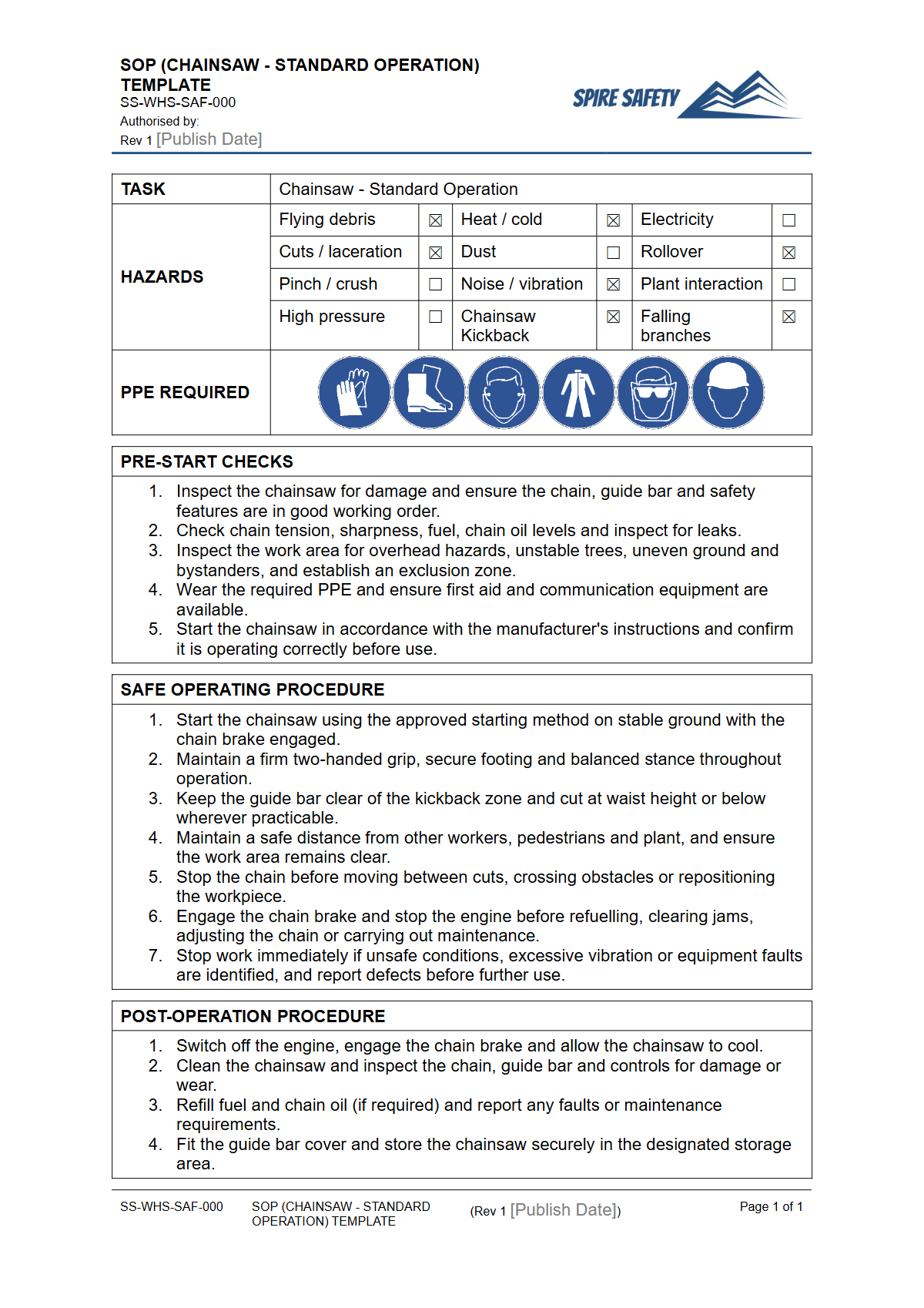
Download our free Safe Operating Procedure (SOP) template for standard chainsaw operation.
Free Safe Operating Procedure (Chainsaw - Standard Operation) Template
DOCX • 175 KB + PDF
Updated Oct 2026
No signup required
Purpose of the Free Safe Operating Procedure (Chainsaw - Standard Operation) Template
The primary purpose of this Safe Operating Procedure for chainsaw operation is to provide a clear and formalised process to manage the significant risks involved. Chainsaws present numerous hazards, including severe cuts from contact with the moving chain, injuries from kickback, noise-induced hearing loss, and musculoskeletal disorders from vibration and awkward postures.
This template helps your organisation detail the required pre-operational checks, safe cutting techniques, and post-operational procedures to ensure work is performed according to established safety standards. While focusing on chainsaws, similar principles of documenting safe use apply to other cutting tools, as detailed in our Circular Saw SOP template.
Video walkthrough
How to use the Free Safe Operating Procedure (Chainsaw - Standard Operation) Template
To use this free template, simply download the DOCX file and open it in your preferred word processor. The document is structured logically but needs to be adapted to your specific operational context.
Important: We have created this document as a comprehensive template. You must customise it to accurately reflect the specific chainsaw models used, the types of cutting tasks performed, the environmental conditions, and the unique hazards present in your workplace.
Consultation with your workers and other relevant stakeholders during the customisation process is a critical step required by WHS legislation. Integrating such procedures effectively is a core component of well-designed WHS management systems.
When to use a Chainsaw Safe Operating Procedure
A Safe Operating Procedure for chainsaw operation should be used as a primary reference document in several scenarios. It is essential for inducting and training new workers, ensuring they understand the approved methods before they ever start the machine.
It also serves as a valuable tool for refresher training for experienced operators and for conducting competency assessments. Furthermore, it should be readily available in the work area for operators to consult before starting a task, particularly if it is non-routine. This practice is consistent across various types of outdoor and agricultural machinery, such as that covered in our Free Tractor SOP Template.
Who should use this Safe Operating Procedure
This document is intended for use by multiple roles within an organisation. WHS managers and supervisors will use it to develop and implement safety protocols, conduct risk assessments, and deliver training.
Workers who are required to operate chainsaws are the primary end-users, relying on the SOP to guide their actions and reinforce safe work habits. It also serves as a reference for maintenance personnel who are responsible for ensuring the chainsaw is in safe working order.
If you need assistance tailoring this SOP or developing other safety documents, our WHS consulting team can provide expert support.
Integrating the SOP into Your Safety System
An SOP works best when it is part of a broader safety framework. This includes ensuring workers have received adequate training, are deemed competent, and are provided with the correct personal protective equipment (PPE).
The SOP should be reviewed regularly and updated whenever a new chainsaw model is introduced, a work process changes, or after an incident or near-miss. You can find more templates and guides to build out your safety system in our free WHS resources library.
Common mistakes
Common mistakes to avoid
- Neglecting to check and correctly adjust chain tension before starting work.
- Using a dull or improperly sharpened chain, which increases physical effort and the risk of kickback.
- Operating the chainsaw above shoulder height or in an unstable stance.
- Failing to wear appropriate personal protective equipment (PPE), particularly leg chaps and eye/face protection.
Legal references
Legal considerations
The following legal requirements may be relevant to this type of work.
- Work Health and Safety Act (Harmonised) — Provides the primary duties for protecting workers and other people from work health and safety risks.
- Work Health and Safety Regulations (Harmonised) — Sets out requirements supporting the management of workplace hazards and risks.
The following codes may be relevant to this type of work.
- Managing WHS Risks Code of Practice — Provides practical guidance on identifying hazards, assessing risks and applying effective controls.
- Work Health and Safety Consultation, Cooperation and Coordination Code of Practice — Provides practical guidance on consulting workers and coordinating with other duty holders.
- Managing the Work Environment and Facilities Code of Practice — Provides practical guidance on safe work environments, workplace facilities and related controls.
Did you know
Kickback Danger
Chainsaw kickback can happen in milliseconds, much faster than human reaction time. It is a leading cause of serious and fatal injuries to operators, occurring when the upper tip of the guide bar touches an object.
Noise Exposure
The noise from a typical petrol-powered chainsaw often exceeds 110 decibels (dB). This is significantly higher than the 85 dB exposure standard at which Australian regulations mandate hearing protection.
FAQ
Frequently asked questions
01What is a Safe Operating Procedure for a chainsaw?
02Is this chainsaw SOP template compliant with Australian WHS laws?
03What PPE is required for using a chainsaw?
04How often should chainsaw operators receive training?
Share this resource
Free Safe Operating Procedure (Chainsaw - Standard Operation) Template
Browse Categories
How To Use It
- 1Download and open in Word or PDF.
- 2Replace the placeholders with your business details.
- 3Get it reviewed by a WHS specialist before rollout.
Need it customised?
Our WHS consultants can adapt this template to your site, run a gap analysis, or audit what you already have in place.
Book a Free Consultation WHS consulting servicesor call 1300 156 382
Related templates
- Free Safe Operating Procedure (Change Room Inspection) Template
- Free Safe Operating Procedure (Chargrill Operation) Template
- Free Safe Operating Procedure (Checkout Belt Cleaning) Template
- Free Safe Operating Procedure (Checkout Till Operation) Template
- Free Safe Operating Procedure (Checkweigher) Template
- Free Safe Operating Procedure (Cheese Grater) Template