
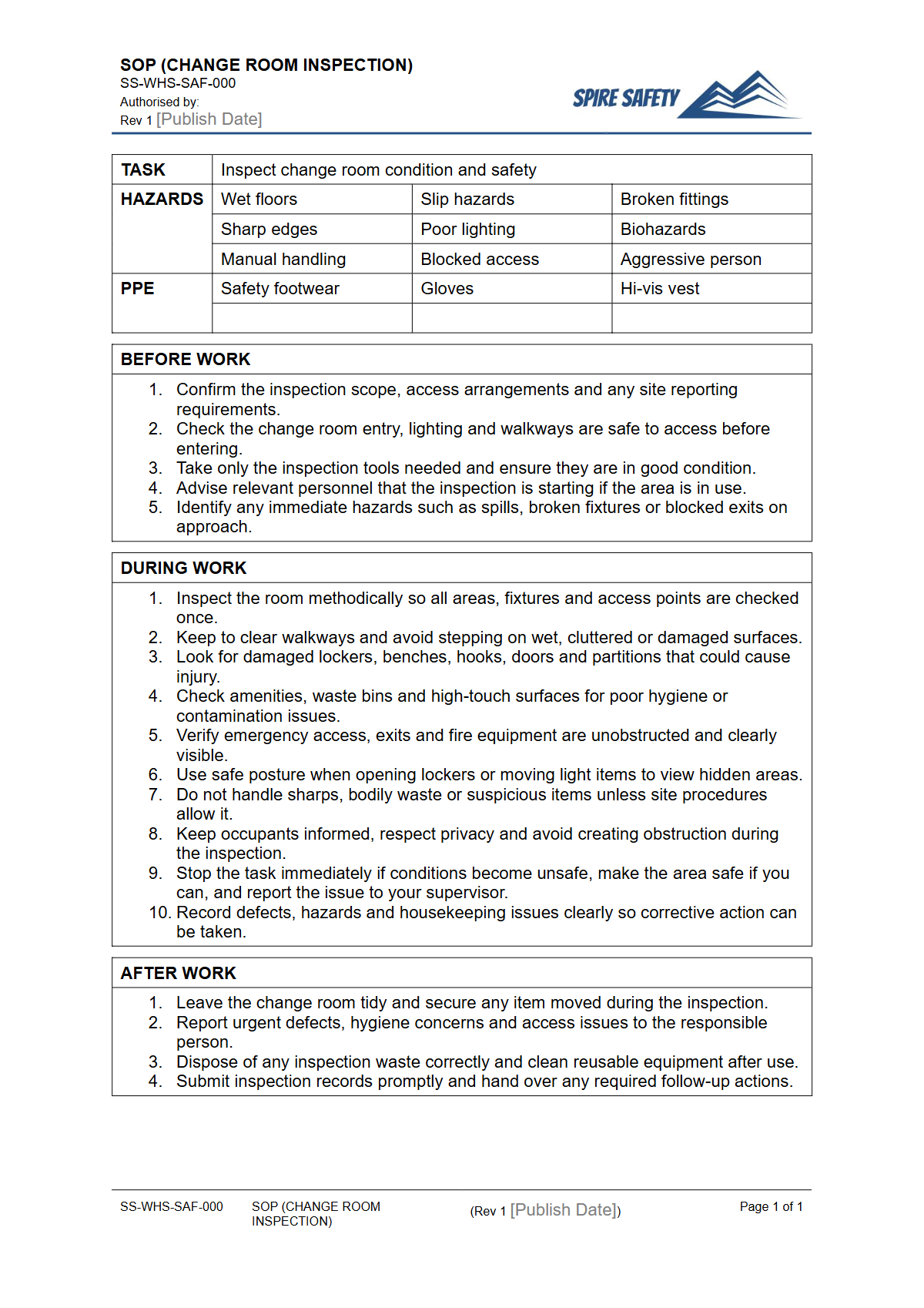
Free Safe Operating Procedure (Change Room Inspection) Template
Download our Free Safe Operating Procedure (Change Room Inspection) Template to ensure workplace facilities are safe, clean, and well-maintained.
Free Safe Operating Procedure (Change Room Inspection) Template
DOCX • 126 KB + PDF
Updated Oct 2026
No signup required
Purpose of the Free Safe Operating Procedure (Change Room Inspection) Template
Maintaining clean, safe, and functional change rooms is a fundamental aspect of providing a healthy work environment. This Free Safe Operating Procedure (Change Room Inspection) Template provides a structured framework for conducting regular and thorough inspections of your workplace amenities.
Using this SOP helps systematically identify and control hazards such as slips, trips, falls, poor hygiene, fire risks, and inadequate security. It supports a proactive approach to facility management, ensuring issues are documented, rectified, and tracked over time.
Integrating this procedure into your broader safety framework helps demonstrate your organisation's commitment to worker welfare. A well-defined SOP for facility inspections forms a critical part of comprehensive WHS management systems, ensuring consistent standards are applied and maintained across the business.
Video walkthrough
How to Use the Free Safe Operating Procedure (Change Room Inspection) Template
This Safe Operating Procedure for change room inspections is available as a fully editable DOCX file, allowing for easy customisation, and a ready-to-use PDF. To implement it effectively, start by downloading the template and reviewing its contents against your specific workplace layout, risks, and legal obligations.
Add your company branding, specify roles and responsibilities, and adjust the inspection checklist to include all relevant items for your facility, such as lockers, showers, benches, lighting, and ventilation systems.
Important: This document is a template and must be customised to suit the specific requirements, hazards, and controls of your workplace. It is designed as a starting point, aligned with Australian WHS principles.
Your final SOP should reflect a thorough risk assessment conducted at your site. Verifying that customised procedures are followed correctly is often achieved through WHS compliance auditing.
When to Conduct Inspections
The frequency of change room inspections should be determined by a risk-based approach. High-traffic facilities may require daily or weekly checks to manage hygiene and restocking of consumables.
Less-used areas might be suitable for monthly inspections. Consider factors such as the number of workers using the facility, the nature of the work (e.g., exposure to dirt, chemicals, or biological materials), and any history of incidents or complaints.
Inspections should be scheduled events, but unscheduled spot-checks can also provide valuable insights into day-to-day conditions. If any maintenance requires working at height to check vents or lighting, ensure a step ladder SOP is followed.
Who Should Use This SOP
This SOP is intended for use by personnel responsible for workplace facility management and safety. This can include WHS Officers, Health and Safety Representatives (HSRs), facility managers, supervisors, and maintenance teams.
It is crucial that individuals assigned to conduct inspections are competent to do so. They must be trained to recognise potential hazards, understand the procedure, and know the process for reporting and escalating issues.
The inspection may also involve checking the accessibility and readiness of safety equipment, such as first aid kits or defibrillators. For the latter, a clear Safe Operating Procedure for defibrillator operation should be readily available nearby.
By defining a clear process, this SOP ensures consistency regardless of who performs the task. For more templates and safety documents, browse our complete free WHS resources library.
Common mistakes
Common mistakes to avoid
- Focusing only on cleanliness while overlooking structural or electrical hazards.
- Failing to document findings, assign corrective actions, or track them to completion.
- Neglecting to check ventilation systems, leading to poor air quality and potential mould growth.
- Not involving workers or HSRs in the inspection process, missing valuable user feedback.
Legal references
Legal considerations
The following legal requirements may be relevant to this type of work.
- Work Health and Safety Act (Harmonised) — Provides the primary duties for protecting workers and other people from work health and safety risks.
- Work Health and Safety Regulations (Harmonised) — Sets out requirements supporting the management of workplace hazards and risks.
The following codes may be relevant to this type of work.
- Managing WHS Risks Code of Practice — Provides practical guidance on identifying hazards, assessing risks and applying effective controls.
- Work Health and Safety Consultation, Cooperation and Coordination Code of Practice — Provides practical guidance on consulting workers and coordinating with other duty holders.
- Managing the Work Environment and Facilities Code of Practice — Provides practical guidance on safe work environments, workplace facilities and related controls.
Did you know
Hygiene and Slips
Poorly maintained change rooms with wet floors or soap residue are a leading cause of slips, trips, and falls in the workplace. Regular inspections directly help control these common but preventable hazards.
Psychological Safety
Providing clean, secure, and well-maintained change facilities can positively impact worker morale and psychological well-being. It demonstrates that an organisation values its employees' health and comfort.
FAQ
Frequently asked questions
01What should be included in a change room inspection checklist?
02How often should workplace change rooms be inspected?
03Who is responsible for maintaining clean and safe change rooms?
04Is a Safe Operating Procedure legally required for a change room inspection?
Share this resource
Free Safe Operating Procedure (Change Room Inspection) Template
Browse Categories
How To Use It
- 1Download and open in Word or PDF.
- 2Replace the placeholders with your business details.
- 3Get it reviewed by a WHS specialist before rollout.
Need it customised?
Our WHS consultants can adapt this template to your site, run a gap analysis, or audit what you already have in place.
Book a Free Consultation WHS consulting servicesor call 1300 156 382
Related templates
- Free Safe Operating Procedure (Chargrill Operation) Template
- Free Safe Operating Procedure (Checkout Belt Cleaning) Template
- Free Safe Operating Procedure (Checkout Till Operation) Template
- Free Safe Operating Procedure (Checkweigher) Template
- Free Safe Operating Procedure (Cheese Grater) Template
- Free Safe Operating Procedure (Cheese Slicer) Template