
Free Safe Operating Procedure (Pool Chemical Dosing System Operation) Template
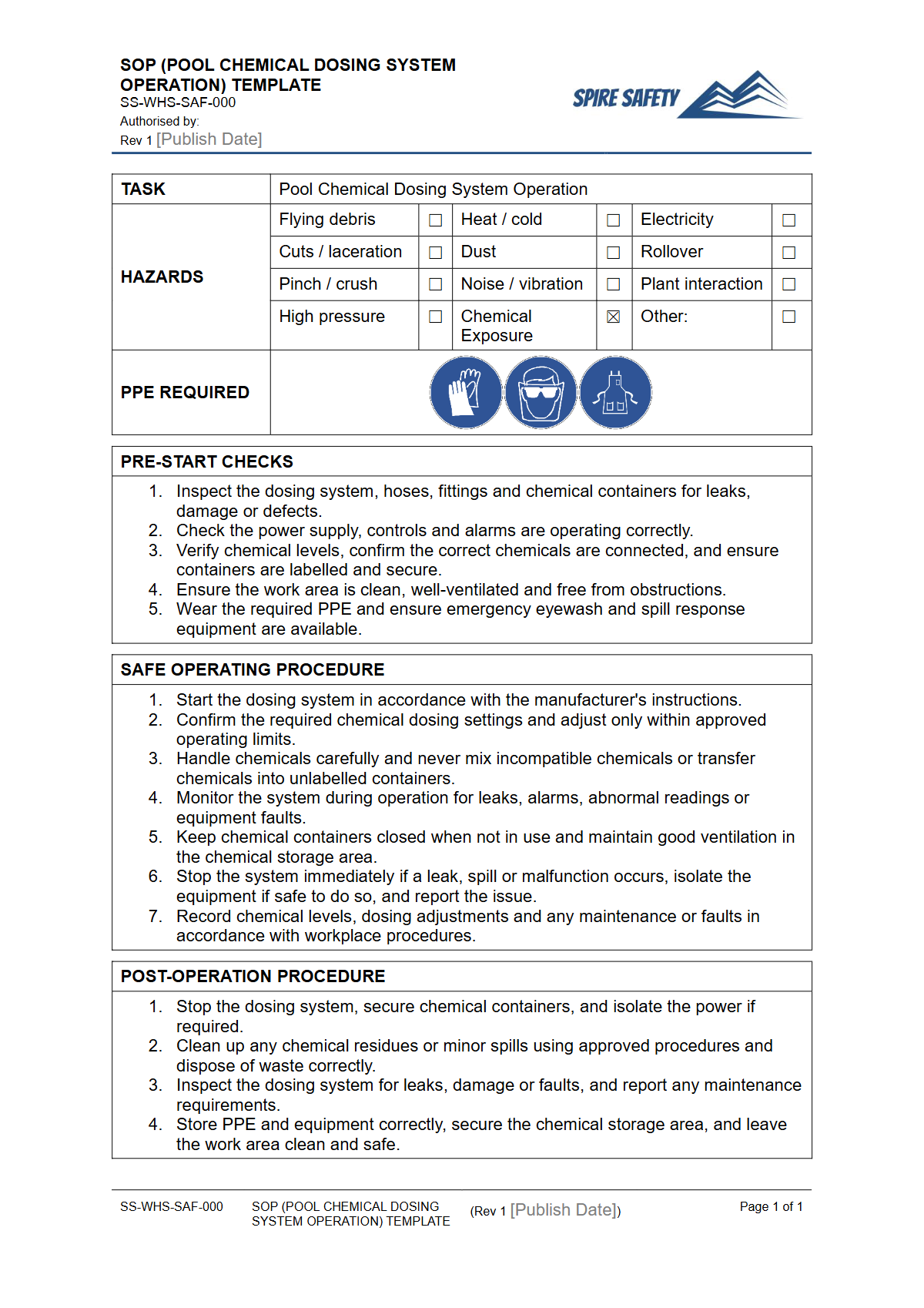
Download our free Safe Operating Procedure (Pool Chemical Dosing System Operation) template. This DOCX and PDF resource helps you outline safe work practices.
Free Safe Operating Procedure (Pool Chemical Dosing System Operation) Template
DOCX • 161 KB + PDF
Updated Oct 2026
No signup required
Purpose of the Free Safe Operating Procedure (Pool Chemical Dosing System Operation) Template
Operating automated pool chemical dosing systems introduces significant workplace hazards if not managed correctly. This free Safe Operating Procedure (Pool Chemical Dosing System Operation) template provides a structured framework for documenting the required steps to operate, maintain, and handle chemicals for these systems safely.
It is designed to help persons conducting a business or undertaking (PCBUs) manage risks associated with hazardous chemicals, electrical equipment, and pressurised lines. Using this SOP helps standardise your processes, support worker training, and demonstrate a commitment to a safe working environment, forming a key part of your overall safety management system.
The primary goal is to control risks such as chemical burns, toxic gas inhalation from incorrect mixing, eye injuries from splashes, and electrical shock. By clearly defining pre-operational checks, safe operating sequences, and emergency responses, this document serves as a critical tool for preventing incidents.
Establishing clear, documented procedures is a fundamental part of a compliant and effective WHS management system, ensuring all workers follow a consistent, safe methodology.
Video walkthrough
How to use the Free Safe Operating Procedure (Pool Chemical Dosing System Operation) Template
This template is provided in both DOCX and PDF formats for your convenience. To effectively implement it, you must adapt the content to the specific context of your facility.
This includes detailing the make and model of your dosing pumps, the exact types of chemicals used (e.g., sodium hypochlorite, hydrochloric acid), storage arrangements, and site-specific emergency shutdown points. You will need to review and customise every section to ensure it is relevant and accurate for your workplace.
IMPORTANT: This is a template only. We have provided a structured starting point, but you must customise it to reflect the specific equipment, chemicals, processes, and risks in your workplace.
A generic procedure is not sufficient to ensure safety or compliance. For complex system setups, a comprehensive risk assessment should be conducted before finalising the SOP. Similar principles apply when documenting procedures for other automated plant, such as those found in our free Conveyer System SOP template.
When to use this Safe Operating Procedure
This Safe Operating Procedure should be the primary reference document for any interaction with the pool chemical dosing system. It should be consulted before performing tasks such as daily start-up and system checks, replenishing chemical supplies, calibrating sensors and pumps, and performing routine maintenance.
It is also a critical document for training new pool technicians or maintenance staff and for conducting refresher training for existing personnel. The SOP should also be readily accessible in the plant room for quick reference during normal operation or in the event of a system malfunction or emergency.
Furthermore, this SOP serves as an essential reference during safety reviews and audits. Regular verification against a procedure like this is a core activity in a WHS compliance audit to ensure prescribed safety controls are being consistently applied by workers.
It forms the benchmark against which actual work practices are measured.
Who should use this Pool Chemical SOP
This SOP is intended for use by all personnel who operate, maintain, or supervise pool chemical dosing systems. This includes qualified pool technicians, facilities maintenance staff, plant operators, and their supervisors.
It is also a valuable resource for Health and Safety Representatives (HSRs) and managers responsible for overseeing aquatic facilities, hotels, resorts, and residential body corporates. Anyone involved in training others on the use of the equipment should use this document as the foundation for their instructional material, ensuring consistency and accuracy in the information provided.
The principles of documenting safe processes for automated systems are transferable across various industries. For example, the structured approach in this SOP is similar to how one might document the safe operation of water management equipment detailed in our Irrigation System SOP template. If you require further guidance on developing or implementing safety procedures, our WHS consulting team can provide expert support tailored to your specific needs.
By implementing this customised SOP, you create a safer environment for everyone. For more tools to help build out your safety systems, feel free to browse our complete free WHS resources library, which contains a wide range of templates and guides.
Common mistakes
Common mistakes to avoid
- Pouring water into concentrated acid instead of acid into water, which can cause a violent, splashing reaction.
- Neglecting to wear appropriate PPE, especially eye and face protection, when decanting or handling chemicals.
- Failing to follow lockout/tagout procedures before performing maintenance on pumps or electrical components.
- Storing incompatible chemicals (like oxidisers and acids) next to each other, increasing the risk of a dangerous reaction in case of a spill.
Legal references
Legal considerations
The following legal requirements may be relevant to this type of work.
- Work Health and Safety Act (Harmonised) — Provides the primary duties for protecting workers and other people from work health and safety risks.
- Work Health and Safety Regulations (Harmonised) — Sets out requirements supporting the management of workplace hazards and risks.
The following codes may be relevant to this type of work.
- Managing WHS Risks Code of Practice — Provides practical guidance on identifying hazards, assessing risks and applying effective controls.
- Work Health and Safety Consultation, Cooperation and Coordination Code of Practice — Provides practical guidance on consulting workers and coordinating with other duty holders.
- Managing the Work Environment and Facilities Code of Practice — Provides practical guidance on safe work environments, workplace facilities and related controls.
Did you know
A Dangerous Mix
Mixing chlorine-based chemicals (like sodium hypochlorite) with acids (like hydrochloric acid) can rapidly release toxic chlorine gas, which is extremely hazardous and can be fatal if inhaled in a poorly ventilated space.
Automation Safety
Automated chemical dosing systems significantly reduce worker exposure to hazardous chemicals compared to manual dosing, but they introduce new risks related to mechanical and electrical systems that must be managed.
FAQ
Frequently asked questions
01What are the main hazards of a pool chemical dosing system?
02Is a Safe Operating Procedure a legal requirement in Australia?
03How often should an SOP for pool chemical systems be reviewed?
04What PPE is needed for handling pool chemicals?
Share this resource
Free Safe Operating Procedure (Pool Chemical Dosing System Operation) Template
Browse Categories
How To Use It
- 1Download and open in Word or PDF.
- 2Replace the placeholders with your business details.
- 3Get it reviewed by a WHS specialist before rollout.
Need it customised?
Our WHS consultants can adapt this template to your site, run a gap analysis, or audit what you already have in place.
Book a Free Consultation WHS consulting servicesor call 1300 156 382
Related templates
- Free Safe Operating Procedure (Pool Cover Handling) Template
- Free Safe Operating Procedure (Pool Deck Cleaning) Template
- Free Safe Operating Procedure (Pool Deck Inspection) Template
- Free Safe Operating Procedure (Pool Fence Cleaning) Template
- Free Safe Operating Procedure (Pool Filter Cleaning) Template
- Free Safe Operating Procedure (Pool Furniture Setup) Template