
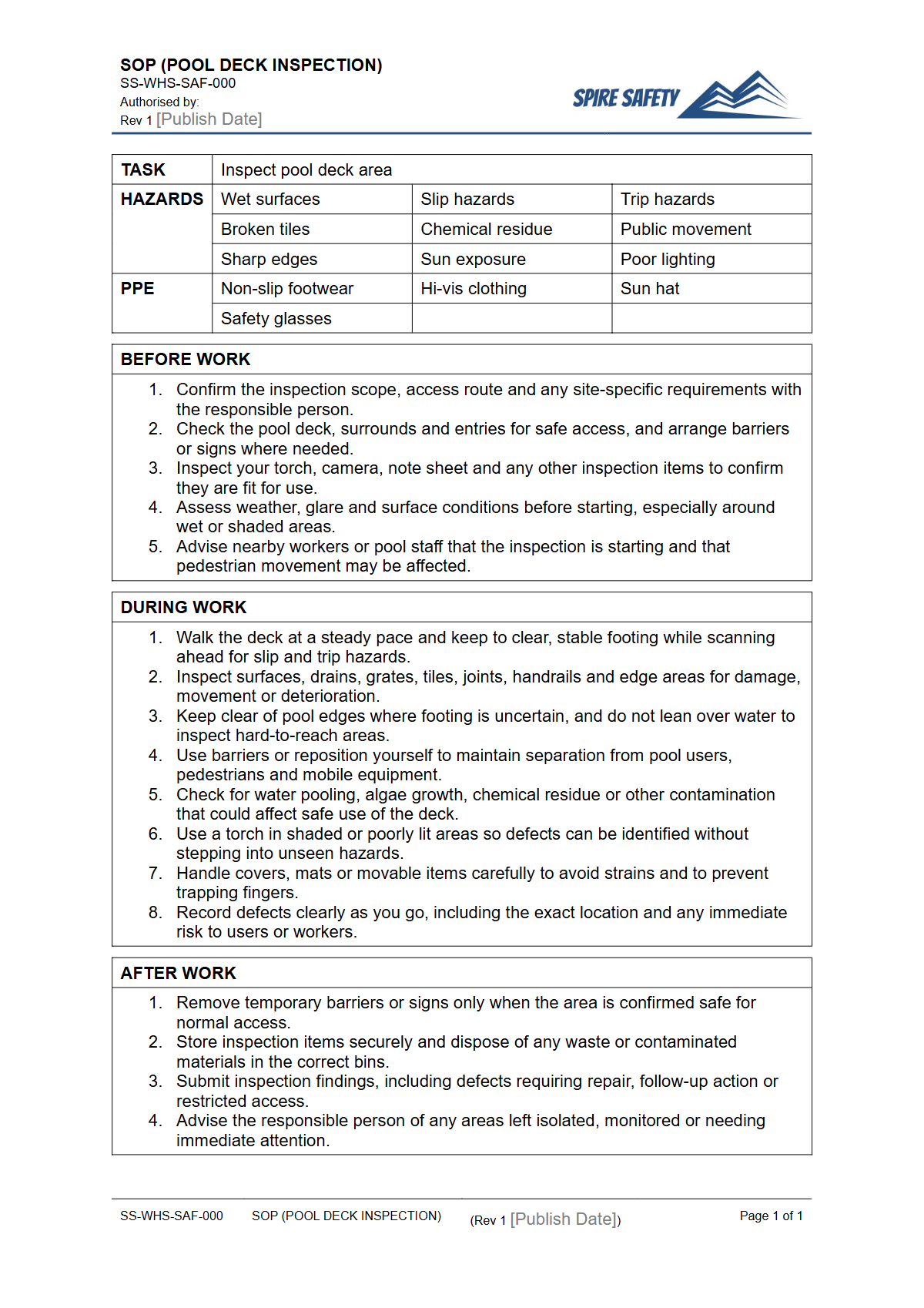
Free Safe Operating Procedure (Pool Deck Inspection) Template
Ensure the safety of swimmers and staff with our comprehensive SOP for pool deck inspections. Download this customisable template to get started today.
Free Safe Operating Procedure (Pool Deck Inspection) Template
DOCX • 126 KB + PDF
Updated Oct 2026
No signup required
Purpose of the Free Safe Operating Procedure (Pool Deck Inspection) Template
Maintaining a safe swimming pool environment is critical for any public or commercial facility. Our free Safe Operating Procedure (Pool Deck Inspection) template provides a structured framework to help you systematically identify and control hazards before they cause harm.
A well-executed SOP ensures that daily and periodic checks are consistent, thorough, and documented, forming a key part of your overall safety management system.
The primary purpose of this Safe Operating Procedure is to prevent incidents, particularly slips, trips, and falls, which are common in wet environments. It guides staff to proactively look for hazards such as:
- Water pooling on walkways and changing room floors
- Slippery surfaces from algae, mould, or chemical residue
- Trip hazards like cleaning equipment, hoses, or patrons' belongings
- Damaged deck surfaces, including cracked tiles, loose pavers, or sharp edges
- Unsecured or damaged drain covers and grates
- Poor lighting in specific areas
- Missing or inadequate safety signage
By formalising this process, you create a safer, more organised environment for everyone and establish a clear record of your risk management activities.
Video walkthrough
How to use the Free Safe Operating Procedure (Pool Deck Inspection) Template
This template is provided as a starting point. To make it effective, you must download the DOCX file and adapt it to the unique layout and features of your aquatic facility.
Generic procedures are not sufficient for managing site-specific risks. Identify the different zones of your facility, such as the main pool deck, splash park area, spa surrounds, and entryways, and tailor the checklist items for each.
Key customisation steps include adding your company name and logo, listing the specific personal protective equipment (PPE) required (e.g., non-slip footwear), and detailing the exact procedure for reporting and rectifying hazards. Integrating this customised SOP into your broader WHS management systems ensures it becomes a standard, enforceable part of your organisation's daily practice.
Important Note on Customisation
It is crucial that you customise this document for your specific workplace, equipment, and operational context. We are not liable for any incidents that may occur from the use of this generic template.
Your final SOP should reflect a thorough risk assessment conducted at your site.
When to use it
Frequency is key to an effective inspection routine. At a minimum, a thorough inspection of the entire pool deck and associated walkways should be performed daily before the facility opens to the public.
This ensures a safe environment is established from the start of each day.
Additional visual checks are recommended throughout the day, especially during peak usage periods, after cleaning activities, or following any incident. More detailed structural inspections might be scheduled weekly or monthly as part of a preventative maintenance program.
Regularly reviewing completed inspection records is also a key component of an effective WHS compliance auditing program, helping to verify that procedures are being followed correctly and are effective in controlling risks.
Who should use it
This Safe Operating Procedure is designed for use by trained personnel responsible for the day-to-day safety and operation of the pool area. This typically includes roles such as lifeguards, pool operators, duty managers, and maintenance staff.
The Person Conducting a Business or Undertaking (PCBU) holds the ultimate responsibility for ensuring these checks are completed by competent individuals.
Whoever performs the inspection must be trained to recognise the specific hazards outlined in the procedure and understand the protocol for reporting issues and implementing corrective actions. A robust safety framework includes documented procedures for all key tasks.
While this template covers the pool deck, your facility may also require SOPs for other equipment, such as a deep fryer standard operation procedure for an onsite kiosk.
Documenting procedures for all equipment, even maintenance tools covered by a free Air Compressor SOP, is a hallmark of good safety management. If you need support developing procedures or training your team, our WHS consulting services can provide expert guidance.
Explore our full free WHS resources library for more templates to support your safety system.
Common mistakes
Common mistakes to avoid
- Failing to customise the template for the specific facility layout and features.
- Conducting inspections as a 'tick-and-flick' exercise without genuine observation.
- Not properly documenting or following up on corrective actions for identified hazards.
- Inadequate training for staff on how to identify potential hazards during the inspection.
Legal references
Legal considerations
The following legal requirements may be relevant to this type of work.
- Work Health and Safety Act (Harmonised) — Provides the primary duties for protecting workers and other people from work health and safety risks.
- Work Health and Safety Regulations (Harmonised) — Sets out requirements supporting the management of workplace hazards and risks.
The following codes may be relevant to this type of work.
- Managing WHS Risks Code of Practice — Provides practical guidance on identifying hazards, assessing risks and applying effective controls.
- Work Health and Safety Consultation, Cooperation and Coordination Code of Practice — Provides practical guidance on consulting workers and coordinating with other duty holders.
- Managing the Work Environment and Facilities Code of Practice — Provides practical guidance on safe work environments, workplace facilities and related controls.
Did you know
Slips, Trips, and Falls
According to Safe Work Australia, slips, trips, and falls are a leading cause of serious workplace injuries. Wet, smooth surfaces like those on a pool deck present a significantly elevated risk that requires active management.
Chemical Safety
Pool chemicals can cause skin and respiratory irritation if not handled correctly. A thorough deck inspection includes checking public areas for any chemical spills, residue, or improperly stored containers.
FAQ
Frequently asked questions
01How often should a pool deck inspection be conducted?
02What are the most common hazards on a pool deck?
03Who is responsible for completing the Pool Deck Inspection SOP?
04Can I use this template for a private residential pool?
Share this resource
Free Safe Operating Procedure (Pool Deck Inspection) Template
Browse Categories
How To Use It
- 1Download and open in Word or PDF.
- 2Replace the placeholders with your business details.
- 3Get it reviewed by a WHS specialist before rollout.
Need it customised?
Our WHS consultants can adapt this template to your site, run a gap analysis, or audit what you already have in place.
Book a Free Consultation WHS consulting servicesor call 1300 156 382
Related templates
- Free Safe Operating Procedure (Pool Fence Cleaning) Template
- Free Safe Operating Procedure (Pool Filter Cleaning) Template
- Free Safe Operating Procedure (Pool Furniture Setup) Template
- Free Safe Operating Procedure (Pool Gate Inspection) Template
- Free Safe Operating Procedure (Pool Lane Rope Handling) Template
- Free Safe Operating Procedure (Pool Lane Setup) Template