
Free Safe Operating Procedure (Sheep Crutching Stand) Template
Formalise safety protocols for operating a sheep crutching stand with our structured template. Download your free DOCX and PDF to get started today.
Free Safe Operating Procedure (Sheep Crutching Stand) Template
DOCX • 126 KB + PDF
Updated Oct 2026
No signup required
Purpose of the Free Safe Operating Procedure (Sheep Crutching Stand) Template
Operating agricultural equipment like a sheep crutching stand requires clear, documented safety instructions to minimise risks to workers. This free Safe Operating Procedure (Sheep Crutching Stand) Template provides a structured framework for your business to formalise these instructions, helping to prevent injuries related to manual handling, mechanical hazards, and unpredictable animal behaviour.
A well-drafted SOP is a critical component of a proactive safety culture on any farm or station.
The primary purpose of this Safe Operating Procedure is to provide a clear, step-by-step guide for the safe operation of a sheep crutching stand. It helps your business meet its WHS obligations by systematically identifying hazards and outlining control measures.
Using this template helps standardise work practices, ensuring every worker, from new hires to experienced hands, follows the same safe process. This consistency is vital for reducing musculoskeletal injuries and other common risks in livestock handling, forming a key part of your overall WHS management systems.
Key Hazards Addressed
This SOP template prompts you to consider and control common hazards associated with using a sheep crutching stand, including:
- Mechanical Risks: Entanglement, crushing, or pinching from moving parts.
- Manual Handling: Strains and sprains from lifting, pushing, or pulling sheep into position.
- Animal Behaviour: Being kicked, struck, or bitten by unpredictable livestock.
- Ergonomic Hazards: Musculoskeletal disorders from awkward postures or repetitive motions.
- Noise: Hearing damage from the equipment and animal noise in enclosed spaces.
- Zoonoses: Diseases that can be transmitted from animals to humans.
Video walkthrough
How to use the Free Safe Operating Procedure (Sheep Crutching Stand) Template
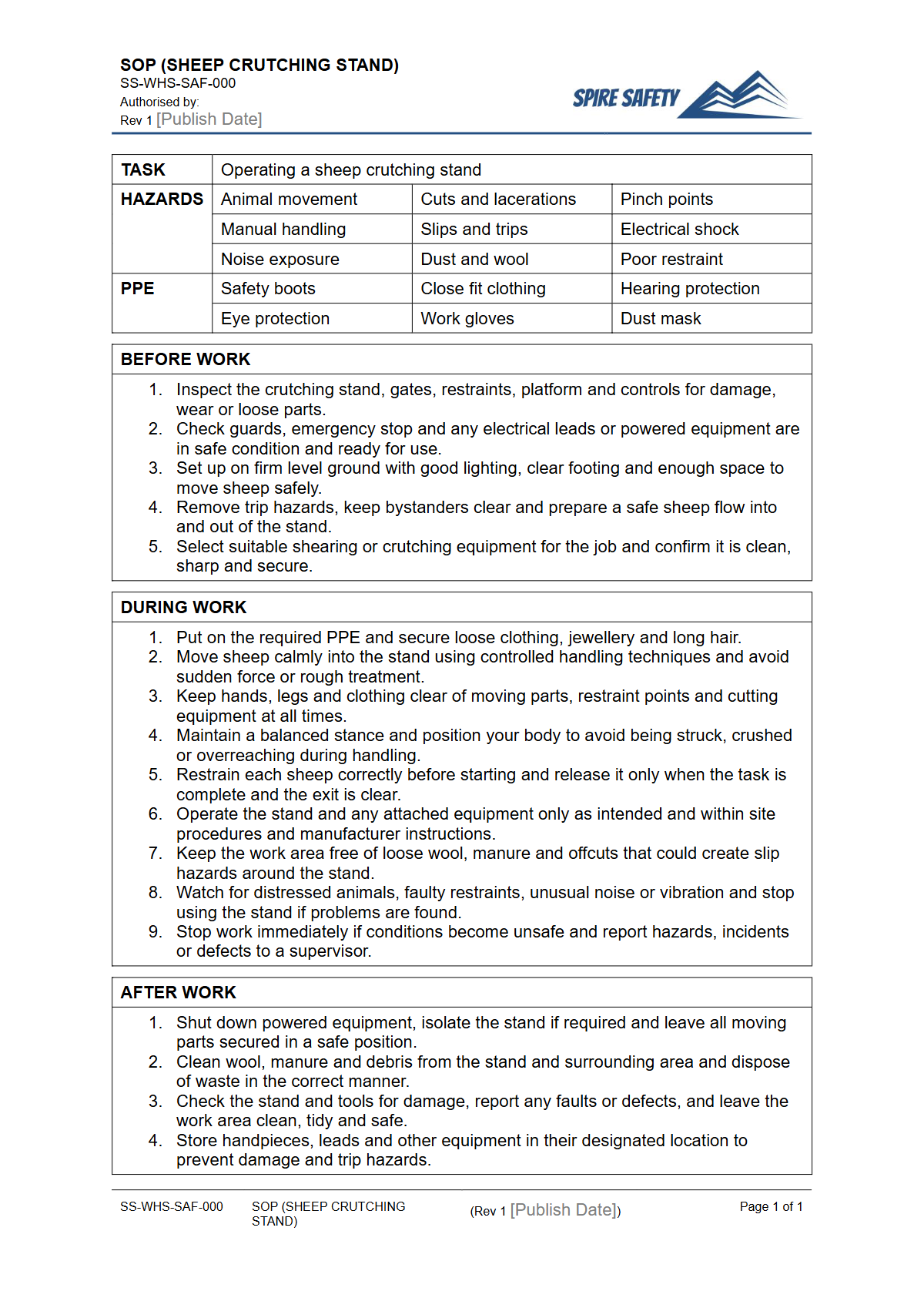
Download the template in the versatile DOCX format to begin. The document is pre-formatted with key sections, including required Personal Protective Equipment (PPE), pre-operational checks, step-by-step operating instructions, and emergency shutdown procedures.
Just as you would have a procedure for a grain drill, the crutching stand requires its own specific documentation.
Important: This is a template, not a finished document. You must customise it with the specific details of your make and model of crutching stand, your workplace environment, your livestock, and your existing safety protocols.
We have included prompts and placeholder text to guide you through this customisation process. Once complete, save a final version as a PDF for easy distribution and display in the work area. Regular review of your procedures is also a key part of the safety lifecycle and can be validated through periodic WHS compliance auditing.
When to Use This SOP
A Safe Operating Procedure for a sheep crutching stand should be a core part of your operational safety toolkit. It is essential to use it as a primary training document for any new worker assigned to the task, ensuring they understand the risks and controls before they begin.
The SOP should be kept readily accessible in the work area for quick reference by any operator. Furthermore, it serves as a benchmark for competency assessments and refresher training programs.
It is critical to review and update the SOP whenever a new model of crutching stand is introduced, if the work environment changes, or following any incident or near miss involving the equipment.
Who Should Use This Safe Operating Procedure
This SOP template is designed for anyone responsible for health and safety in an agricultural setting. This includes Farm Managers, Station Owners, and designated WHS Officers who are tasked with developing and implementing safety procedures.
The principles of documenting safe machinery use apply across various farm equipment, from a spreader SOP to this crutching stand guide.
The finalised document will be used directly by workers who operate the equipment, such as Shearers, Farmhands, and Livestock Handlers. It provides them with the essential, step-by-step information needed to perform their job safely and efficiently, reinforcing the importance of hazard awareness and correct procedure.
If your team lacks the internal expertise to adapt this template effectively, seeking external guidance from WHS consulting professionals can help bridge the gap and ensure your procedures are robust and practical for your unique operation.
Common mistakes
Common mistakes to avoid
- Using a generic SOP template without customising it for the specific model of crutching stand and workplace.
- Failing to consult with and train workers on the procedures outlined in the finalised document.
- Not making the SOP easily accessible to operators in the actual work area.
- Neglecting to review and update the SOP after an incident, a near miss, or when new equipment is introduced.
Legal references
Legal considerations
The following legal requirements may be relevant to this type of work.
- Work Health and Safety Act (Harmonised) — Provides the primary duties for protecting workers and other people from work health and safety risks.
- Work Health and Safety Regulations (Harmonised) — Sets out requirements supporting the management of workplace hazards and risks.
The following codes may be relevant to this type of work.
- Managing WHS Risks Code of Practice — Provides practical guidance on identifying hazards, assessing risks and applying effective controls.
- Work Health and Safety Consultation, Cooperation and Coordination Code of Practice — Provides practical guidance on consulting workers and coordinating with other duty holders.
- Managing the Work Environment and Facilities Code of Practice — Provides practical guidance on safe work environments, workplace facilities and related controls.
Did you know
Agricultural Injury Rates
The agriculture, forestry, and fishing industry consistently has one of the highest rates of serious workplace injury claims in Australia, with body stressing (manual handling) being a primary cause.
Purpose of Crutching
Crutching is the practice of shearing wool from around a sheep's tail and between its rear legs. This is done primarily to prevent flystrike, a painful and potentially fatal condition caused by blowflies laying eggs in soiled wool.
FAQ
Frequently asked questions
01What is a Safe Operating Procedure for a sheep crutching stand?
02Why is an SOP important for crutching?
03Who is responsible for writing and reviewing the SOP?
04How often should a sheep crutching stand SOP be reviewed?
Share this resource
Free Safe Operating Procedure (Sheep Crutching Stand) Template
Browse Categories
How To Use It
- 1Download and open in Word or PDF.
- 2Replace the placeholders with your business details.
- 3Get it reviewed by a WHS specialist before rollout.
Need it customised?
Our WHS consultants can adapt this template to your site, run a gap analysis, or audit what you already have in place.
Book a Free Consultation WHS consulting servicesor call 1300 156 382
Related templates
- Free Safe Operating Procedure (Sheep Drafting) Template
- Free Safe Operating Procedure (Sheep Feeding) Template
- Free Safe Operating Procedure (Sheep Footbath) Template
- Free Safe Operating Procedure (Sheep Loading) Template
- Free Safe Operating Procedure (Sheep Weighing) Template
- Free Safe Operating Procedure (Sheet Metal Brake) Template