
Free Safe Operating Procedure (Sheep Loading) Template
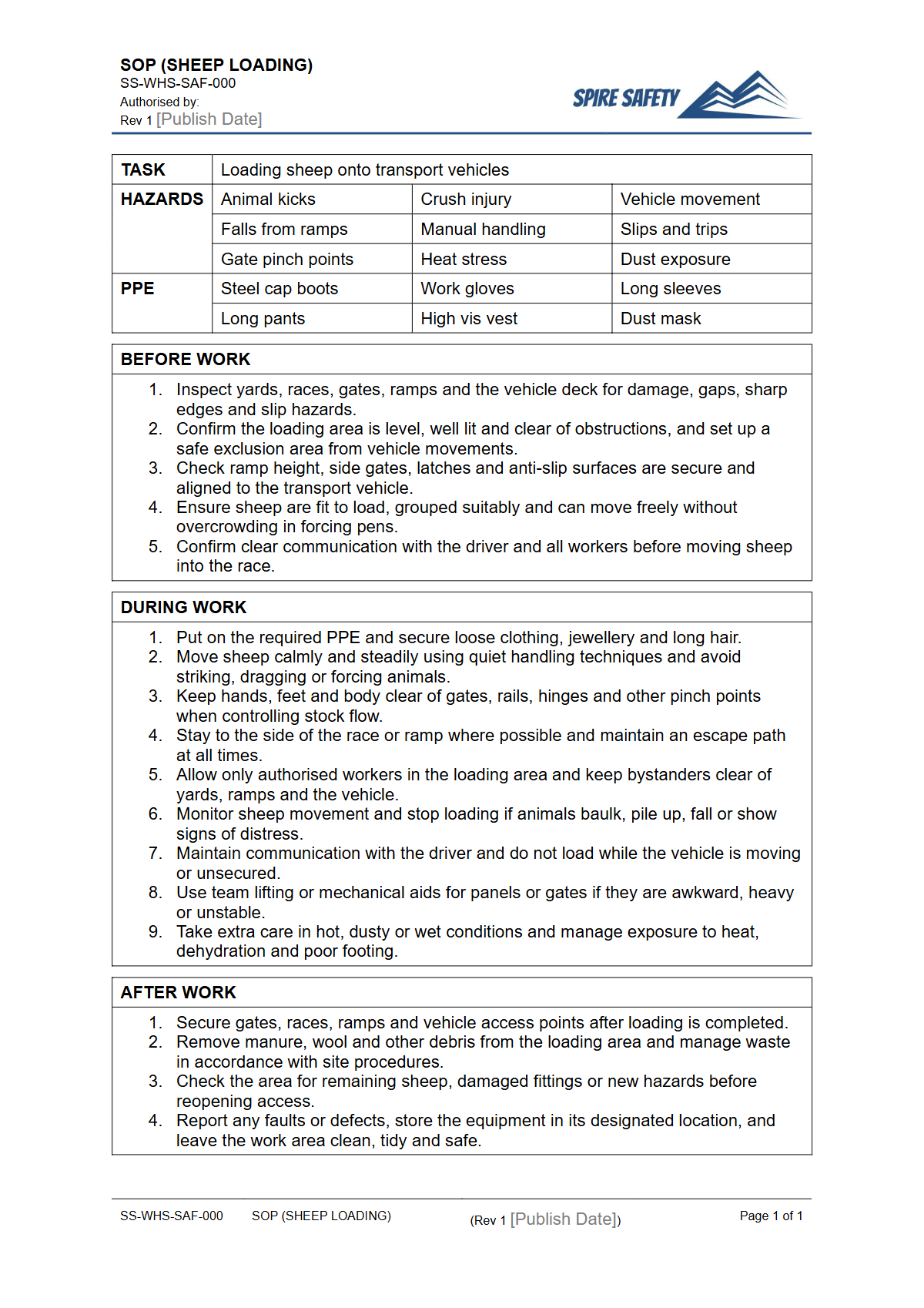
Download our free Safe Operating Procedure (Sheep Loading) Template. This customisable DOCX provides a framework for managing livestock handling risks.
Free Safe Operating Procedure (Sheep Loading) Template
DOCX • 126 KB + PDF
Updated Oct 2026
No signup required
Purpose of the Free Safe Operating Procedure (Sheep Loading) Template
This Safe Operating Procedure (SOP) provides a structured framework for documenting the required steps to safely load sheep onto vehicles. The primary goal is to minimise risks to workers by clearly outlining procedures, identifying potential hazards, and specifying control measures.
Using a formalised process like our free Safe Operating Procedure (Sheep Loading) Template helps organisations meet their duty of care obligations under Australian WHS legislation. Key hazards addressed include slips, trips, and falls on ramps, crush injuries from animal movement, musculoskeletal disorders from hazardous manual tasks, and stress-related incidents involving unpredictable livestock behaviour.
A well-drafted SOP is a critical component of a safe system of work. It serves as a practical tool for training, a reference for experienced personnel, and evidence of proactive risk management.
By standardising the sheep loading process, businesses can improve efficiency, reduce the likelihood of incidents, and foster a stronger safety culture among all workers involved in livestock handling operations. This document helps formalise the controls required to manage a high-risk agricultural task.
Video walkthrough
How to use the Free Safe Operating Procedure (Sheep Loading) Template
To effectively use this Safe Operating Procedure for sheep loading, begin by downloading the DOCX file. The template is designed as a comprehensive starting point that you must adapt to your specific operational environment.
Conduct a thorough review of the document with key personnel, including farm managers, livestock handlers, and transport operators, to ensure it accurately reflects your site’s layout, the type of loading ramps and yards used, and the specific equipment involved.
Customise the sections to detail your unique processes, PPE requirements, and emergency procedures. Add site-specific details, such as contact numbers and the location of first aid kits.
It is crucial to integrate this SOP into your broader safety framework. A regular review of your safety documents is a key part of effective WHS compliance auditing.
Please note: this template is a starting point. We have developed it to be adapted to your specific site, equipment, and operational context.
You must customise it to reflect your actual workplace procedures and ensure all control measures are implemented and maintained.
When to use a Safe Operating Procedure
A Safe Operating Procedure for sheep loading should be used consistently before and during the task. It is an essential document for inducting new employees or contractors, providing them with clear, step-by-step instructions on how to perform the job safely.
It should also be used as a basis for refresher training for existing staff to reinforce correct procedures and introduce any updates to the process. Many farms incorporate similar documents for other key tasks, like those outlined in our FREE Grain Drill SOP Template.
The SOP should be readily accessible in the work area, either as a hard copy in the yards or digitally on a tablet. It should be consulted during pre-start checks and toolbox talks to remind workers of the key risks and controls.
Furthermore, the SOP must be reviewed and updated following any incident or near miss, or when new equipment or procedures are introduced, ensuring it remains a relevant and effective risk management tool.
Who should use it
This SOP is intended for use by all individuals involved in the process of loading sheep. This includes farm owners, station managers, and supervisors who are responsible for overseeing operations and ensuring safe work practices are followed.
It is a critical tool for livestock handlers and farmhands who are physically carrying out the task, as it details the specific actions they need to take to protect themselves and others. Transport operators and truck drivers who may be assisting with or directing the loading process should also be familiar with the procedure.
Ultimately, anyone with a role in the livestock supply chain who is present during loading operations can benefit from understanding the documented procedure. Ensuring everyone follows a consistent, safe method is a cornerstone of well-developed WHS management systems. The document also provides safety and health representatives with a clear standard against which they can monitor workplace practices. You can find more examples of task-specific procedures in our free WHS resources library.
For tasks involving heavy equipment on the farm, a similar systematic approach is vital. For example, operators should always follow a documented procedure like our FREE Telehandler SOP Template to manage machine-specific risks.
By ensuring all personnel are trained and competent in the relevant SOPs for their tasks, a business can significantly reduce its operational risk profile.
Common mistakes
Common mistakes to avoid
- Using poorly maintained or unsuitable loading ramps and gates.
- Failing to account for animal behaviour, leading to rushing and high-stress situations.
- Poor communication between the ground crew and the truck driver.
- Not wearing appropriate Personal Protective Equipment (PPE), such as steel-capped boots and gloves.
Legal references
Legal considerations
The following legal requirements may be relevant to this type of work.
- Work Health and Safety Act (Harmonised) — Provides the primary duties for protecting workers and other people from work health and safety risks.
- Work Health and Safety Regulations (Harmonised) — Sets out requirements supporting the management of workplace hazards and risks.
The following codes may be relevant to this type of work.
- Managing WHS Risks Code of Practice — Provides practical guidance on identifying hazards, assessing risks and applying effective controls.
- Work Health and Safety Consultation, Cooperation and Coordination Code of Practice — Provides practical guidance on consulting workers and coordinating with other duty holders.
- Managing the Work Environment and Facilities Code of Practice — Provides practical guidance on safe work environments, workplace facilities and related controls.
Did you know
Livestock Handling Risks
According to Safe Work Australia, the agriculture industry has one of the highest rates of workplace injury. A significant portion of serious claims are due to incidents involving animals, including being trapped, crushed, or struck by livestock.
FAQ
Frequently asked questions
01What are the main hazards when loading sheep?
02Is a Safe Operating Procedure legally required for loading sheep?
03How often should an SOP for sheep loading be reviewed?
04Who is responsible for training workers on the SOP?
Share this resource
Free Safe Operating Procedure (Sheep Loading) Template
Browse Categories
How To Use It
- 1Download and open in Word or PDF.
- 2Replace the placeholders with your business details.
- 3Get it reviewed by a WHS specialist before rollout.
Need it customised?
Our WHS consultants can adapt this template to your site, run a gap analysis, or audit what you already have in place.
Book a Free Consultation WHS consulting servicesor call 1300 156 382
Related templates
- Free Safe Operating Procedure (Sheep Weighing) Template
- Free Safe Operating Procedure (Sheet Metal Brake) Template
- Free Safe Operating Procedure (Sheet Metal Roller) Template
- Free Safe Operating Procedure (Sheet Pile Driver) Template
- Free Safe Operating Procedure (Sheet Sander) Template
- Free Safe Operating Procedure (Shelf Label Gun) Template